
Nebius’s Price Hike Suggests Michael Burry Made a Mistake and Is Shorting the Best Neocloud Stock
On August 7, Michael Burry revealed a new short position in Nebius Group (NBIS). Rather than paying what he described as exorbitant prices for puts, Burry chose to short the equity directly. The move represents a particularly clear bearish call on a rapidly growing AI infrastructure company. Michael Burry’s timing is particularly notable because Nvidia (NVDA) recently disclosed a 9.3% stake in Nebius. Moreover, multiple comparisons have also favored NBIS over CoreWeave (CRWV) as the stronger of the two major neocloud companies. In fact, I also pointed this out in my Nebius vs. CoreWeave article a while back. Burry’s trade raises a key question: Does he believe Nebius is nearing the peak valuation, or is the market simply overestimating a company that many investors see as one of the sector’s strongest players?
Burry Bets Against Nebius While Returning To Oracle
Burry's recently disclosed short position in Nebius at $211.77 per share reflects his broader concerns about growing leverage risk from off-balance-sheet commitments across the technology and cloud sectors. He also reopened a short in Oracle (ORCL) at $144.63 per share, just days after closing his previous position in the stock for a substantial profit. That earlier trade involved January 2027 puts with strikes in the low 100s, although Burry said he could return to puts if volatility falls. And just a few days ago, Burry closed his short position in CoreWeave. As he is still short Nebius, it makes me wonder whether he is really bearish on the company, or just waiting for a better exit point. However, last Thursday, Nebius announced it was raising compute prices for selected Nvidia chips starting Oct. 1 — another piece of bad news for Burry.
Why Nebius May Be the Wrong Neocloud to Bet Against?
The case against a Nebius short starts with Nvidia’s investment. The shares surged more than 18% in a single session after Nvidia disclosed its stake in Nebius. The investment signals strong support from one of the AI industry’s most important suppliers. Nebius had $9.37 billion in cash against $9.48 billion in debt. By comparison, CoreWeave held $2.27 billion in cash against $35.15 billion in debt. This highlights Nebius’ significantly stronger balance sheet relative to CoreWeave.
That is significant because Burry’s broader concern centers on leverage risk. At the same time, the company’s revenue surged nearly 700% year over year in the first quarter, supported by contracted commitments including Meta Platform’s (META) agreement to purchase up to $27 billion in capacity. Investors must now decide whether Burry is identifying a systemic risk early or has chosen the wrong company to short.
About Nebius Stock
Nebius provides GPU infrastructure, including GPU Cloud, a full-stack platform — including developer tools, storage and managed services — and global data centers. The company is headquartered in Amsterdam, Netherlands.
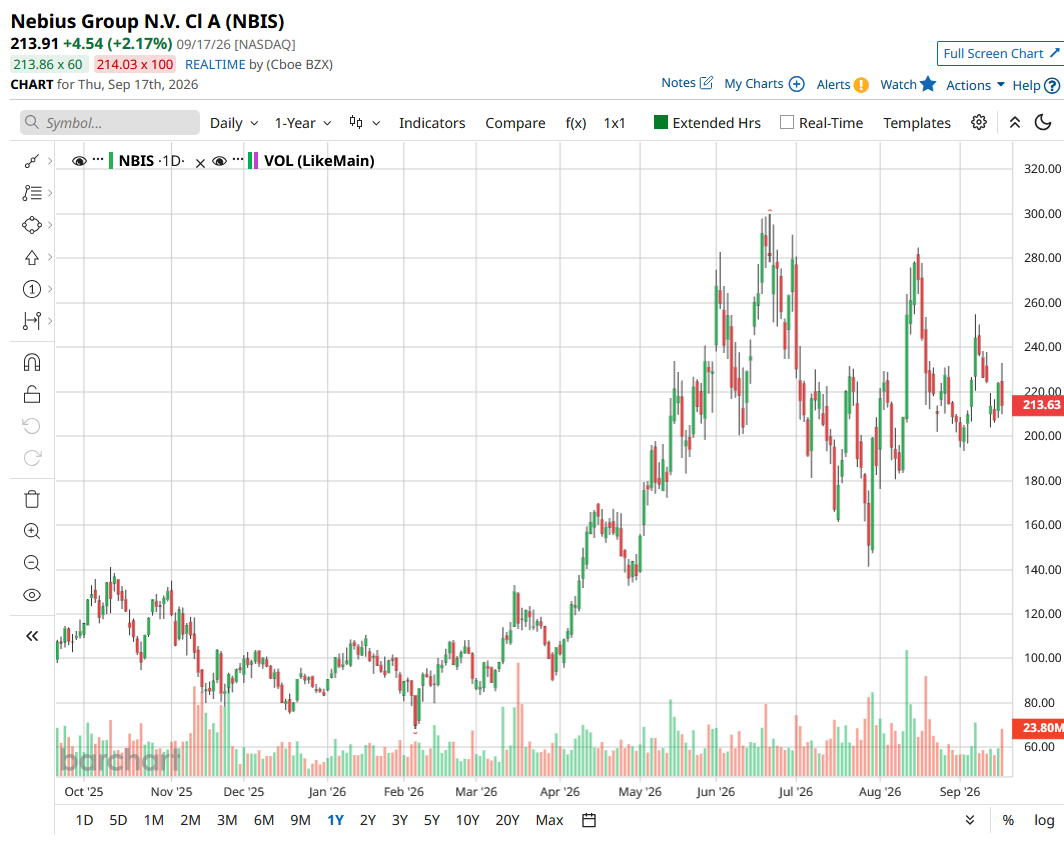
After the compute price hike news, the stock rose 10% in pre-market trading but gave back all the gains as soon as the market opened, pretty consistent behavior for a stock with a high short interest of 19%. Still, the stock is up over 127% YTD.
Demand Continues to Outpace Available Capacity
Nebius Group reported its second-quarter fiscal 2026 earnings on August 12. The company delivered one of its strongest quarters with revenue of $582.3 million, up 454% year over year and 46% sequentially. Nebius AI revenue increased 514% to $575 million. The company also showed stronger operating leverage. Group adjusted EBITDA was $236 million, compared with a loss of $21 million in the same quarter last year. The quarter benefited from higher utilization, better infrastructure efficiency, and recent acquisitions. Nebius's operating cash flow for the quarter was $2.3 billion, while capital expenditures of $5.7 billion were incurred.
Looking forward, Nebius reaffirmed its full-year 2026 guidance for group revenue of $3 billion to $3.4 billion. The company also expects annualized run-rate revenue of $7 billion to $9 billion and an adjusted EBITDA margin of about 40%. Capital spending guidance, however, was kept at $20 billion to $25 billion for 2026. Moreover, it expects year-end connected power of 800 megawatts to 1 gigawatt and raised its contracted power target to 5 gigawatts by the end of the calendar year. Looking ahead, the company said it plans to deploy more than 1 gigawatt of new capacity in 2027, which would be above this year’s pace.
What Are Analysts Saying About Nebius Stock
On Sept. 10, Truist analyst Arvind Ramnani initiated coverage on NBIS with a “Buy” rating and assigned a price target of $255. The analyst believes Nebius is an attractive stock as it is expanding its AI cloud platform. Ramnani also thinks Wall Street is underestimating how much recurring revenue NBIS can generate by 2027, and expects the company to significantly outperform current consensus forecasts.
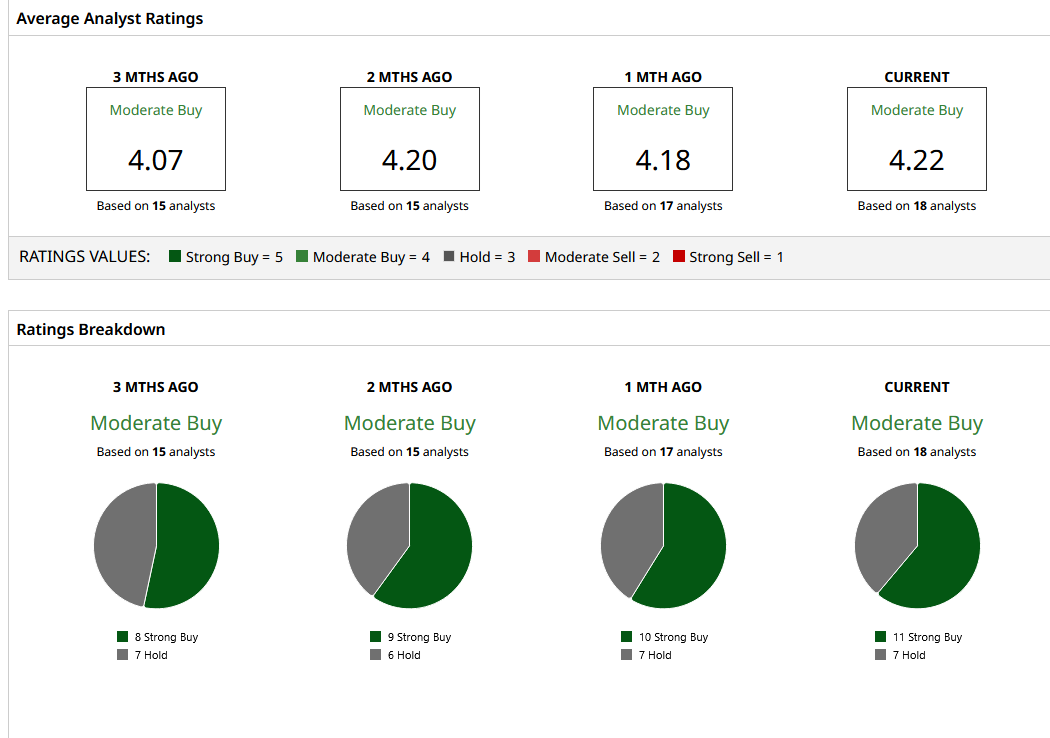
Based on 18 Wall Street analysts covering the stock, NBIS holds a consensus “Moderate Buy” rating. The median price target of $293 reflects an additional 40% upside from current levels. The high price target of $410 is quite impressive, as it implies 96% upside from the current share price. This shows the overall consensus remains largely positive, with none of the analysts recommending a sell.
On the date of publication, Jabran Kundi did not have (either directly or indirectly) positions in any of the securities mentioned in this article. All information and data in this article is solely for informational purposes. For more information please view the Barchart Disclosure Policy here.