
How Investors Are Reacting To TXNM Energy (TXNM) Higher Rate Pressure
- Following the U.S. Federal Reserve’s latest interest rate hike, TXNM Energy is being described as relatively well positioned among capital intensive alternative energy utilities, supported by its ongoing grid expansion and modernization projects in Texas and New Mexico.
- The key insight is that TXNM Energy’s capital program focuses on regulated infrastructure, which can offer clearer cost recovery paths even as borrowing costs rise for the wider sector.
- This article examines how TXNM Energy’s investment narrative around regulated grid buildout relates to its perceived resilience to higher interest rates.
Scan beyond TXNM Energy and compare its interest rate resilience with hand picked peers running capital intensive grids and infrastructure, starting with the list of solid balance sheet and fundamentals (23 results).
TXNM Energy Investment Narrative Recap
For TXNM Energy, you basically need to believe that regulated grid spending in Texas and New Mexico can translate into a growing rate base without eroding financial flexibility. The recent Federal Reserve hike increases borrowing costs, but the core story still sits in execution on approved projects and in keeping construction and operating expenses under control as capital requirements stay heavy.
The near term catalyst remains regulatory approval and timely recovery of grid and resiliency investments, including tools that shorten the lag between spend and rate relief. The biggest risk is rising interest expense and already tight interest coverage combining with high capex to strain cash flow, especially if regulators limit how quickly TXNM Energy passes costs through.
With no fresh company specific announcements tied directly to the latest rate move, the most relevant context for TXNM Energy is its existing capital plan in Texas and New Mexico. Management is already committing substantial investment to transmission upgrades, resilience programs, solar and storage, and new capacity needs flagged out to 2032.
Those projects sit at the intersection of the current catalyst and the key risks. Efficient delivery and regulatory support can expand the regulated asset base and support earnings stability. Cost overruns, delays or tighter rate decisions would have the opposite effect, especially with interest payments not fully covered by earnings and a dividend that is not covered by free cash flow.
What The TXNM Energy Consensus Is Really Pricing In
TXNM Energy’s analyst narrative now has very specific numbers behind it, and those figures matter if you are judging how resilient the grid buildout story looks after higher rates. Forecasts point to 6.6% yearly revenue growth over the next three years, with profit margins moving from 8.7% today to 19.0% by 2028 as more projects earn regulated returns. Earnings are projected to climb from US$177.4 million today to US$467.6 million by 2028, which is roughly a 2.6x increase in absolute profit tied to the same grid modernization push that is driving capital needs.
TXNM Energy’s narrative projects US$2.5b revenue and US$467.6 million earnings by 2028. This requires 6.6% yearly revenue growth and roughly a 2.6x earnings increase from US$177.4 million.
On these consensus estimates, the stock would trade on a 19.8x P/E in 2028, compared with about 33.8x today and roughly in line with the current 19.9x for the broader US electric utilities group. That compression assumes investors are willing to pay a lower multiple for a larger, more profit-focused regulated grid business once the current investment wave is embedded in the rate base. It effectively prices in successful cost control, constructive rate decisions, and stable execution on major lines and resiliency projects while interest expense stays manageable.
The implied earnings climb also relies on share issuance staying contained. Analysts expect the share count to rise about 7.0% per year over the next three years, so part of the projected earnings per share outcome comes from how efficiently new equity and debt are converted into regulated assets. For investors tracking interest rate sensitivity, that creates a tension between funding capacity, rising borrowing costs, and the promise of a larger regulated platform that is expected to support higher absolute profit even as the valuation multiple steps down.
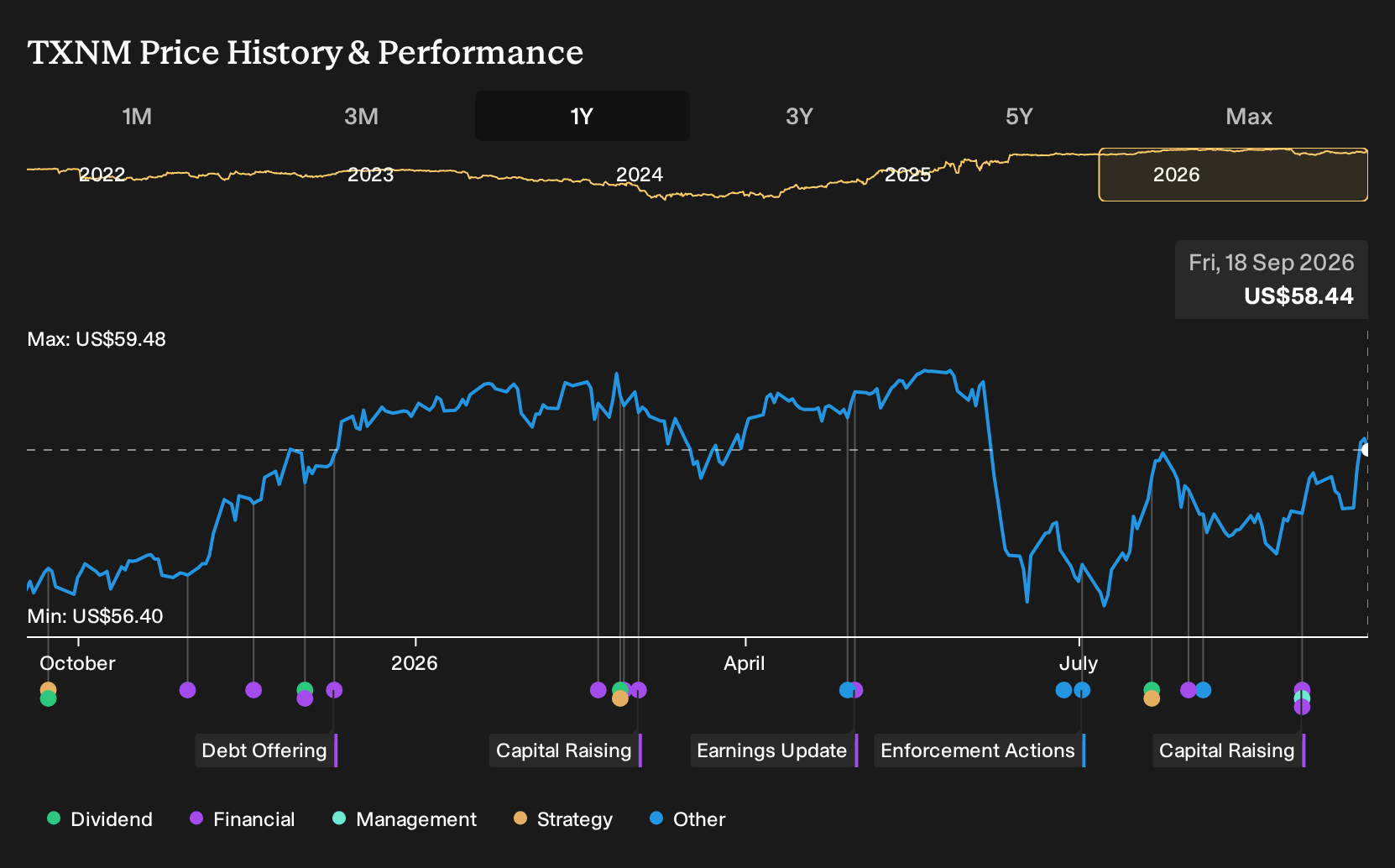
Uncover why TXNM Energy's fair value indicates a 4% potential upside to its current price that could narrow quickly.
The Verdict Is Yours
Disagree with existing narratives? Extraordinary investment returns rarely come from following the herd, so consider forming your own view.
- A great starting point for your TXNM Energy research is our analysis highlighting 1 key reward and 3 important warning signs that could impact your investment decision.
- See our latest analysis for TXNM Energy. The report includes a comprehensive fundamental analysis summarized in a single visual, the Snowflake, making it easy to evaluate TXNM Energy's overall financial health at a glance.
Looking For More Ideas Beyond TXNM Energy?
If the TXNM Energy story has you thinking about interest rate resilience and balance sheet strength, it can help to widen the lens and compare it with other potential opportunities that share similar qualities or offer very different risk profiles.
- If you want to keep risk in check while still hunting for returns, start with a focused group of 30 resilient stocks with low risk scores that aim to pair steadier business models with measured volatility.
- For income focused investing, consider broadening your watchlist with 7 dividend fortresses that combine higher yields with a focus on durability of payouts.
- If you prefer to hunt for mispriced quality, scan through 16 high quality undiscovered gems that pair stronger fundamentals with less market attention.
This article by Simply Wall St is general in nature. We provide commentary based on historical data and analyst forecasts only using an unbiased methodology and our articles are not intended to be financial advice. It does not constitute a recommendation to buy or sell any stock, and does not take account of your objectives, or your financial situation. We aim to bring you long-term focused analysis driven by fundamental data. Note that our analysis may not factor in the latest price-sensitive company announcements or qualitative material. Simply Wall St has no position in any stocks mentioned.
Have feedback on this article? Concerned about the content? Get in touch with us directly. Alternatively, email editorial-team@simplywallst.com