
New CFO Plan Could Be A Big Moment For Flex (FLEX)
- Flex appointed Amy B. Schwetz as CFO for its RMS and ITS segments, with the expectation that she will become Flex CFO after the planned separation of its Cloud and Power Infrastructure business, and added experienced industrial leaders George R. Oliver and Mark Eubanks to its board.
- The combination of a future CFO already embedded in key segments and two directors with deep industrial and electrical backgrounds signals a sharper focus on execution in regulated manufacturing, automation and power-related services that sit at the center of Flex's operating model.
- We will examine how Flex's investment narrative around higher margin verticals and AI infrastructure could be reshaped by Amy Schwetz's planned CFO succession.
Scan how other industrial and infrastructure players are positioning their leadership teams for the next leg of growth by reviewing our curated list of solid balance sheet and fundamentals (23 results) alongside Flex's latest moves.
Flex Investment Narrative Recap
To own Flex, you need to believe the business can keep shifting its mix toward higher margin AI infrastructure, healthcare, automotive and power solutions while managing thin margins and high customer concentration. The near term story still hinges on execution in data center and regulated manufacturing, and this leadership news mostly supports that path rather than changing it.
The biggest near term swing factor remains how reliably Flex converts AI and cloud demand into stable, repeatable earnings without margin slippage. Customer insourcing and ongoing capital needs for automation still sit on the risk side. The new CFO designation and board refresh do not remove those pressures, but they could improve how they are managed.
The most relevant announcement here is the planned separation of Flex's Cloud and Power Infrastructure segment. This frames why Amy Schwetz is first stepping into the RMS and ITS finance roles. Your thesis now ties more tightly to whether Flex can run CPI as a cleaner, more focused entity around data center and power exposure.
If that separation goes ahead as planned, investors will watch how Schwetz manages capital allocation, debt and margin discipline across the remaining segments, given Flex already carries high leverage and thin profitability. Execution around customer concentration and insourcing risk in CPI, while keeping the healthcare and automotive pipeline on track, is where this leadership setup will really be tested.
Flex's current analyst storyline points to revenues of $49.7b and earnings of $3.3b by 2029, based on a 21.2% yearly revenue growth assumption and an earnings increase of about $2.4b from $880.0m today.
Uncover why Flex's fair value indicates a 48% potential upside to its current price, which could narrow quickly.
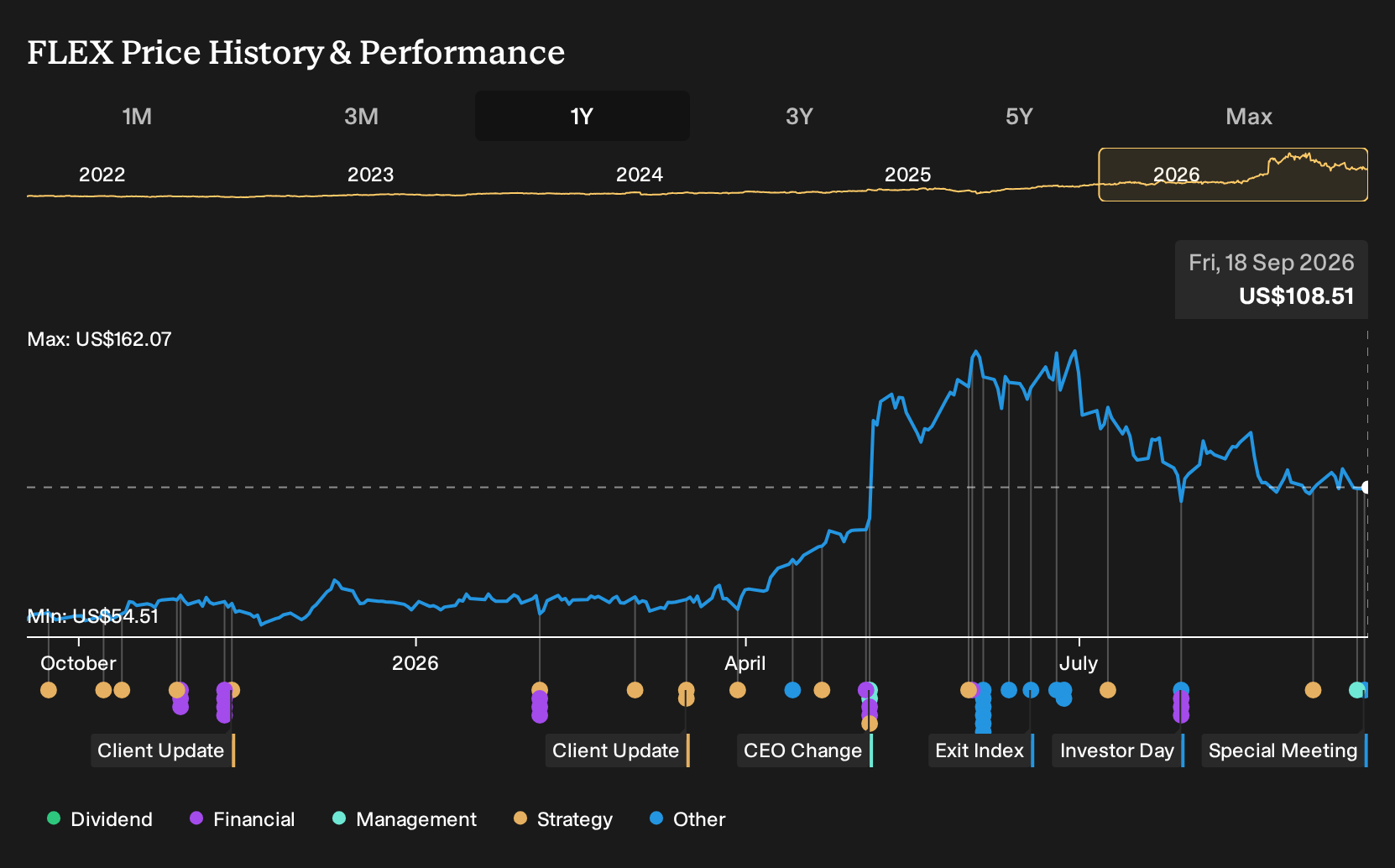
Exploring Other Perspectives
One alternate, more optimistic view is that Flex’s board and CFO changes could help the business lean into regionalization even faster. Before this news, the most bullish analysts were already pencilling in revenue of about $58.6b and earnings near $4.3b by 2029. You can now ask whether those upbeat forecasts move again once this leadership shift is fully priced in.
Explore 5 other Flex fair value estimates, including one that suggests as much as 86% upside from the current price!
Form Your Own Verdict
Don't just follow the ticker; dig into the data and build a conviction that's truly your own.
- A great starting point for your Flex research is our analysis highlighting 4 key rewards and 1 important warning sign that could impact your investment decision.
- See our latest analysis for Flex. The report includes a comprehensive fundamental analysis summarized in a single visual, the Snowflake, making it easy to evaluate Flex's overall financial health at a glance.
Looking For More Ideas Beyond Flex?
Once you have a view on Flex, it often helps to compare it with other companies that share similar qualities in balance sheet strength, valuation or risk profile. The Simply Wall St Screener can surface those opportunities quickly so you spend more time weighing the story and less time trawling through tickers.
- For investors who care most about quality at a reasonable entry point, filter for stronger fundamentals and attractive pricing with the 35 high quality undervalued stocks.
- If capital preservation and steadier profiles are a priority, narrow your search to steadier profiles with the 30 resilient stocks with low risk scores.
- When you want to focus on companies with robust financial footing, start with the list of solid balance sheet and fundamentals (23 results) to see which businesses carry cleaner balance sheets alongside solid fundamentals.
This article by Simply Wall St is general in nature. We provide commentary based on historical data and analyst forecasts only using an unbiased methodology and our articles are not intended to be financial advice. It does not constitute a recommendation to buy or sell any stock, and does not take account of your objectives, or your financial situation. We aim to bring you long-term focused analysis driven by fundamental data. Note that our analysis may not factor in the latest price-sensitive company announcements or qualitative material. Simply Wall St has no position in any stocks mentioned.
Have feedback on this article? Concerned about the content? Get in touch with us directly. Alternatively, email editorial-team@simplywallst.com