
Air Canada (TSX:AC) Stock Looks Reasonable On Its 49% Run
Air Canada has delivered a strong stretch of gains, and the question now is whether that share price is properly anchored to the earnings the airline is generating. After a powerful rebound in travel demand and a busy period for the business, investors are asking if the current valuation still lines up with what the income statement is doing.
- Over the past year the stock has returned 49.4%, which puts real pressure on the numbers to show that this move is grounded in sustainable earnings power.
- Recent commentary highlighting resilient passenger demand and Air Canada's use of artificial intelligence in pricing and capacity decisions points to potential support for profitability and the durability of its earnings base.
- There is a second opinion on Air Canada worth weighing. See what analysts think Air Canada's shares could be worth.
The issue now is whether Air Canada's current share price is justified by the earnings the airline is producing today and is expected to produce in the near term.
If you are testing whether Air Canada's 49.4% one year return lines up with its earnings, it can help to run the same lens across a wider set of 4 high quality undervalued stocks
Is Air Canada Fairly Priced on Earnings?
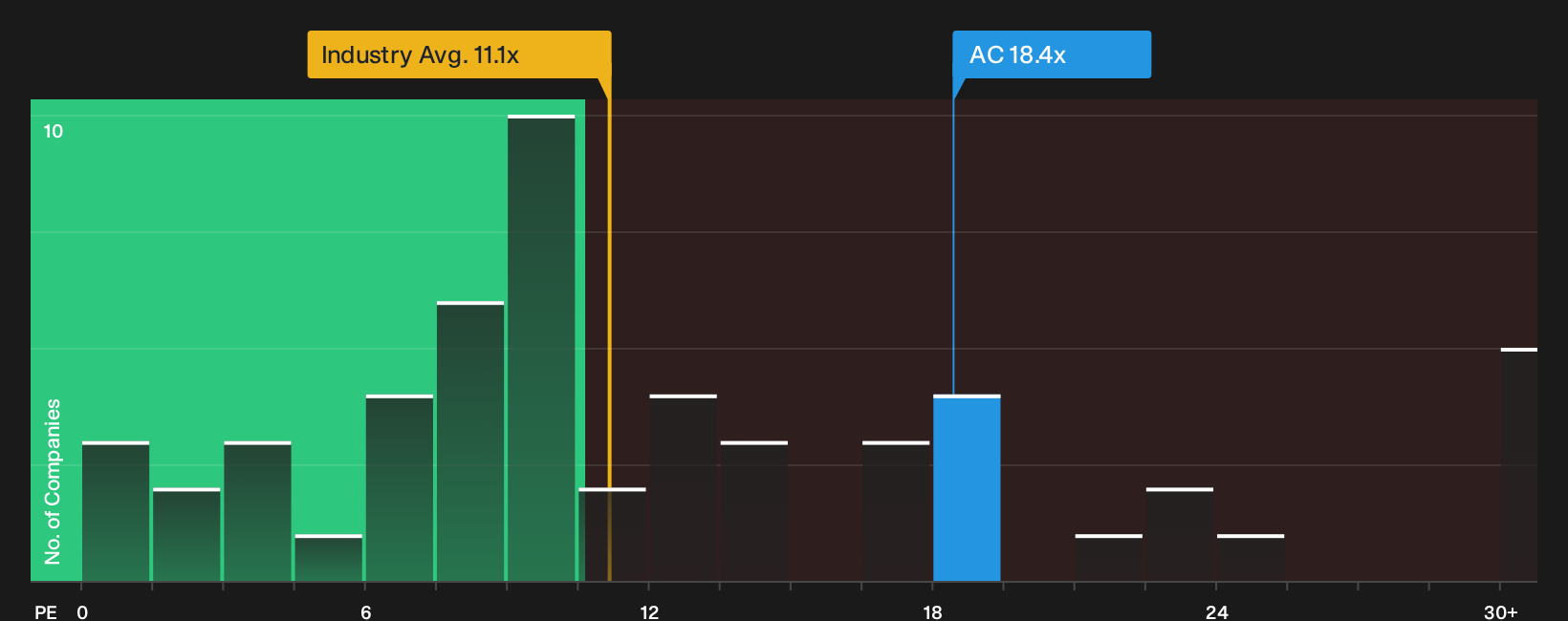
The P/E ratio fits Air Canada well because earnings are now a central part of how investors frame the story, not just revenue recovery. On this lens, the stock trades around 18.4x earnings, which is below both the airlines sector average near 11.1x and a peer group closer to 25.1x. That combination shows the shares are priced higher than many carriers globally but still below a wider basket of comparable companies.
Because the current P/E sits close to what a tailored fair multiple suggests for Air Canada, the market price looks roughly aligned with the earnings profile implied by that model. Recent commentary about resilient travel demand and the airline’s use of artificial intelligence in pricing and capacity decisions helps explain why investors are willing to pay this kind of P/E even after the strong share price run. For anyone weighing the stock now, the key question is whether those earnings and revenue-management tools can keep supporting this level of multiple over time. Explore the numbers behind Air Canada's P/E valuation.
The Air Canada Narrative: What Would Justify Today's Price?
Simply Wall St Narratives pick up where the valuation puzzle on Air Canada leaves off and spell out which paths for future growth, profitability and earnings would need to hold for the stock to be worth materially more or less than today. Each scenario ties its implied number to a specific view on how Air Canada's revenue trajectory, margin profile and key risks could evolve, giving you something concrete to revisit as fresh information comes through.
Community views on Air Canada split between a premium on long term demand strength and a discount for rising cost and regulatory risk.
Bull case: 19% undervalued
"Digital and loyalty initiatives, including Aeroplan partnership growth and enhanced member amenities, are increasing ancillary revenues and building a recurring, high-margin earnings stream..."
Discover why this Narrative puts Air Canada at 19% undervalued.
Bear case: 24% overvalued
"Increasing regulatory scrutiny on climate impact, including anticipated carbon taxes and stricter emissions requirements, is likely to impose significantly higher operating costs on Air Canada..."
Explore why this Narrative puts Air Canada at 24% overvalued.
One more check for Air Canada before you close the tab
Price, earnings and story all matter, but there is one more lens that can sharpen your view on Air Canada by comparing today's multiples with where professionals think the business could be a few years from now. Explore where analysts expect Air Canada to be in a few years.
This article by Simply Wall St is general in nature. We provide commentary based on historical data and analyst forecasts only using an unbiased methodology and our articles are not intended to be financial advice. It does not constitute a recommendation to buy or sell any stock, and does not take account of your objectives, or your financial situation. We aim to bring you long-term focused analysis driven by fundamental data. Note that our analysis may not factor in the latest price-sensitive company announcements or qualitative material. Simply Wall St has no position in any stocks mentioned.
Have feedback on this article? Concerned about the content? Get in touch with us directly. Alternatively, email editorial-team@simplywallst.com