
3 Regional Bank Stocks Built For Higher For Longer Rates
When long term US yields jump on a handful of payroll prints and Fed speeches, the real story for investors is not today’s headline. It is how higher for longer rates can quietly reshape winners and losers across the market. That backdrop creates both pressure and potential opportunity. This article walks through three stocks from our screener that are closely tied to this rate theme and explains why they may deserve a closer look now.
The three stocks below are just a starting sample from this theme, while the full screen surfaced 38 more US financials and insurers with equally compelling rate-sensitive stories that are not covered here. If you want to identify your own higher-for-longer candidates and pressure test them side by side, head straight into the US Financials and Insurance Benefiting from Higher-for-Longer Interest Rates screener.
Farmers National Banc (FMNB)
Overview: Farmers National Banc is a Canfield based bank holding company offering community banking, trust, retirement consulting, insurance, and wealth management services.
Operations: Farmers National Banc generates about $161.9 million from its Bank Segment, $40.7 million from Unallocated Other Revenues, and $15.9 million from Trust and Retirement Consulting, all in the United States totaling $218.4 million.
Market Cap: US$922 million
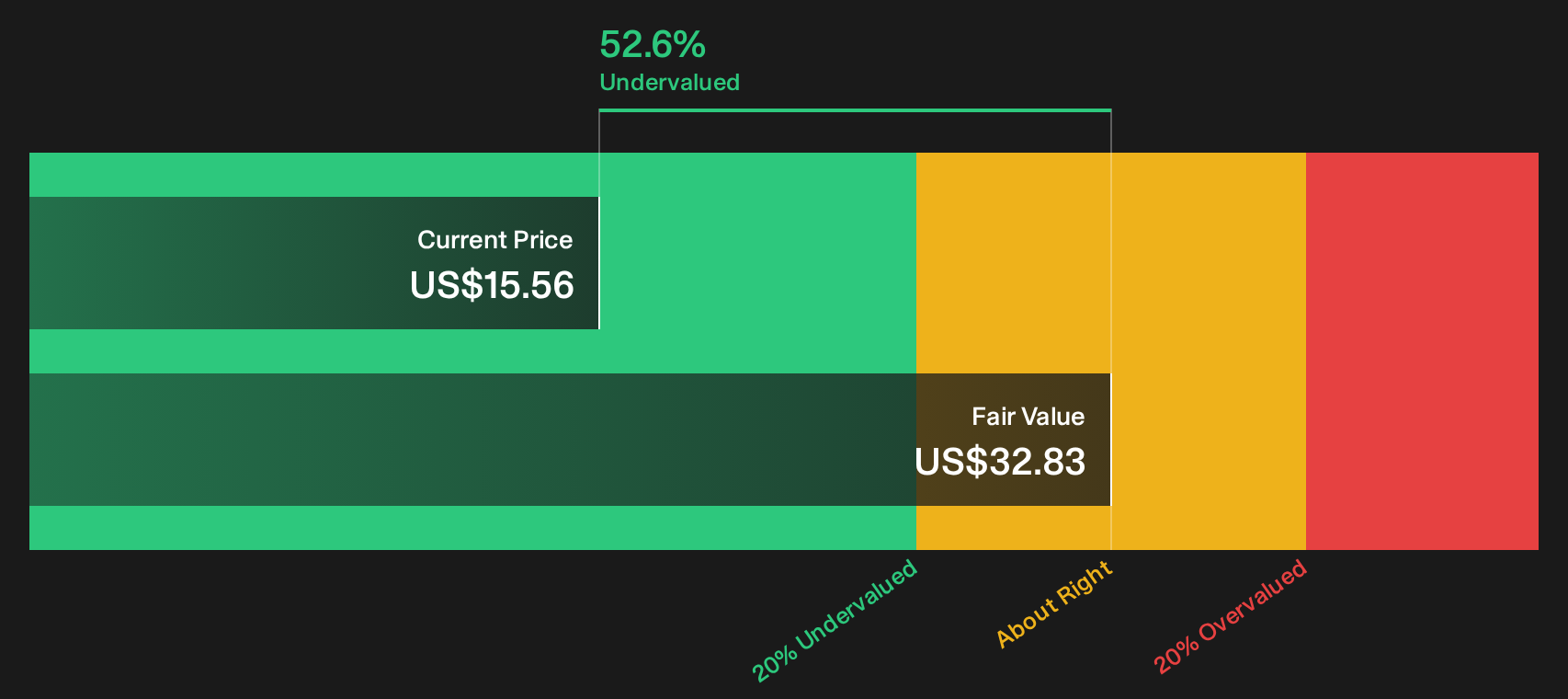
Farmers National Banc gives you a traditional community bank that collects most of its income from interest and fee streams that often improve when long term rates stay firm. Earnings climbed 31.7% last year and the dividend yield sits at 4.37%. The shares trade well below an internal fair value estimate if one unresolved pressure on future margins plays out gently rather than sharply.
If you want to see how that margin overhang is priced in, go straight to the DCF valuation analysis for Farmers National Banc to see what the market might be missing.
Mid Penn Bancorp (MPB)
Overview: Mid Penn Bancorp is a regional bank holding company that provides lending, deposit, and wealth services to customers across Pennsylvania and New Jersey.
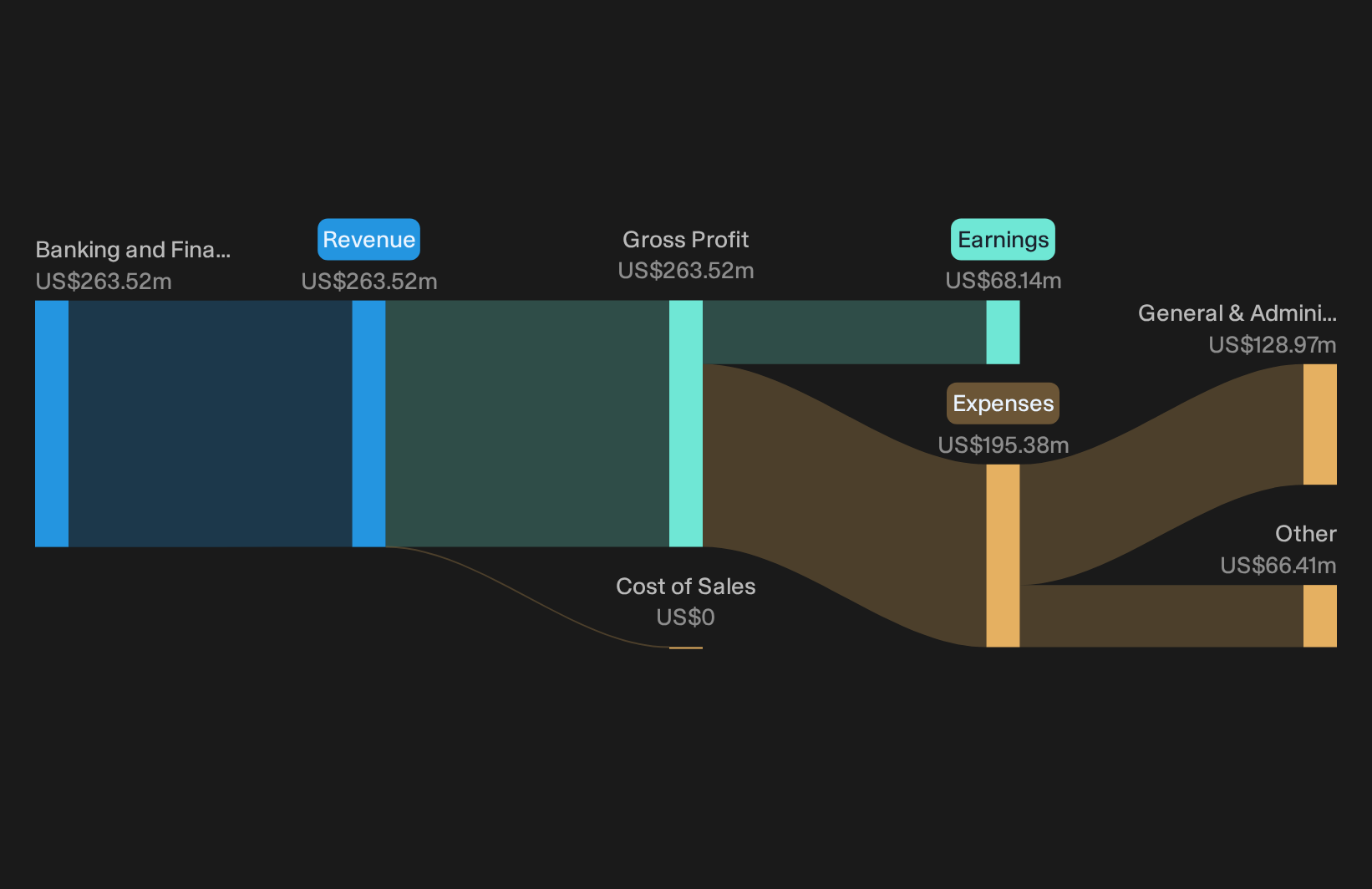
Operations: Mid Penn Bancorp generates about $263.5 million from banking and financial services to individuals, businesses, and institutional clients in the United States.
Market Cap: US$936 million
Mid Penn Bancorp ties neatly into the higher for longer theme because it earns primarily from lending spreads and reinvesting deposits at today’s richer long term yields. Earnings grew 54.7% last year, and net interest income recently reached $65.28 million for the quarter. That momentum leaves plenty riding on what happens if a single key assumption breaks around future rate pressure on margins.
That single assumption is exactly what the 3 key rewards and 1 important warning sign could be quietly hinging on for Mid Penn Bancorp investors who are hunting for mispriced rate exposure.
HBT Financial (HBT)
Overview: HBT Financial is a regional bank holding company providing deposit, lending, wealth management, and digital banking services across Illinois and Eastern Iowa.
Operations: HBT Financial generates about $265.9 million from community banking activities in the United States, centered on loans, deposits, and related services.
Market Cap: US$1.3b
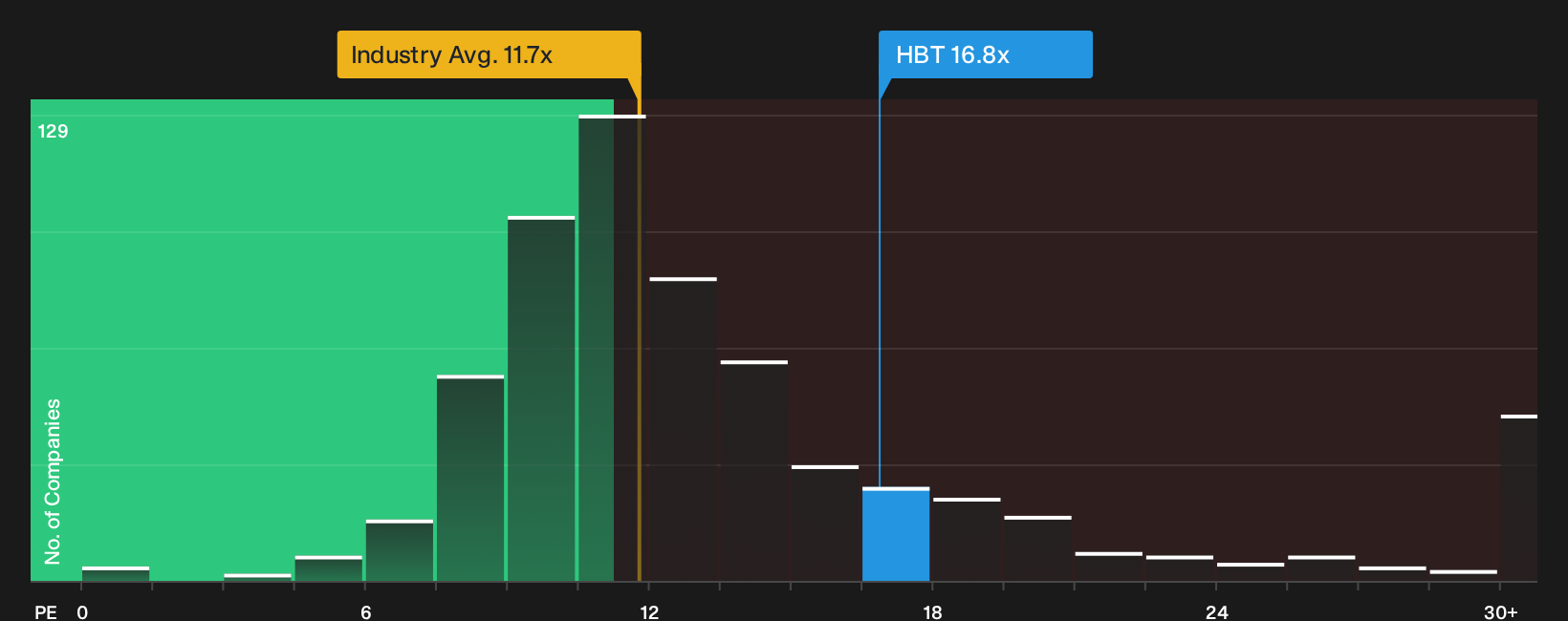
HBT Financial operates in a higher for longer rate environment, with earnings closely linked to net interest income and a dividend stream that has been increasing. Recent results show stronger net interest income and Q2 net income of $27.84 million. The stock trades on a P/E of 16.8x, above many peers. Investor returns may be sensitive to changes in funding costs or other pressures on the bank’s cost of capital.
Those cost of capital questions are exactly what the 3 key rewards and 1 important warning sign unpacks, helping you see where HBT Financial’s rate story might be quietly decoupling from peers.
Seeking Fresh Alternatives Beyond Banks?
Some of the quickest breakout moves start quietly, then advance once the crowd finally catches on. Review these ideas while it matters, before they become fully reflected in prices.
- Spot early momentum in smaller companies with balance sheet strength by running the 16 high quality undiscovered gems before these stories move from under the radar to widely followed.
- Target resilient income streams by using the 7 dividend fortresses to focus on higher-yielding businesses before more investors pursue the same opportunities.
- Follow structural spending trends by checking the 39 power grid technology and infrastructure stocks while these infrastructure companies are still more closely linked to current grid upgrades than to potential future demand changes.
This article by Simply Wall St is general in nature. We provide commentary based on historical data and analyst forecasts only using an unbiased methodology and our articles are not intended to be financial advice. It does not constitute a recommendation to buy or sell any stock, and does not take account of your objectives, or your financial situation. We aim to bring you long-term focused analysis driven by fundamental data. Note that our analysis may not factor in the latest price-sensitive company announcements or qualitative material. Simply Wall St has no position in any stocks mentioned.
Have feedback on this article? Concerned about the content? Get in touch with us directly. Alternatively, email editorial-team@simplywallst.com