
3 Chinese Biopharma Stocks Retail Investors Are Watching For Licensing Deals
Chinese biopharma developers just caught a rare break. Fresh signals from Washington suggest U.S. pharma groups may keep licensing most drugs from Chinese partners, and the Hang Seng Biotech Index has already reacted. This keeps the door open for cross-border deals that can reshape how companies fund pipelines and share risk. This article walks through three Chinese biopharma stocks exposed to this news and why that matters for your portfolio decisions.
The stocks covered below are just a starting sample, and the full screen identified 27 more Chinese biopharma developers with international out licensing angles and equally compelling narratives that are not covered here.
If you want to identify and analyze potential high conviction ideas across this theme, head straight to the Chinese Biopharma Developers with International Out-Licensing Exposure screener.
Sichuan Kelun-Biotech Biopharmaceutical (SEHK:6990)
Overview: Sichuan Kelun-Biotech Biopharmaceutical develops and commercializes oncology, immunology and metabolism drugs in China and abroad, supported by partnerships and licensing.
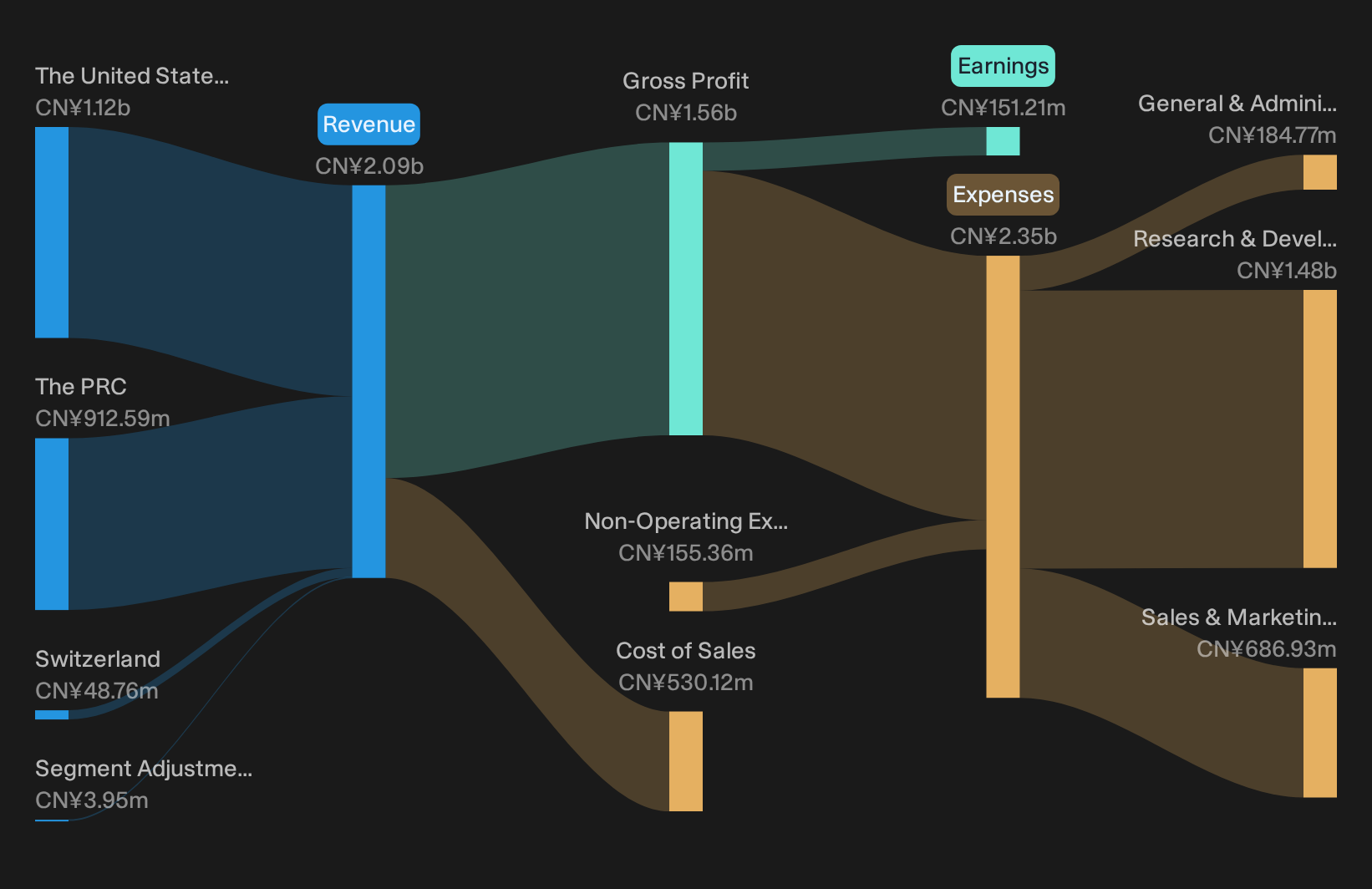
Operations: Sichuan Kelun-Biotech Biopharmaceutical generated CN¥2,085.8 million from pharmaceuticals, with around CN¥912.6 million from the PRC and CN¥1,120.5 million from the United States.
Market Cap: HK$110.3b
Sichuan Kelun-Biotech Biopharmaceutical fits well within this licensing-focused screen, with a deep oncology pipeline already connected to global partners. This is an area where the latest U.S. policy signals are particularly relevant.
"The broad adoption of antibody drug conjugates in cancer treatment, combined with Kelun-Biotech's OptiDC platform and 9 ADC projects in the clinic, positions the company to add indications and products that can widen the revenue base over time."
A key consideration from here is how one evolving stream of overseas partnership economics ultimately affects long-term margins.
That margin question is only the start, and the full narrative for Sichuan Kelun-Biotech Biopharmaceutical shows how partnership terms, capital needs and pipeline risk could be accelerating or quietly capping future economics.
Everest Medicines (SEHK:1952)
Overview: Everest Medicines is a Shanghai based biopharma that licenses in and develops late stage therapies for kidney, autoimmune, cardiovascular and infectious diseases across Greater China and Asia Pacific.
Market Cap: HK$9.7b
Everest Medicines sits squarely in this cross border licensing theme, using partnerships to bring global drugs into Asia and potentially send some assets back out again. This is exactly where policy clarity on U.S. licensing and a more open attitude to biopharma could matter most.
"Strategic partnerships, successful fund-raising, and investments (e.g., I-Mab) provide operational and financial flexibility to pursue in-licensing, shared R&D, and potential out-licensing or co-development deals. These factors may influence net margins, funding risk, and future EPS outcomes as industry appetite for biotech M&A and collaborations evolves."
What happens to Everest Medicines' earnings power if one still unresolved regulatory and pricing swing factor is resolved favorably on key therapies?
If that swing factor is on your mind, go straight to the full narrative for Everest Medicines to see how Everest Medicines’ licensing, funding and risk profile could be decoupling expectations.

Biocytogen Pharmaceuticals (Beijing) (SEHK:2315)
Overview: Biocytogen Pharmaceuticals (Beijing) develops antibody based drugs and preclinical research services across China, the US and other international markets.
Operations: Biocytogen Pharmaceuticals (Beijing) generated about CN¥878 million from disease model sales, CN¥440 million from preclinical pharmacology and CN¥387 million from antibody development.
Market Cap: HK$59.6b
Biocytogen Pharmaceuticals (Beijing) focuses on an out-licensing model, supported by antibody discovery platforms, global preclinical services and collaboration agreements that have resulted in upfront payments, milestones and royalties. One unresolved factor is how partners value the company’s pipeline, which could significantly influence the terms of future deals.
If you want to see how that valuation debate could play out in real contracts, start with the 3 key rewards and 2 important warning signs, while partner appetite is still taking shape.

Curious About What You Might Be Missing Next
Fresh themes can start breaking out while the obvious stories lose momentum. Before these ideas stop flying under the radar, scan the next wave and act while they are still emerging.
- Spot lesser known compounders early by running the 614 high quality undiscovered gems before they get caught by mainstream momentum traders and pricing becomes less forgiving.
- Zero in on resilient balance sheets and cash flows with the list of solid balance sheet and fundamentals (198 results) while lenders stay selective and weaker businesses risk dropping out of contention.
- Track where real profits meet AI excitement through the 38 profitable AI stocks that aren't just burning cash so you focus on cash generative stories instead of pure hype.
This article by Simply Wall St is general in nature. We provide commentary based on historical data and analyst forecasts only using an unbiased methodology and our articles are not intended to be financial advice. It does not constitute a recommendation to buy or sell any stock, and does not take account of your objectives, or your financial situation. We aim to bring you long-term focused analysis driven by fundamental data. Note that our analysis may not factor in the latest price-sensitive company announcements or qualitative material. Simply Wall St has no position in any stocks mentioned.
Have feedback on this article? Concerned about the content? Get in touch with us directly. Alternatively, email editorial-team@simplywallst.com