
After the stock price fell by more than 80%, the challenge of lifting the ban was compounded. Can Master Copper (00664)'s “heavy asset” direct-run gambling reversal?
After handing over the first “Terrible” interim results with net profit plummeting 95.8% after the listing, Master Copper (00664), known as the “bubble mart for middle-aged people,” also fell rapidly. The cumulative decline exceeded 80%, staging a thrilling “ankle break.”
However, even though his performance since listing has been so bleak, Master Tong's weakness has not stopped. The Zhitong Finance App observed that on October 1, Master Copper will officially lift the ban on restricted shares.
As a cornerstone investor, CCI International spent HK$30 million to purchase 500,000 shares of Master Copper. Although the current market value of these shares has shrunk to 6 million, if CCI “cuts meat relentlessly,” it will definitely have a clear impact on Master Tong's stock price.
Master Copper's current daily turnover is only tens of thousands to hundreds of thousands. When the stock price fell 7.36% and 5.48% on August 31 and September 1, respectively, the corresponding turnover was only 480,000 and 100,000, respectively, which is enough to show the fragility of its stock price carrying capacity. Once the 6 million worth of goods starts to be sold off, liquidity risk may be imminent.
Inflated pricing was miserably “voted by foot” by the market, and some early shareholders have already suffered deep losses
The core reason why Master Copper's stock price performance has been so poor since its listing is that the company's overpricing has led to a serious mismatch between fundamentals and issuance valuations.
Data show that from 2022 to 2024, Master Tong's revenue was 503 million, 506 million yuan, and 571 million yuan respectively; however, adjusted net profit for the same period was 569.38 million yuan, 44.131 million yuan, and 78.982 million yuan respectively. Although the overall trend showed an upward trend, there were significant fluctuations.
In 2025, Master Tong's revenue was 617 million yuan, up 8.06% year on year, and net profit was 478.38 million yuan. Even after adding 2022 million yuan of listing expenses during the reporting period, adjusted net profit was only 68.088 million yuan, down 13.83% year on year.
However, it was this kind of performance with obvious profit side ups and downs, which was given an outrageous valuation at the time of listing. Based on the issue price of HK$60 per share, Master Copper's IPO valuation is approximately HK$3.864 billion. Even with an adjusted net profit of HK$68.08,000 in 2025, the static PE corresponding to this IPO valuation is nearly 50 times as high.
As a comparison, the valuation of well-known consumer stocks supported by fundamentals in the Hong Kong stock market is generally 10-20 times PE, while Master Copper's pricing is 2.5-5 times higher than this valuation benchmark, and the fundamentals of profit side fluctuations once again highlight the inflated valuation level.
In fact, such inflated valuations are not accepted by institutions; this is confirmed in many dimensions. The first is the slump in international placement. According to the data, Master Copper's international placement was only oversubscribed by about 1.56 times, which is at a low level of institutional subscription willingness under the hot IPO market during the quarter. Furthermore, of the 43 undertakers in international placements, the top five undertakers accounted for 47.07% of the shares, of which the largest undertakers accounted for 20.84%, and chips were concentrated in the hands of a small number of carriers.
Second, Master Copper only introduced CCI International, a cornerstone investor. The subscription amount was only HK$30 million, accounting for only 6.33% of the issuance scale. This ratio is also at the bottom of the IPOs that have introduced cornerstone investors, indicating that institutions are less willing to “cover the bottom”.
Judging from the chip distribution, Master Copper accounts for only 15% of shares sold publicly, and accounts for 85% of international placement shares. Most of the chips are not in the hands of retail investors. Reasonably, this chip distribution is conducive to stabilizing stock prices and avoiding disorderly sell-off, but due to inflated pricing and the relative concentration of international placement chips, this caused the agency to step on the stock price in the midst of scrambling to stop loss.
Master Copper closed with a sharp drop of 30% during the dark market. The final decline on the first day of listing was close to 50%. The outrageous trend of “losing ground” in the listing made Master Copper particularly obtrusive in the hot IPO market. The stark contrast between this cold stock price trend and the fervent market sentiment allowed capital to quickly escape from Master Copper, who had poor fundamentals, thus causing the stock price to continue to plummet.
To a certain extent, the high IPO price reflected Master Copper's dual demands at the time: not only to raise more capital in a context of fundamental pressure, but also to reserve sufficient “safety pads” for the subsequent exit of early shareholders. However, it backfired. The inflated valuation was voted on by the market with its feet, and the first day of listing was severely cut. The release of financial sentiment continued to depress stock prices downward; in turn, it blocked the exit channel for most early shareholders.
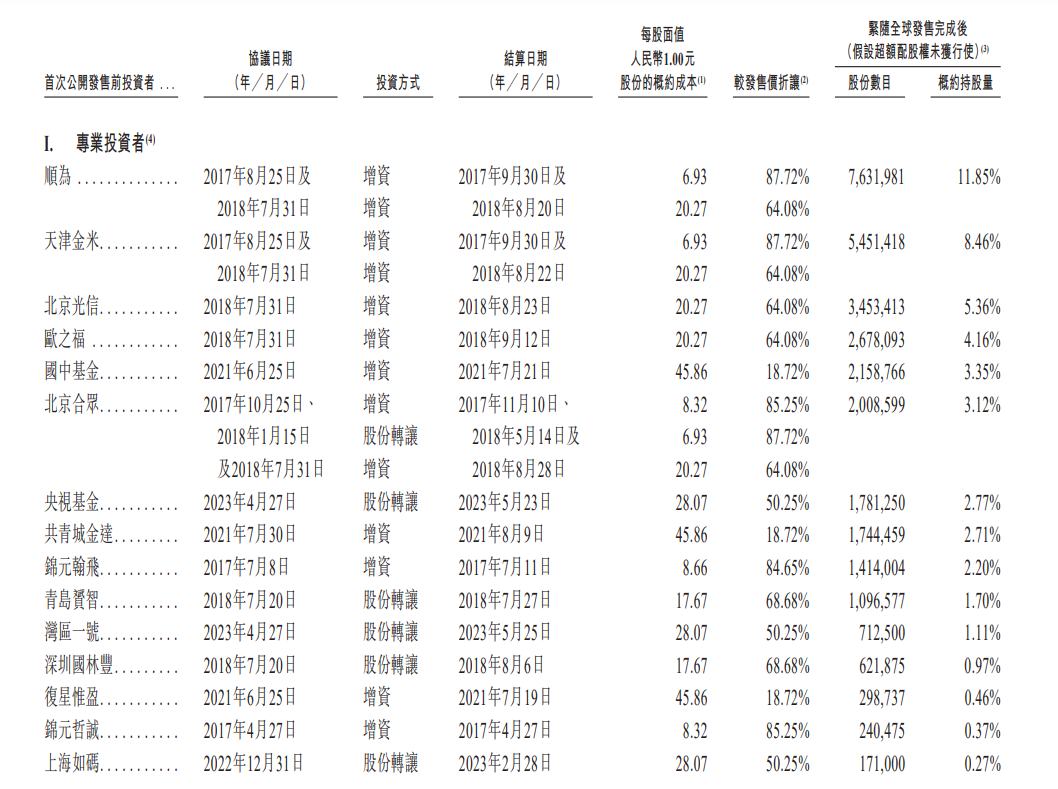
As of the close of trading on September 17, Master Copper's stock price was only HK$12.49. Going back to its pre-IPO equity structure, it had 15 professional investors and shareholders, and the lineup included well-known capital and state-owned assets such as Shunwei, Tianjin Jinmi, and Beijing Guangxin. Today, with the exception of very few shareholders such as Shunwei and Tianjin Jinmi, which entered the market at a low cost of 6.93 yuan in 2017, the cost price of other shareholders (such as Guozhong Fund, CCTV Fund, etc., which cost a capital increase of 45.86 yuan in 2021) is generally much higher than the current market price. This capital took years, but eventually fell into a quagmire of losses.
The net increase of 55 offline direct-run stores dragged down the release of performance, and running through a single store became the key to victory in risky chess
The mid-term results of net profit plummeting 95.8% in the first half of 2026 undoubtedly hit a historical freezing point in Master Tong's stock price and became a direct driver for the cumulative decline to break through the 80% mark. However, underneath this “amazing” performance, it's not all hopelessness — the new variables nurtured by it are becoming the hope that the company's stock price will survive at a freezing point. For the early shareholders involved, this weak light of “hope” is also a “lifesaver” that determines whether they can leave the market in a decent manner.
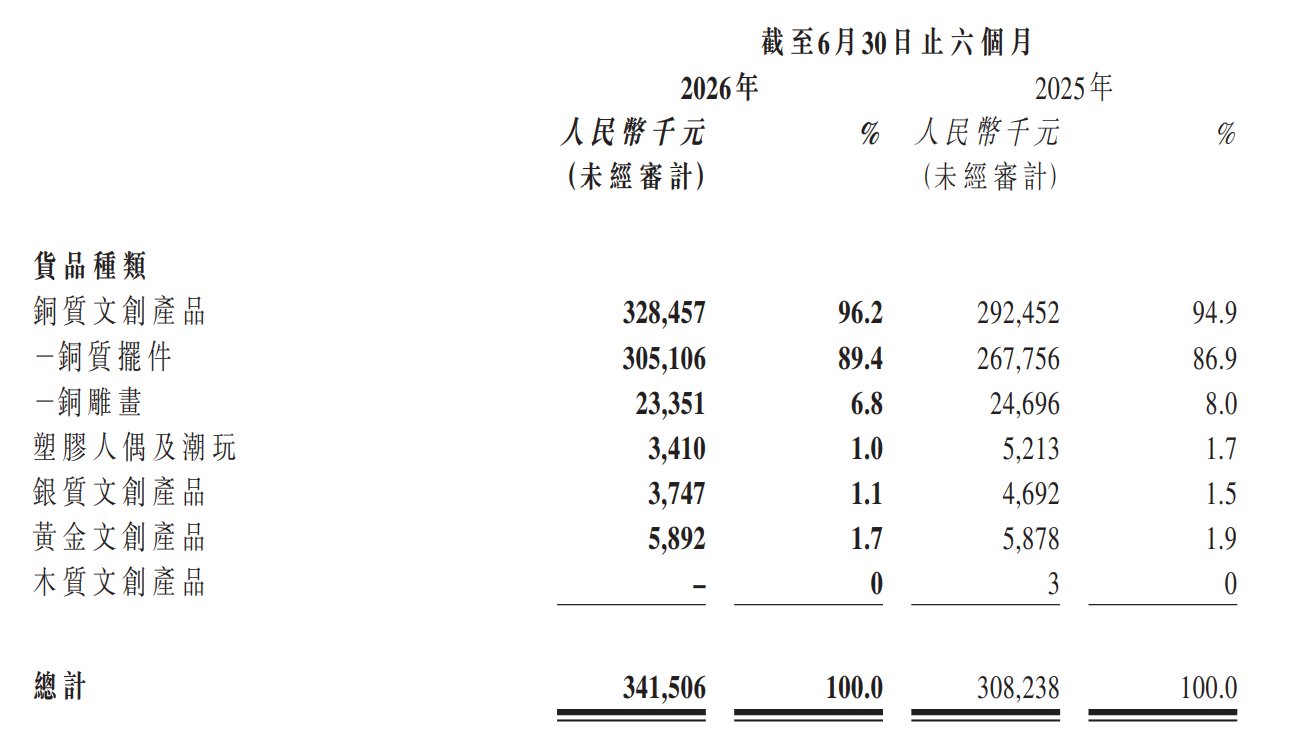
According to financial reports, Master Tong achieved revenue of about 342 million yuan in the first half of 2026, an increase of 10.79% over the previous year, and continued steady double-digit growth on the revenue side. However, dismantling the product matrix, the engine of growth was almost entirely driven by copper cultural and creative products alone — this category's revenue increased 12.31% year over year to 328 million yuan, and its share of total revenue further climbed to 96.2%, and the trend of business structure leaning towards a single category became more and more obvious. In contrast, revenue from plastic dolls, trendy games, and silver cultural and creative works has declined. Although Gold Cultural and Creative has remained stable, its size is still small, and the company's diversified layout has not yet had a scale effect.
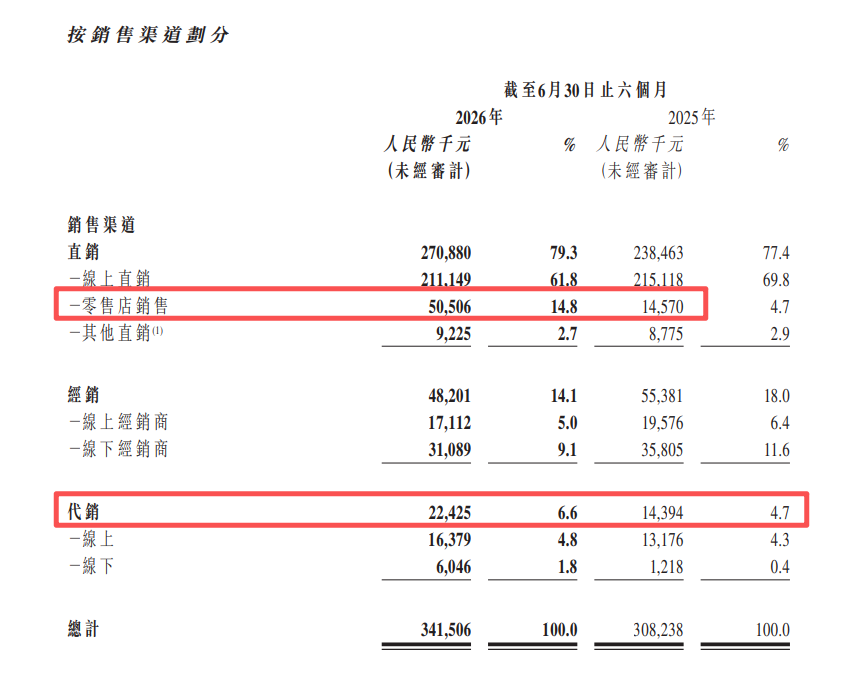
From the channel side, the continuous expansion of revenue is mainly due to the rapid expansion of offline direct sales networks and the expansion of the dropshipping business. As of June 30, 2026, the total number of the company's direct-run stores reached 65, a net increase of 55 over 10 in the same period last year, driving offline retail store revenue to surged 246.64% year on year to 50,506 million yuan.
At the same time, Master Tong is actively building a diversified sales ecosystem: on the one hand, he is working with high-end supermarkets such as OLE, Sam, and Fat Donglai; on the other hand, he has co-developed cultural tourism IPs such as Wudang Mountain, and has reached sales cooperation with platforms such as Bilibili, World Wide Cat Animation, and Reading Group. The multi-pronged approach promoted a year-on-year increase of 55.79% in sales revenue to 22.425 million yuan.
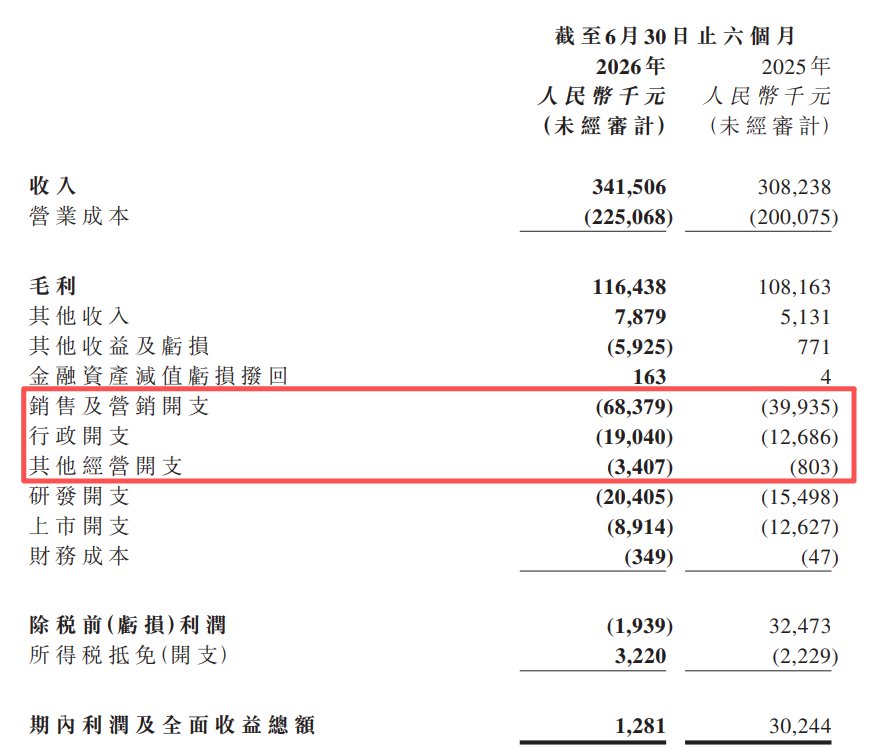
At the same time as revenue grew by double digits, Master Tong's net profit plummeted 95.8% because of the rapid expansion of the company's offline direct-run stores (net increase of 55 over the reporting period), which led to a sharp increase in fixed costs such as rent and labor. Revenue has not yet been fully released during the new store development period, which continues to suppress profit performance in the short term.
Judging from past channel revenue performance, Master Tong's revenue mainly comes from online. In the first half of 2025, online channel revenue accounted for 80.42% of the company's total revenue, and after the listing raised capital, the number of direct offline stores accelerated. In the first half of the year alone, the number increased from 10 to 65 in the same period. This aggressive style of “killing profits and changing scale” is essentially a gamble where short-term financial performance is exchanged for long-term channel barriers.
Judging from the strategic intention, the management is clearly trying to use offline experience to solve the conversion problem of “low frequency, high customer unit price” products such as copper ornaments — it is difficult for consumers to pay for a bronze statue that can easily cost thousands of yuan, and the physical touch, craft display, and immersive atmosphere provided by offline stores can indeed effectively establish brand trust and increase conversion rates.
At the same time, in a passive situation where stock prices continue to be sluggish, Master Tong quickly launched an offline network to tell the capital market a new story of a “new retail cultural and creative group” in an attempt to maintain market attention using the speed of opening stores.
However, the financial costs of this kind of expansion are extremely heavy. The rent, decoration, personnel wages, and sample display of new stores are all upfront costs, and sales of new stores require months or even longer to climb. As a result, sales expenses skyrocketed by more than 70% over the same period last year, directly “blowing up” the profit sheet.
Although offline retail revenue apparently surged 246.64% to 50,506,000 yuan, when spread out to the 55 new stores, the average monthly revenue of a single store was only about 128,000 yuan. After bearing the high rents in the core business districts of Tier 1 and 2 cities, it is almost impossible to cover the mismatch between cost preemption and revenue lag. This is the underlying logic of this “disgusting” report.
But the real risk of this short-term blowout of offline stores is that it pushes the company into an extremely dangerous balance bar — within the next 1 to 2 years, the risk of closing stores impacting profits far outweighs the certainty that performance will be released at an accelerated pace. First, Master Bronze has a total market value of only 1.6 billion yuan, and the company's market share has reached 35%. This means that the crypto space for offline stores is very limited. If the 65 stores are distributed in the core business district of Tier 1 and 2 cities, they are basically close to the maximum coverage limit of the effective customer base, and continuing expansion will only fall into the domestic consumption of “left and right.”
Second, unlike Bubble Mart's model of relying on blind boxes with high frequency, low unit price, and strong repurchase of products, Master Copper relies on copper ornaments for 96.2% of its revenue, which is a typical “one-size-fits-all deal”. Single stores that lack the support of high-frequency products make it difficult to increase natural traffic and repurchase rates. Once the consumption environment fluctuates, this type of consumption that is not just needed bears the brunt.
More importantly, from managing 10 stores to 65 stores is a qualitative change in the management dimension. Loss of control in site selection, inventory, training, and after-sales can cause individual stores to lose money, and the current state of “increasing revenue without increasing profit” just indicates that the management team has not yet succeeded in this model. Once some stores fail to achieve break-even within 6 to 12 months, the company will inevitably close inefficient stores in order to stop bleeding, and renovation impairment, penalties, and severance expenses caused by closing the store will have a secondary impact on profits. At that time, the “pain of closing the store” will once again hit the already weak stock price hard.
Therefore, Master Copper's aggressive offline expansion strategy is the only hope that the single-store model can quickly run through, and whether gold culture, creativity, or plastic games can actually break the single dependency on copper. However, from now on, both of these prerequisites are far away, and there is not much time left for Master Tong. Whether the early shareholders can exit in a decent manner depends on this risky step.