
Should Chassis Free Home Debut Require Action From Cavco Industries (CVCO) Investors?
- Cavco Industries introduced the Grande Arbor, described as the first HUD-code manufactured home built without a permanent steel chassis. This reflects new federal rules that removed the chassis requirement and allows ground set installation, multistory potential and a multigenerational double suite layout.
- The frameless, multigenerational design points to Cavco Industries leaning into HUD-code flexibility, higher curb appeal and demand for shared living arrangements, as more households combine under one roof for cost and caregiving reasons.
- We will look at how Cavco Industries' investment narrative is influenced by frameless HUD-code homes that target multigenerational housing demand.
Cavco Industries Investment Narrative Recap
Cavco Industries appeals to investors who think factory-built housing will keep playing a bigger role in affordability and multigenerational living. The Grande Arbor fits that thesis by showing how HUD-code flexibility can broaden product mix across communities, from traditional subdivisions to higher density infill, which could support utilization and pricing power if demand holds.
The key near term swing factor is still order consistency in a rate sensitive customer base, combined with cost pressures from tariffs on imported components. The frameless HUD product does not remove those risks. It mainly adds another tool for Cavco to target pockets of demand rather than a single, decisive short term catalyst.
The Grande Arbor reveal ties directly back to earlier policy momentum around the 21st Century ROAD to Housing Act and broader recognition of manufactured housing in federal housing conversations. That regulatory backdrop is one of the bigger long term drivers for Cavco Industries because zoning acceptance and chassis flexibility influence where its homes can actually be placed.
For you as a shareholder, the operational question is whether Cavco can turn this regulatory shift into consistent plant throughput, while managing exposure to tariffs, regional softness and pricing competition. Execution on frameless HUD designs, along with existing efforts in automation and financial services, will shape how much operating leverage Cavco extracts from any incremental demand created by those policy changes.
What The Street Is Pricing In For Cavco Industries
Cavco Industries' consensus storyline points to US$2.8b in revenue and US$241.8m in earnings by 2029, based on analyst models that assume the company can steadily scale factory-built housing and modestly lift profitability over time.
Cavco Industries' narrative projects US$2.8b revenue and US$241.8m earnings by 2029. This corresponds to 7.6% yearly revenue growth and an earnings increase of about US$51.2m from US$190.6m today.
Uncover why Cavco Industries' fair value indicates a 15% potential upside to its current price that could narrow quickly.
Exploring Other Perspectives
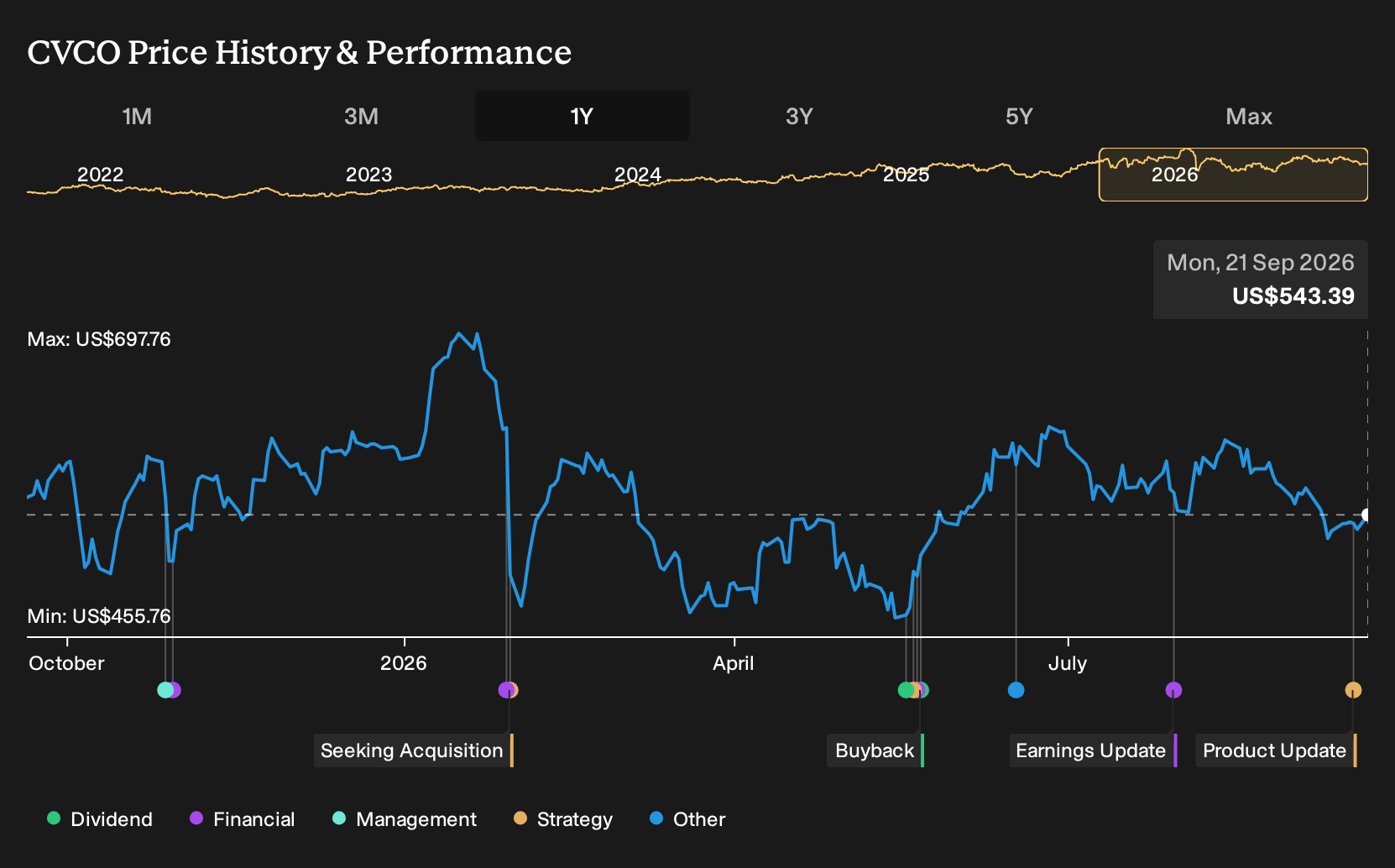
Two fair value estimates from the Simply Wall St Community span a wide range, from about US$258 to US$625, which shows how far apart views on Cavco Industries can be. Before you lean on either extreme, weigh tariff risk, uneven regional demand and the potential impact of HUD-code policy changes on future housing appetite.
Explore another Cavco Industries fair value estimate, including one that suggests there could be as much as 15% upside from the current price.
The Verdict Is Yours
Don't just follow the ticker. Dig into the data and build a conviction that's truly your own.
- A great starting point for your Cavco Industries research is our analysis highlighting 1 key reward that could impact your investment decision.
- See our latest analysis for Cavco Industries. The report includes a comprehensive fundamental analysis summarized in a single visual, the Snowflake, making it easy to evaluate Cavco Industries' overall financial health at a glance.
Looking For More Ideas Beyond Cavco Industries?
If you want to put Cavco Industries in context and spot other potential opportunities, the Simply Wall St Screener can help you quickly filter for businesses that match your risk tolerance, income needs or quality thresholds.
- For investors who care most about balance sheet strength and resilient fundamentals, scan through our list of solid balance sheet and fundamentals (23 results) to see which companies meet that standard.
- If value is your priority and you prefer companies that screen as potentially mispriced on quality and cash flow, start with the 30 high quality undervalued stocks and see what else lines up with your checklist.
- Income focused investors who want yield with a focus on durability can work through the 7 dividend fortresses and compare those payouts with your own risk and return goals.
This article by Simply Wall St is general in nature. We provide commentary based on historical data and analyst forecasts only using an unbiased methodology and our articles are not intended to be financial advice. It does not constitute a recommendation to buy or sell any stock, and does not take account of your objectives, or your financial situation. We aim to bring you long-term focused analysis driven by fundamental data. Note that our analysis may not factor in the latest price-sensitive company announcements or qualitative material. Simply Wall St has no position in any stocks mentioned.
Have feedback on this article? Concerned about the content? Get in touch with us directly. Alternatively, email editorial-team@simplywallst.com