
3 Insurance Stocks Whose Bond Portfolios Could Benefit From Higher Long Term Yields
Global bond yields near post-crisis highs, oil back above $105, and a possible Fed hike in October are shaking up almost every asset class. Long-term rates are suddenly the main character again, affecting how future cash flows are valued and which balance sheets feel the strain or relief. This article walks through 3 insurers from the Global Life & P&C Insurers Benefiting from Higher Long-Term Yields screener that appear especially exposed to this rate shock, and explains what that might mean for your portfolio decisions.
The insurers covered below are only a starting sample, since the full screen surfaced 18 more companies with equally compelling rate exposure stories that are not included here. If you want to identify which of those could fit your own risk profile and time horizon, head straight into the Global Life & P&C Insurers Benefiting from Higher Long-Term Yields screener.
Prudential (LSE:PRU)
Overview: Prudential is a multinational life and health insurer focused on Asia and Africa, using long-term fixed-income portfolios to support savings, protection, and investment products across fast-growing markets.
Operations: Prudential generates most of its revenue from insurance operations in Hong Kong at about $12.8b, plus Singapore $9.4b and other Asian markets.
Market Cap: £23.6b
Prudential matters here because higher long-term yields directly shape the return it can earn on the bond portfolios that sit behind its life and health policies. This in turn affects how confidently it can support dividends, buybacks, and future growth in Asia.
"Prudential's expansion and strengthening of agency and bancassurance distribution in high-growth Asian markets, supported by quality recruitment programs like PRUVenture and new major partnerships (e.g., Bank Syariah Indonesia), position the company to capitalize on rising insurance demand and the growing middle class in Asia."
What really moves the needle from here is how one unseen pressure on future margins and surplus generation ultimately resolves over the next few years.
That pressure point is exactly where the story gets interesting, and the full narrative for Prudential unpacks how Prudential’s rate sensitivity, capital levers, and Asia footprint could be accelerating or masking value.

Chesnara (LSE:CSN)
Overview: Chesnara is a UK based life assurance and pensions group that manages long term savings promises backed by bond heavy investment portfolios.
Operations: Chesnara generates most of its £294 million business revenue in the UK, alongside £89 million from Movestic in Sweden and £149 million segment adjustments.
Market Cap: £819.1 million
Chesnara provides exposure to how higher long term yields feed into a life insurer’s bond portfolio. Its UK and European pensions and savings contracts are closely tied to fixed income returns, alongside a 6.36% dividend yield and recent profitability improvement. One key question is how far that payout can lean on rate support before cash generation has to do more of the work.
That payout question is exactly where things get interesting, and the 2 key rewards and 1 important warning sign to see how Chesnara’s yield story could be amplified or start to strain.

Japan Post Holdings (TSE:6178)
Overview: Japan Post Holdings runs a nationwide postal network combined with large life insurance and banking operations that rely heavily on long-duration bond portfolios.
Operations: Japan Post Holdings generates most of its ¥11.5b revenue in Japan, led by ¥5.6b from life insurance, ¥3.0b from banking, and ¥2.3b from postal and logistics.
Market Cap: ¥6.9b
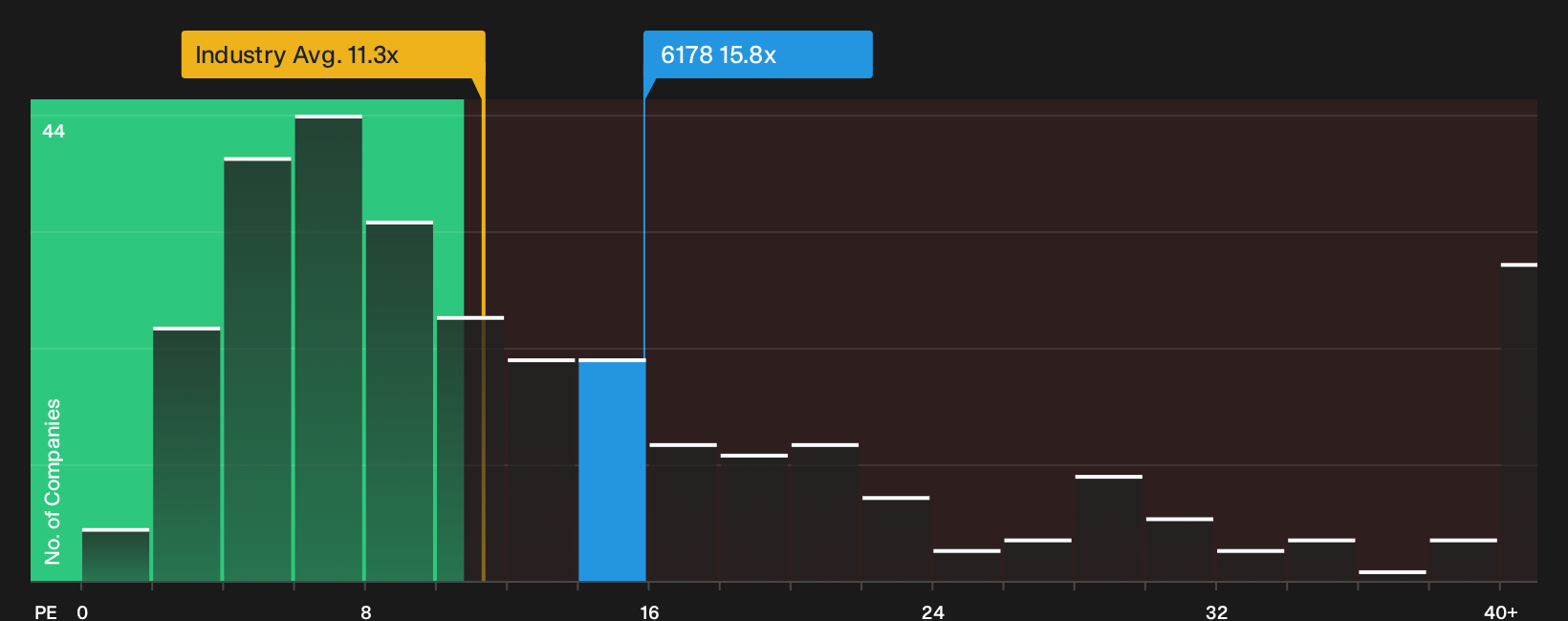
Japan Post Holdings is directly linked to the higher long term yield theme through its sizeable life insurance and banking arms, which together hold a large pool of fixed income assets in Japan. That scale, combined with a 2.4% dividend yield and a P/E of 15.8x, focuses attention on what may happen if a single assumption about future cash generation and payouts changes.
If that single assumption matters to you, review the 1 key reward and 1 important warning sign to see where Japan Post Holdings’ yield exposure could be quietly reshaping future payouts.
Curious About What You Might Be Missing Next
Fresh ideas move first. Some opportunities are already building breakout momentum while others are still under the radar for now, before the crowd catches on, so act now.
- Spot income workhorses early and scan a curated 1 dividend fortresses before yields drop or prices start moving away from today’s levels.
- Track the next infrastructure backbone and review carefully selected 39 power grid technology and infrastructure stocks while grid spending stories still look underappreciated by most investors.
- Target future computing breakthroughs and assess hand-picked 25 quantum computing stocks while expectations, valuations, and sentiment are still forming.
This article by Simply Wall St is general in nature. We provide commentary based on historical data and analyst forecasts only using an unbiased methodology and our articles are not intended to be financial advice. It does not constitute a recommendation to buy or sell any stock, and does not take account of your objectives, or your financial situation. We aim to bring you long-term focused analysis driven by fundamental data. Note that our analysis may not factor in the latest price-sensitive company announcements or qualitative material. Simply Wall St has no position in any stocks mentioned.
Have feedback on this article? Concerned about the content? Get in touch with us directly. Alternatively, email editorial-team@simplywallst.com