
Strategy Increases Its Bitcoin Holding By 950. How to Play MSTR Stock.
As the proverbial crypto winter shows signs of ending, the world's largest holder of Bitcoin (BTCUSD) is stepping in. Strategy (MSTR), formerly known as MicroStrategy, recently bought 950 BTC, parting with $75.7 million for an average purchase price of $79,670 per coin.
The latest filing from the company now places the company's total Bitcoin holdings at 846,000, with Strategy expending a total of $63.8 billion over the years to acquire the cryptocurrency. What does the company's latest move indicate about the wider environment around Bitcoin and its own strategy? Let's take a closer look.
About Strategy
Founded in 1989 primarily as a business-intelligence software company, Strategy has effectively transformed itself into a Bitcoin treasury and capital-markets vehicle, using common stock, preferred stock, convertible debt, and other financing instruments to accumulate BTC. The company made this transformation in 2020, arguing that holding large amounts of cash and short-term assets exposed the company to monetary debasement and that Bitcoin could serve as a long-term store of value.
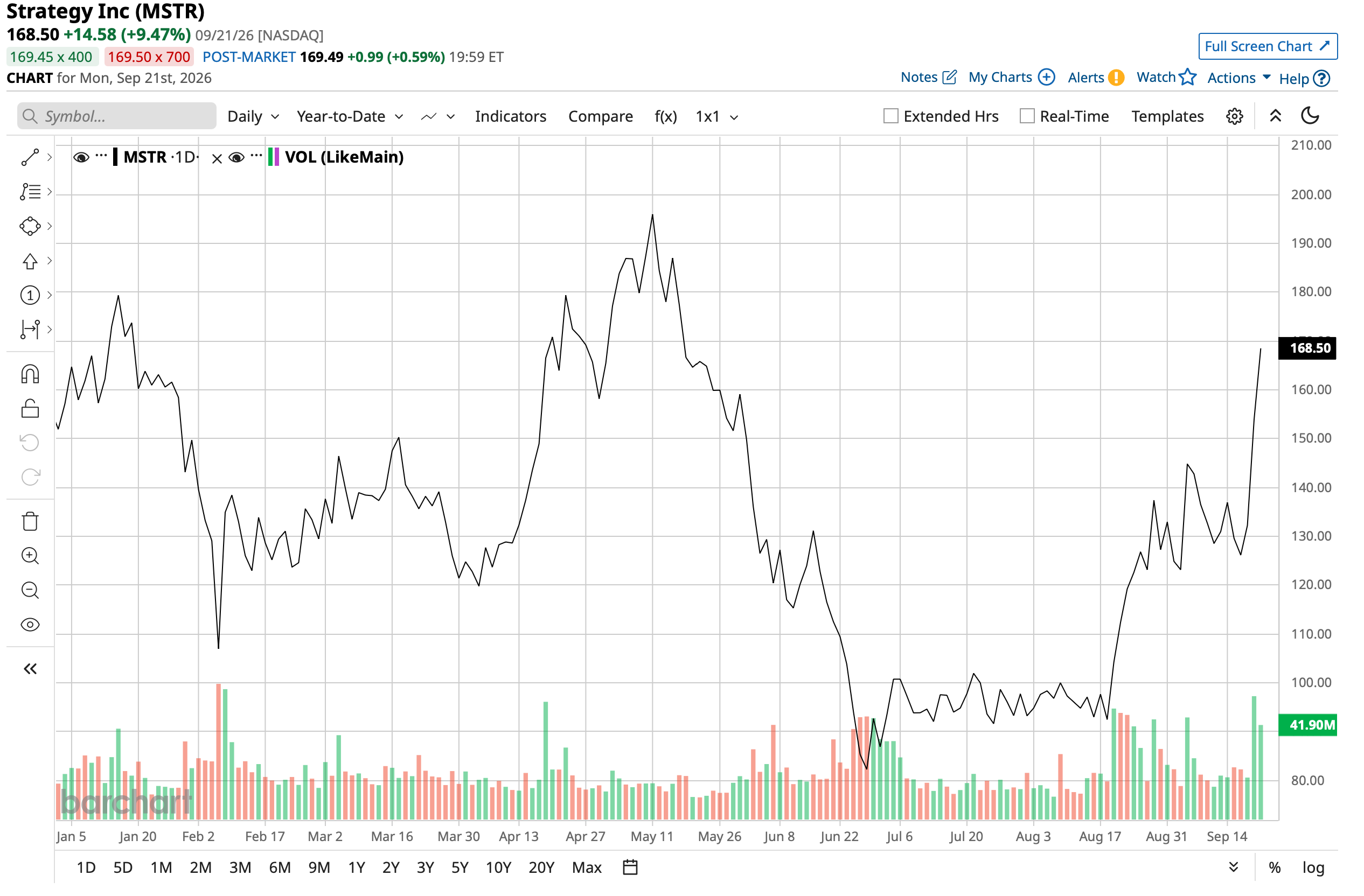
Strategy's market capitalization was just over $1 billion at the beginning of 2020. Now valued at a market cap of $62.3 billion, MSTR stock is up 7% on a year-to-date (YTD) basis.
All About Timing
Bitcoin's price performance in 2026 has been nothing to write home about, as BTC is down roughly 4% so far this year. Yet, the past six months have seen a smart recovery of 21% from the world's largest cryptocurrency.
Industry experts have become increasingly bullish on BTC recently. Bitwise Asset Management Chief Investment Officer Matt Hougan is one such expert. After Bitcoin recently crossed the $85,000 mark for the first time since January 2026, Hougan opined, “I think this will actually be the strongest and longest-running bull market in crypto’s history.”
On the other hand, Greyscale Head of Research Zach Pandl reckons that $58,000 is a strong support. “That would still be my view that that was the bottom for this bear market phase,” said Pandl. Coinbase (COIN) CEO Brian Armstrong recently echoed that thought, saying “I personally think we've seen the bottom of the Bitcoin price in this cycle.”
Meanwhile, the Senate's recent failure to pass the Clarity Act has not dented enthusiasm, primarily because the act would have given clarity about the market structure while not affecting the legitimacy of cryptos as digital assets. Moreover, the U.S. Securities and Exchange Commission (SEC) and the U.S. Commodity Futures Trading Commission (CFTC) can continue using their existing statutory authorities to establish rules and provide guidance. On May 29, the CFTC also approved the listing of a true Bitcoin perpetual futures contract on a CFTC-registered exchange, establishing a regulatory pathway for crypto perpetuals in the United States.
This is a positive development for the crypto industry, especially in the U.S., as this market has historically developed largely offshore because U.S. regulators haven't provided a clear pathway for offering true perpetuals domestically. Moreover, perpetual contracts are used for hedging, directional exposure, and expressing funding-rate views. Coinbase Research describes these “perps” as a central part of crypto market structure and says regulated U.S. access removes some of the compliance and operational friction that had kept institutions away.
Considering all this, Strategy revealed another BTC purchase on Aug. 31, buying 4,603 BTC for a total value of about $370 million.
Q2 Showed Improvement, But There's a Long Way to Go
Strategy's second-quarter 2026 results were marked by revenue and earnings misses. However, total revenue rose 7% year-over-year (YOY) to $122.4 million, while the company moved into the red with a loss of $24.45 per share compared to EPS of $36.23 in the prior-year period.
Having said that, these traditional metrics are not what Strategy should be assessed upon. Strategy is a Bitcoin treasury company, and the relevant metrics are different.
BTC yield is a vital metric, and a drop in the same to 5% from 8.7% in the year-ago period is a concern. However, an eventual rise in Bitcoin prices should lead to an improvement in Q3. The company also increased the number of BTC held in the quarter to 846,000 from 597,325 in the same period a year ago, as BTC per share changed for the better to 210,824 from 190,100.
Meanwhile, up until June 30, Strategy continued to be a net buyer and net issuer of STRC, its preferred stock. Capital raised for the quarter rose to $8.4 billion as the company continues to access the capital markets to fund its BTC purchase and preferred dividend payments.
What Do Analysts Think of MSTR Stock?
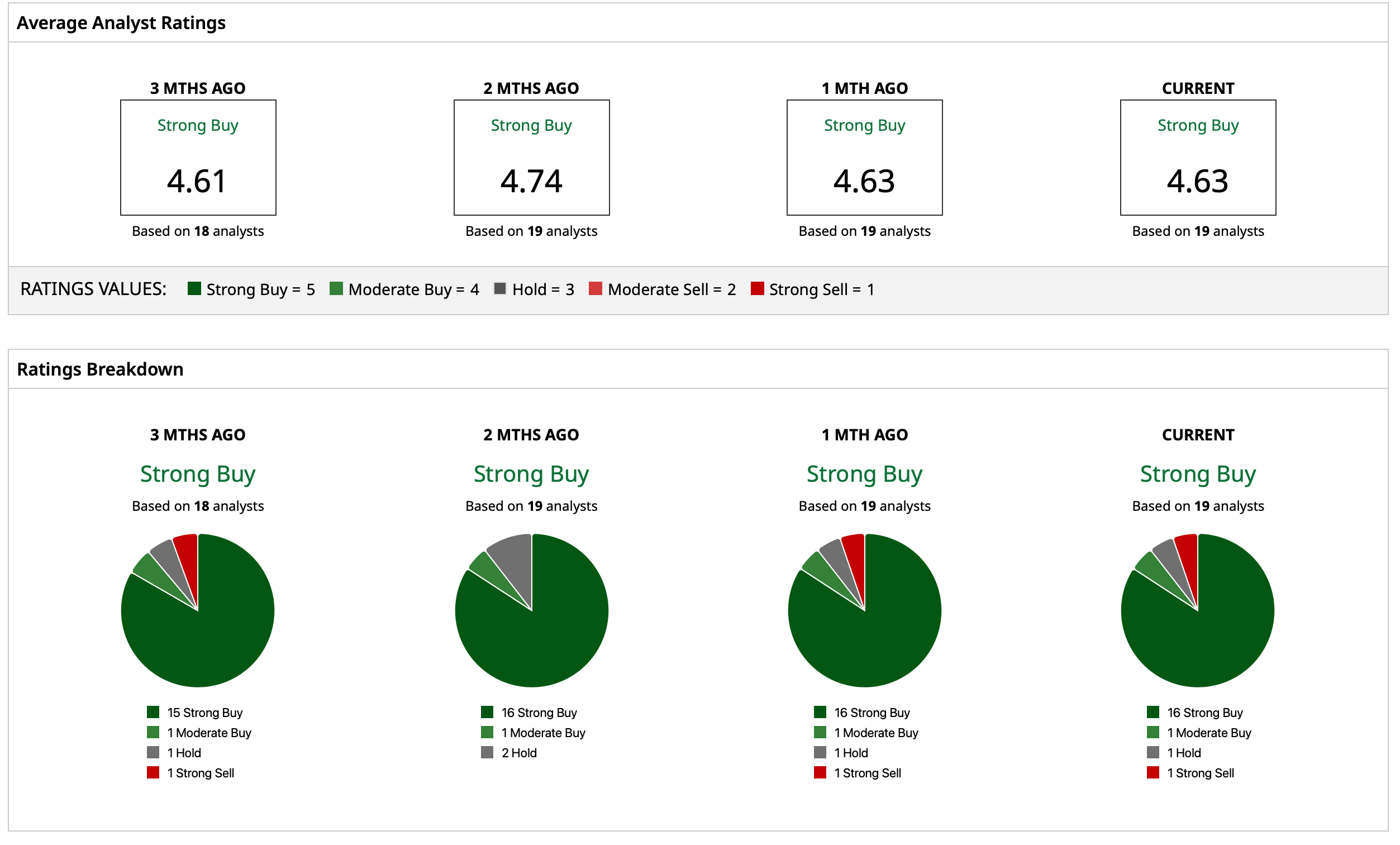
Overall, analysts have a consensus “Strong Buy” rating for MSTR stock. Out of 19 analysts covering the stock, 16 have a “Strong Buy” rating, one has a “Moderate Buy” rating, and two a “Hold” rating. The mean target price of $228.47 indicates potential upside of about 41% from current levels.
On the date of publication, Pathikrit Bose did not have (either directly or indirectly) positions in any of the securities mentioned in this article. All information and data in this article is solely for informational purposes. For more information please view the Barchart Disclosure Policy here.