
Did Reactor Shutdown Just Shift Kansai Electric Power’s (TSE:9503) Investment Narrative?
- Kansai Electric Power Company reported that in September 2026 it manually shut down Mihama Nuclear Power Station Unit 3 after an inspection found water dripping from insulation around a valve connected to the high pressure feedwater system. The company noted there was no radiological impact on the surrounding environment.
- The decision to halt the reactor during a refueling outage to inspect a non isolated section of piping highlights how safety driven maintenance choices can affect nuclear availability, operating costs and the timing of Kansai Electric Power Company’s broader investment program.
- We will now look at how Kansai Electric Power Company's investment narrative is affected by this precautionary reactor shutdown decision.
Kansai Electric Power Company Investment Narrative Recap
To own Kansai Electric Power Company, you need to be comfortable with a utility that is heavily investing in long lived assets while signaling a three year plateau in profitability. The big swing factor in the near term is how smoothly nuclear and thermal maintenance runs, because prolonged outages or lower nuclear capacity factors could pressure margins in the Energy and T&D segments.
This Mihama Unit 3 shutdown looks operational rather than financial at this stage, with no radiological impact disclosed and no immediate hit flagged to guidance. The more pressing risk for the next few years remains disciplined execution on ¥2.5t of planned spending and managing fuel and maintenance cost inflation so that recurring profit does not slip further.
The September 17 Mihama manual shutdown sits squarely in the middle of Kansai Electric Power Company's existing nuclear maintenance story. Management has already indicated that large scale work on reactors can weigh on nuclear capacity factors, so unexpected inspections during a refueling outage add to the risk that availability and cost timing are choppy rather than smooth.
That matters because the group is planning a cumulative ¥15t of investment to 2040 and is aiming for a ROIC spread of 100 to 150 basis points over WACC. Every unplanned stoppage or inspection increases execution risk around that capital plan and makes it more important that asset recycling, cost control and cash generation stay on track to support the heavier spending phase.
Kansai Electric Power Company is being modeled on analyst estimates that point to revenue of ¥4,479.6b and earnings of ¥326.3b by 2029, based on 2.6% yearly top line growth and an earnings decline of ¥91.6b from ¥417.9b today.
Uncover why Kansai Electric Power Company's fair value indicates a 5% potential upside to its current price, which could narrow quickly.
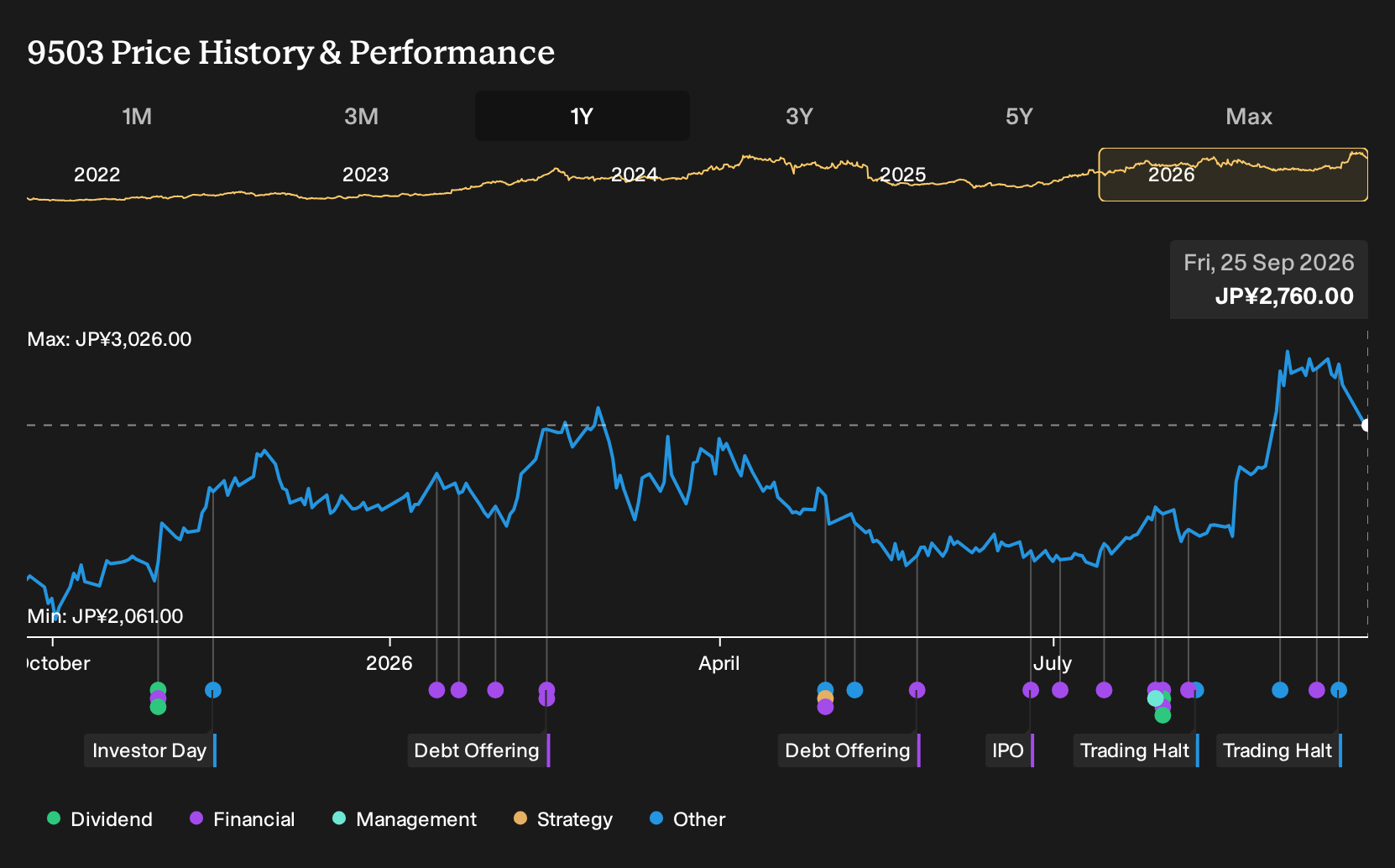
Exploring Other Perspectives
Some bullish analysts frame the same Mihama shutdown as a temporary bump in a broader Kansai Electric Power Company earnings story. Before this event, the most optimistic forecasts were looking for revenue of ¥4,810.5b and earnings of ¥374.5b by 2029. You can treat this leak as a test of that optimism and compare several competing views.
Explore 2 other Kansai Electric Power Company fair value estimates, including one that suggests it could be worth as much as ¥2892.
Reach Your Own Conclusion
Don't just follow the ticker; dig into the data and build a conviction that's truly your own.
- A great starting point for your Kansai Electric Power Company research is our analysis highlighting 2 key rewards and 4 important warning signs that could impact your investment decision.
- See our latest analysis for Kansai Electric Power Company. The report includes a comprehensive fundamental analysis summarized in a single visual, the Snowflake, making it easy to evaluate Kansai Electric Power Company's overall financial health at a glance.
Looking For More Investment Ideas Beyond Kansai Electric Power Company?
If Kansai Electric Power Company has sharpened your focus on where risk, regulation and capital intensity meet, it can help to compare it with a wider bench of opportunities. Use the Simply Wall St Screener to put Kansai Electric Power Company side by side with other stocks that match your income, quality or risk preferences.
- If you want income to feel more predictable, scan for companies we group as 14 dividend fortresses that might suit a yield focused approach.
- When quality and balance sheet strength matter more than excitement, filter for a list of solid balance sheet and fundamentals (22 results) that you can stress test against your own risk tolerance.
- If you prefer to hunt for under the radar ideas, sort through a 74 high quality undiscovered gems that could help broaden your watchlist beyond the usual tickers.
This article by Simply Wall St is general in nature. We provide commentary based on historical data and analyst forecasts only using an unbiased methodology and our articles are not intended to be financial advice. It does not constitute a recommendation to buy or sell any stock, and does not take account of your objectives, or your financial situation. We aim to bring you long-term focused analysis driven by fundamental data. Note that our analysis may not factor in the latest price-sensitive company announcements or qualitative material. Simply Wall St has no position in any stocks mentioned.
Have feedback on this article? Concerned about the content? Get in touch with us directly. Alternatively, email editorial-team@simplywallst.com