
3 Undervalued Stocks Trading Up To 42% Below Fair Value
Foreign investors have poured a record US$942b into US shares over the past year, even as many worry that broad market valuations look stretched. When money chases index-heavy favourites, quieter cash generators can be left trading below what their future cash streams might justify. That gap is where opportunity lives. This article highlights three stocks that screen as potentially underpriced based on their cash flows.
The three stocks in this piece are simply a starting sample, with the full screen surfacing 40 more cash flow driven opportunities that share similarly compelling stories but sit outside the scope of this article. To see the complete list and quickly identify which ideas deserve a place on your watchlist, head straight to the Undervalued Stocks Based On Cash Flows screener.
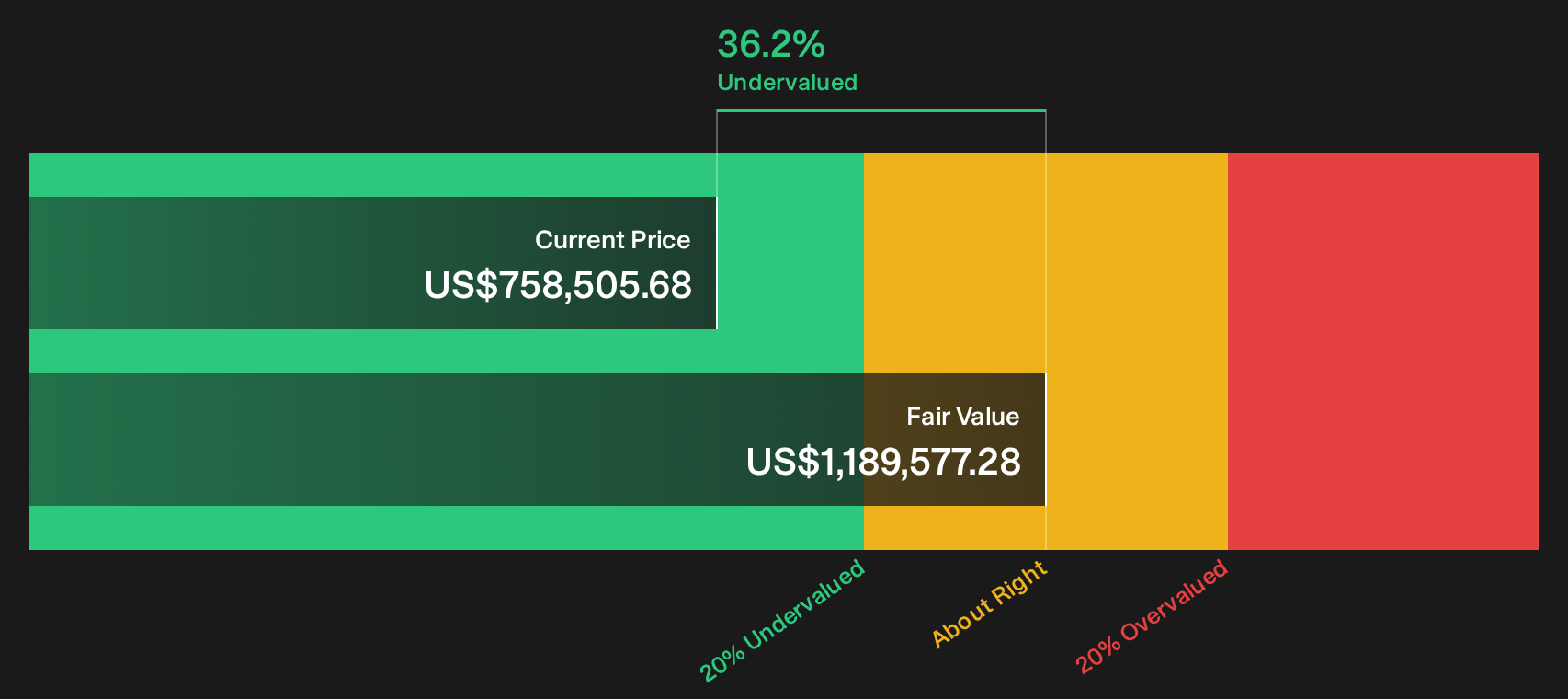
Berkshire Hathaway (BRK.A)
Overview: Berkshire Hathaway is a diversified holding company that owns insurance, rail, utilities, energy, manufacturing, retail and service businesses that generate substantial cash.
Operations: Berkshire earns most of its revenue from manufacturing at US$82.99b, PTC at US$47.84b, McLane at US$50.28b, insurance, service, retail and Berkshire Hathaway Energy at US$26.92b.
Market Cap: US$1.08t
Berkshire Hathaway matters in this cash flow focused screen because its regulated energy arm, insurance engines and rail operations together provide a powerful platform for long-term cash generation that can support a discounted DCF signal.
"The cash fortress: Berkshire's cash and short-term Treasuries hit a staggering, record-breaking $397.4 billion."
The real question now is how one quiet shift in where that money is deployed ultimately reshapes future earnings power.
That deployment question is exactly what the full narrative for Berkshire Hathaway unpacks, including how Berkshire Hathaway’s cash war chest could accelerate or stall future compounding potential.
Broadcom (AVGO)
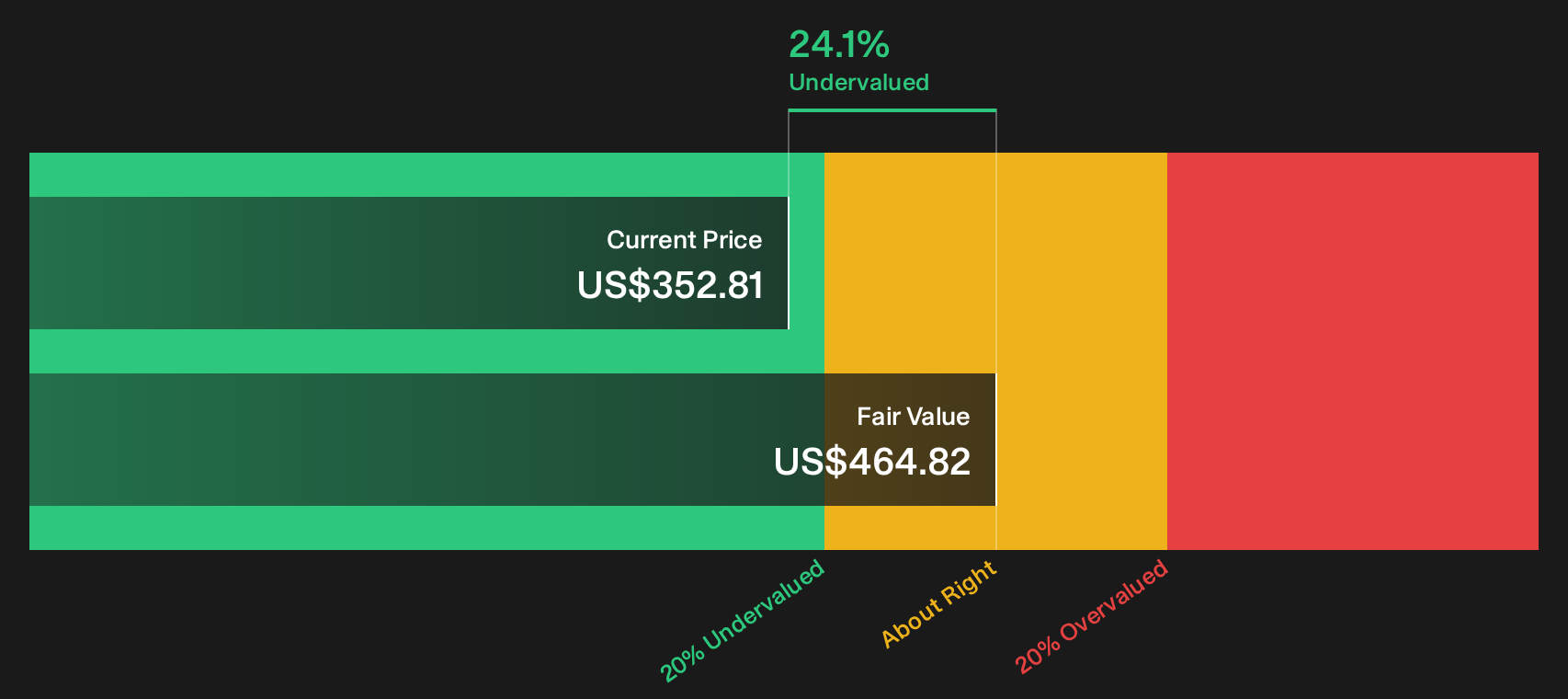
Overview: Broadcom is a digital infrastructure and semiconductor group whose VMware-based private cloud and mainframe software generate high-margin, recurring cash flows.
Operations: Broadcom produces US$59.44b from Semiconductor Solutions and US$29.67b from Infrastructure Software, reflecting a sizeable yet smaller software contribution.
Market Cap: US$1,684.18b
For this cash flow focused screen, Broadcom matters because its VMware powered infrastructure software provides recurring license and maintenance income that can help steady the more cyclical chip activity around it.
"Broadcom is generating substantial free cash flow, expanding its custom silicon business, strengthening its position in networking, and integrating software assets that further diversify earnings."
What happens if one unseen regulatory and pricing pressure around those VMware licenses shifts the balance between rich margins and future demand?
If that pressure really bites, the full narrative for Broadcom shows how Broadcom’s cash engine could still accelerate or stall in ways the headline numbers barely hint at.
Amazon.com (AMZN)
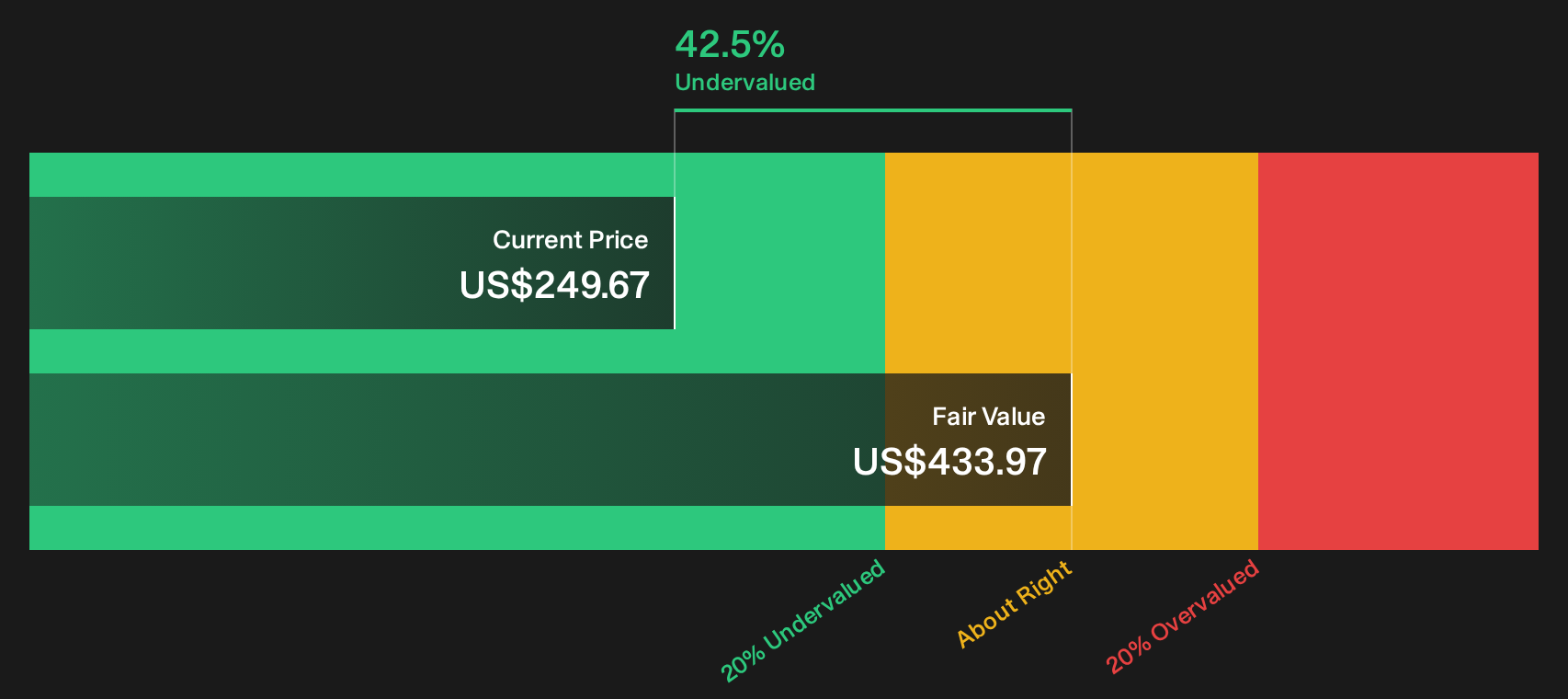
Overview: Amazon.com runs a global e commerce, advertising and subscription platform, while AWS supplies cash rich cloud and AI services.
Operations: Amazon.com generates about US$453.67b from North America, US$173.61b from International, and US$148.40b from AWS.
Market Cap: US$2.69t
Amazon.com matters here because AWS turns a broad retail and advertising ecosystem into a powerful cash machine that anchors the undervalued cash flow story.
"AWS reaccelerated through 2025 with roughly 20% year-over-year growth, exiting the year with an annualized revenue base exceeding $130 billion."
The real swing factor is how one huge wave of AI focused infrastructure spending ultimately reshapes future margins and free cash generation.
That margin story is only the starting point. The full narrative for Amazon.com reveals how Amazon.com’s AI spend, cash engine and risks could be decoupling from the headline cloud numbers.
Seeking Alternatives Before Others Catch On
Fresh ideas can move from quiet to flying once early buyers build momentum. Scan for potential breakouts while they are still under the radar and consider acting before attention broadens.
- Spot resilient cash generators before the crowd by running the list of solid balance sheet and fundamentals (24 results) that filters for stronger finances and cleaner fundamentals.
- Hunt for steady income plays with yields that could matter if prices drop by reviewing the curated 8 dividend fortresses.
- Target fast moving themes in automation and productivity by scanning the hand picked 93 robotics and automation stocks while valuations still reflect early innings.
This article by Simply Wall St is general in nature. We provide commentary based on historical data and analyst forecasts only using an unbiased methodology and our articles are not intended to be financial advice. It does not constitute a recommendation to buy or sell any stock, and does not take account of your objectives, or your financial situation. We aim to bring you long-term focused analysis driven by fundamental data. Note that our analysis may not factor in the latest price-sensitive company announcements or qualitative material. Simply Wall St has no position in any stocks mentioned.
Have feedback on this article? Concerned about the content? Get in touch with us directly. Alternatively, email editorial-team@simplywallst.com