
Why Japan Domestic Demand Stocks Could Move On Bank Of Japan Signals
Japan’s central bank is hinting that the era of ultra-cheap money may not last forever, and that shift could quietly reshape the fortunes of Japan’s most ordinary sounding businesses: the everyday service providers tied to domestic spending. Rising inflation expectations, a possible move in the yen, and a slow grind higher in bond yields all pull different levers on these stocks at once. This article walks through three Japan domestic demand and services stocks that the latest Bank of Japan signals may meaningfully influence, and explains why those moves could matter for your portfolio decisions over the coming months.
The three stocks highlighted below are only a small sample of the opportunity set, since the full screen surfaced 35 more Japan domestic demand and services companies with equally compelling stories that are not covered here. To see the wider field and identify your own high-conviction ideas, head straight to the Japan domestic demand and services stocks screener.
Hokkaido Electric Power Company (TSE:9509)
Overview: Hokkaido Electric Power Company supplies electricity across Hokkaido and runs related energy, construction, telecoms and service businesses across Japan.
Operations: The group reports ¥198.3 billion from other related operations, with total revenue of ¥868.0 billion generated entirely within Japan.
Market Cap: ¥229.1 billion
Hokkaido Electric Power Company is a regional utility tied directly to Japan’s domestic spending, with yen-based tariffs and regulated demand shaping its earnings profile. The stock trades on a P/E below the broader Japanese market and carries a dividend yield near 3%, and future cash flow and debt coverage hinge on how one unseen pressure plays out.
That pressure point is the tariff and cash flow math hiding behind the headline numbers. Check the DCF valuation analysis for Hokkaido Electric Power Company to see what the current setup could be pricing in.
Odakyu Electric Railway (TSE:9007)
Overview: Odakyu Electric Railway runs rail, bus, and other transport alongside real estate and lifestyle services that rely on everyday Japanese consumer spending.
Operations: Odakyu Electric Railway generated ¥183.2b from transportation, ¥96.5b from real estate, and ¥160.0b from lifestyle services, with ¥422.2b earned in Japan.
Market Cap: ¥609.9b
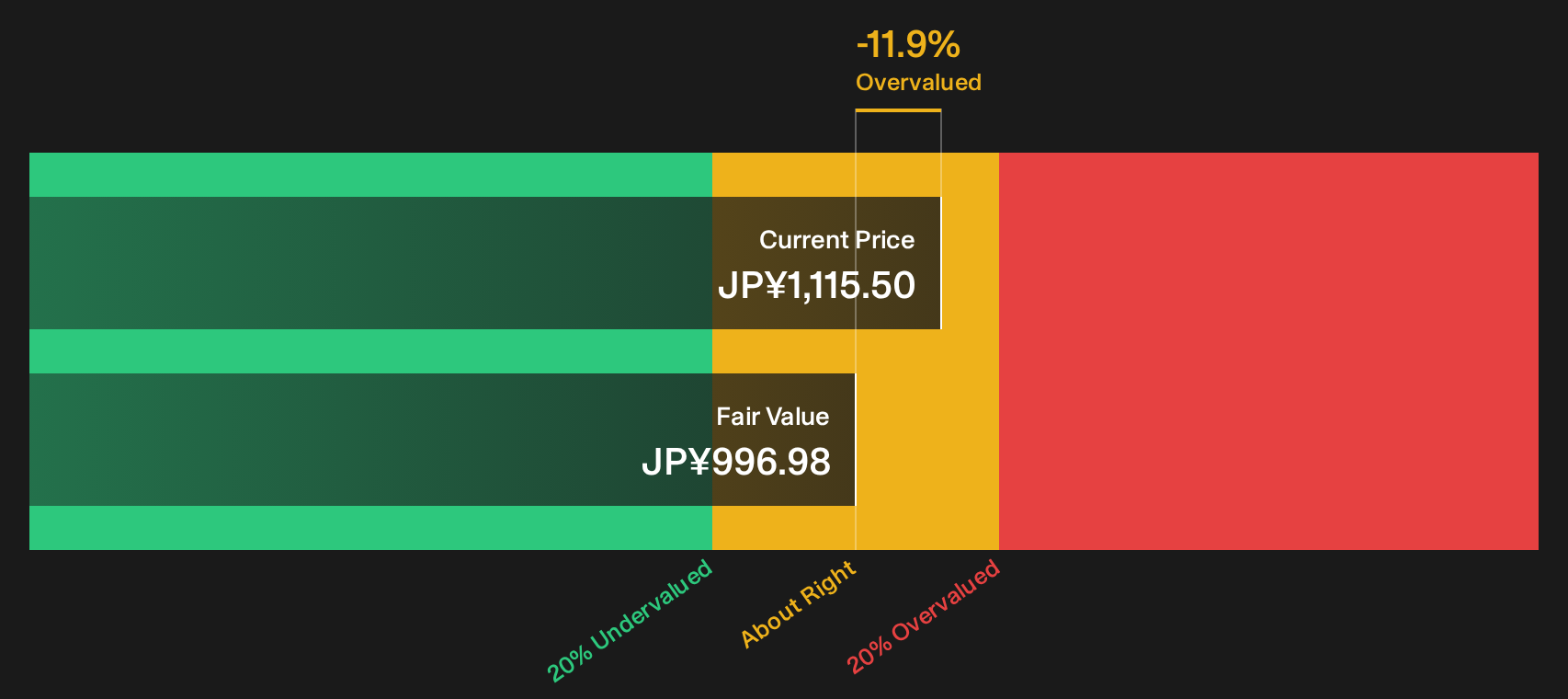
Odakyu Electric Railway is a pure Japan domestic story, with rail traffic, real estate, and retail activity all tied to yen-based spending. The combination of a 3.37% dividend yield and broad exposure to local commuters and shoppers can be appealing for income-focused investors, depending on how one unresolved cash flow constraint shapes dividend and debt coverage over time.
That unresolved constraint puts the focus squarely on Odakyu Electric Railway’s cash generation, so scan the Odakyu Electric Railway financial health report while the trade off between dividends and balance sheet strength is still taking shape.

Nippon Gas (TSE:8174)
Overview: Nippon Gas supplies LP and city gas and related appliances across Japan, giving it a direct link to everyday domestic energy use.
Operations: Nippon Gas generates ¥91.0 billion from LP Gas, ¥66.1 billion from City Gas, and ¥50.3 billion from Electricity, with all ¥212.5 billion earned in Japan.
Market Cap: ¥328.5 billion
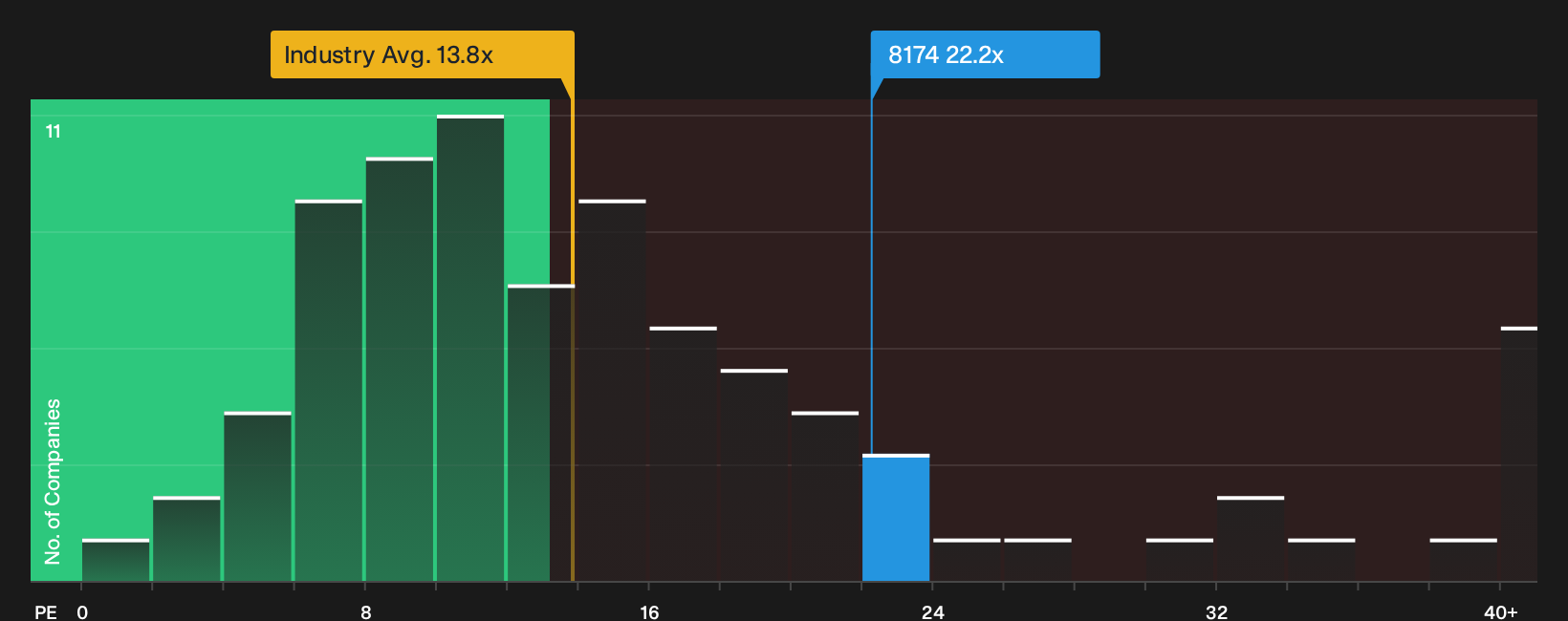
Nippon Gas is closely tied to yen-based household and commercial demand, with ROE around 22.9% and profit margins near 7% inside a utility-like domestic footprint. The stock currently trades on a P/E of 22.2x and has an uneven dividend history. A key consideration for investors is how one relatively quiet funding choice may affect that return profile over time.
That funding choice is exactly what sits behind the 3 key rewards and 1 important warning sign, which lays out where Nippon Gas’s returns could accelerate or quietly plateau next.
Seeking Alternatives Before Others Catch On
Fresh ideas move first. Slow money gets left holding what everyone already owns while the next breakout gathers momentum under the radar for now. Do not delay, consider opportunities early.
- Identify resilient compounders before they are widely crowded by scanning the curated 74 high quality undiscovered gems and evaluating potential quality stories while they are still flying below radars.
- Prepare for potential commodity shifts by reviewing the hand picked 36 elite gold producer stocks and assessing which producers might hold up if sentiment drops suddenly.
- Explore exposure to structural demand for electrification and data by checking the focused 17 top copper producer stocks before a broader group of investors starts targeting the same capacity constrained miners.
This article by Simply Wall St is general in nature. We provide commentary based on historical data and analyst forecasts only using an unbiased methodology and our articles are not intended to be financial advice. It does not constitute a recommendation to buy or sell any stock, and does not take account of your objectives, or your financial situation. We aim to bring you long-term focused analysis driven by fundamental data. Note that our analysis may not factor in the latest price-sensitive company announcements or qualitative material. Simply Wall St has no position in any stocks mentioned.
Have feedback on this article? Concerned about the content? Get in touch with us directly. Alternatively, email editorial-team@simplywallst.com