
Redwire Stock And 2 Top Defense Stocks To Own
Global markets are on edge as bond yields climb and oil trades above $108 a barrel, and money is hunting for businesses tied directly to national security and energy resilience. Governments are pushing ahead with big-ticket defense projects even as broader risk appetite swings around. This article discusses three stocks from the aerospace and military supplier universe that some investors may view as potential anchors in a long term portfolio in this kind of backdrop.
The three aerospace and defense stocks covered below are only a sample. The full screen surfaces 313 more companies supplying hardware, software, and services to this part of the economy that are not discussed in this article.
If you want to identify and analyze a wider range of potential ideas across the sector, head straight to the Aerospace And Defense screener to filter for the setups that best fit your own conviction and risk profile.
Redwire (RDW)
Redwire is a pure play on space hardware and mission services, supplying the sensors, payloads and platforms that sit directly inside government and commercial aerospace and defense programs.
Redwire generates about US$208.9 million from its Space segment and US$217.4 million from Defense Tech, reflecting a fairly balanced mix across core space infrastructure and defense technology lines, and the stock carries a market value of roughly US$2.9b.
"The combination with Edge Autonomy and the shift to a scalable space and defense platform is already reflected in year-over-year revenue of US$103.4 million in Q3 2025 and adjusted gross margin of 27.1%. This could support further operating leverage and earnings as cost savings and lean programs flow through SG&A."
What happens if one pressure on Redwire’s ability to turn that growing backlog into higher quality margins moves in the wrong direction?
If that pressure point matters to your thesis, read the full narrative for Redwire to see how Redwire’s platform shift could accelerate or stall from here.

General Electric (GE)
General Electric, now branded GE Aerospace, is a heavyweight in jet propulsion for both commercial airlines and defense programs. This is exactly why it sits in an Aerospace and Defense screen that looks for real engine and aftermarket exposure, not peripheral suppliers.
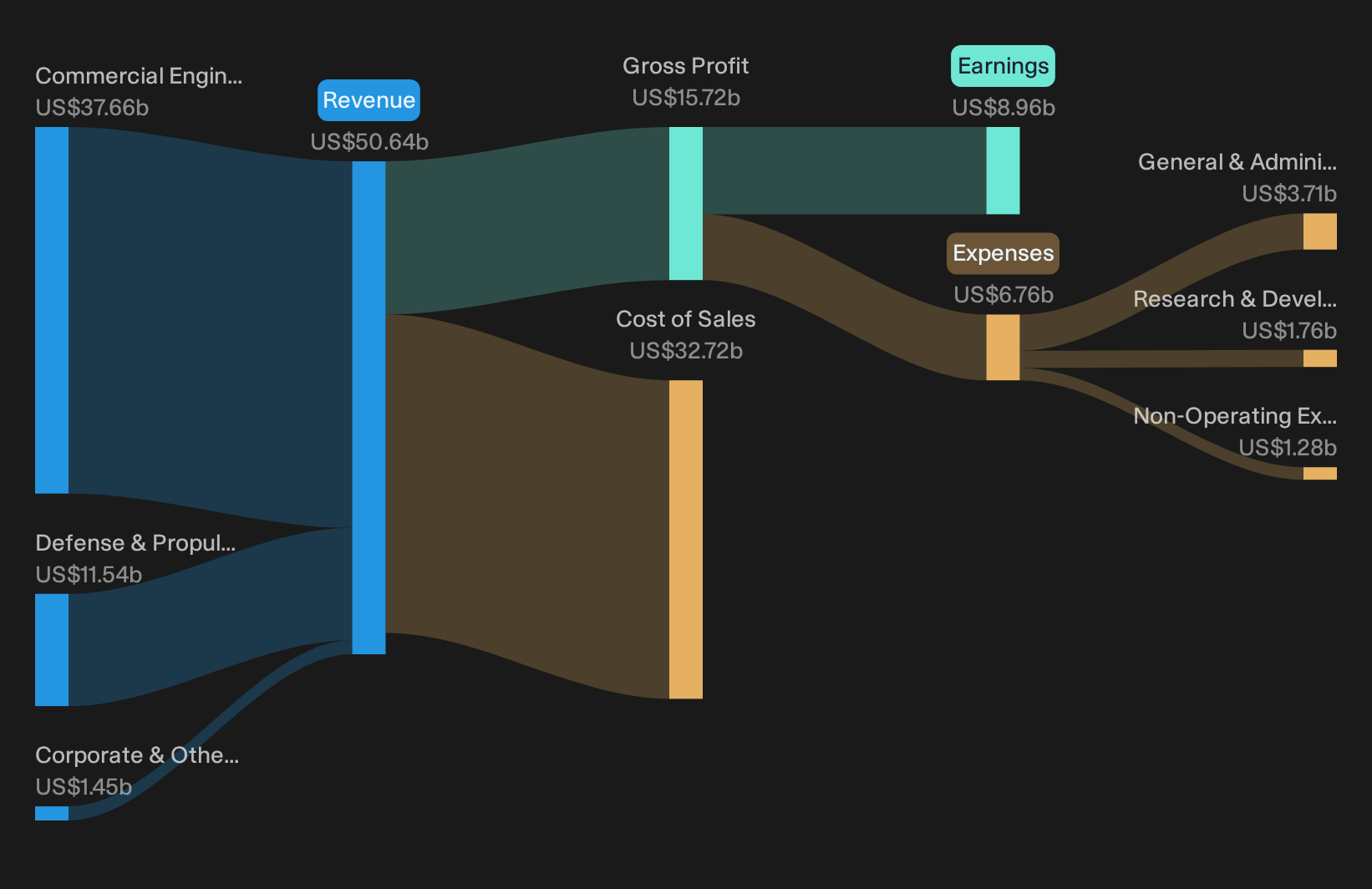
GE Aerospace earns about US$37.7b from Commercial Engines & Services and US$11.5b from Defense & Propulsion Technologies, with Corporate & Other at US$1.4b, and the stock carries a market value near US$339.4b.
For investors who want pure exposure to the machinery that actually keeps aircraft flying, General Electric offers a concentrated bet on engines, components, and long life maintenance contracts rather than broad industrial diversification.
"Acceleration of next generation engine programs such as adaptive cycle engines and CCA propulsion, supported by rising defense book to bill of 1.7x and a Defense & Propulsion Technologies backlog above US$30b, points to multi year visibility on future defense revenue and contribution to segment profit."
What could really shift the story is how one quiet pressure in the engine services business ultimately feeds through to future margins.
That margin question is the real hinge, and the full narrative for General Electric shows how General Electric could see engine services, cash flow and valuation expectations start decoupling from headline backlog strength.
RTX (RTX)
RTX leans directly into the Aerospace And Defense theme through Pratt & Whitney engines and Collins Aerospace systems, while the Raytheon unit extends its reach into sensors and missile defense, creating a broad platform of hardware and services across civil and military fleets.
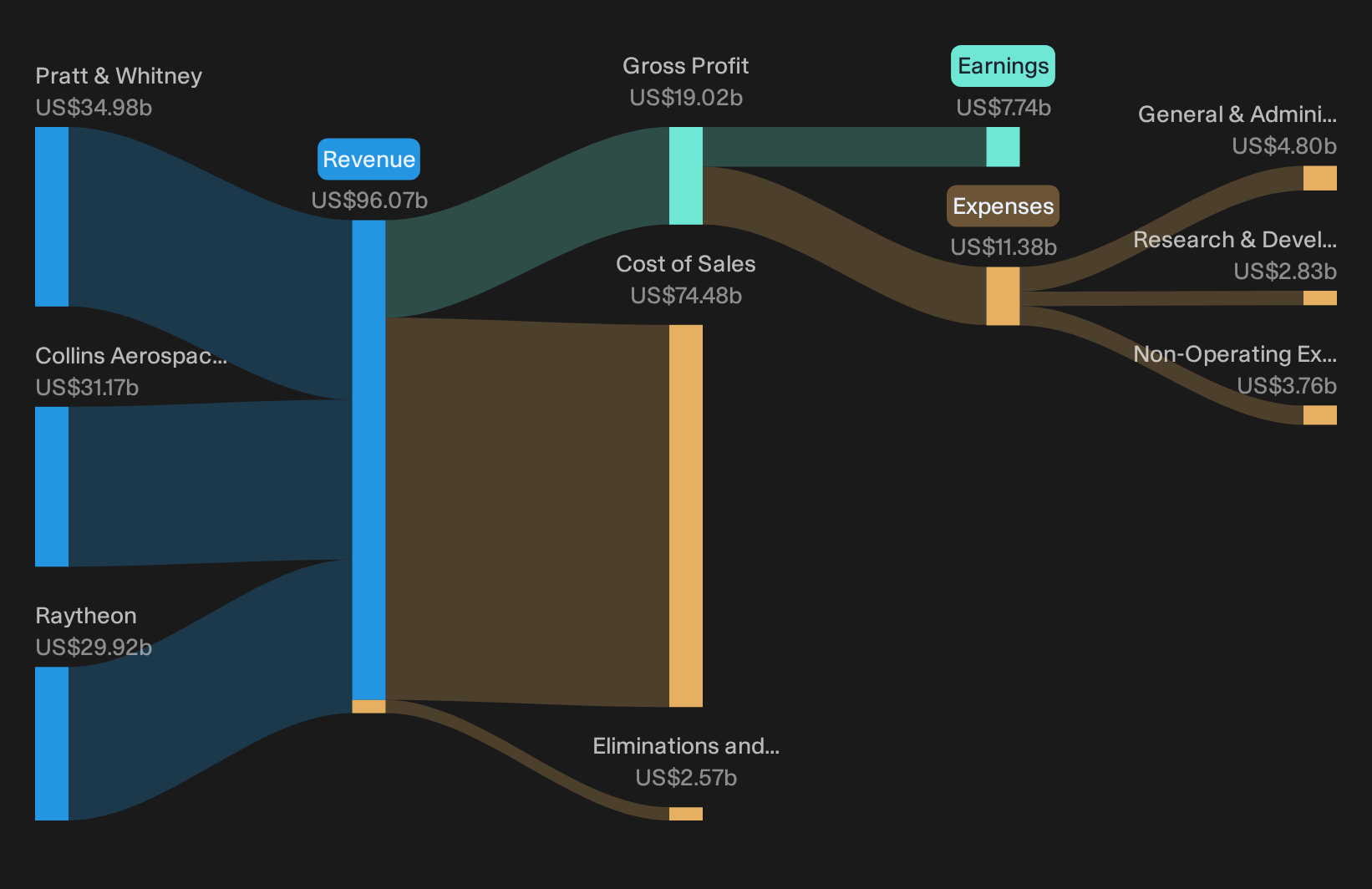
RTX generates about US$35b from Pratt & Whitney, US$31.2b from Collins Aerospace and US$29.9b from Raytheon, and with a market value near US$255.3b it is one of the larger integrated suppliers in this screen.
For investors focused on core aircraft equipment and long term defense programs, RTX ties those pieces together in one vertically integrated group that spans original equipment, upgrades and multi decade support contracts.
"RTX’s record backlog of US$289b, supported by a Raytheon rolling 12 month book to bill of 1.77 and US$19.9b of quarterly awards for systems such as Patriot, AMRAAM, AIM 9X and LTAMDS, is associated with multi year conversion of contracted demand into revenue and segment operating profit that some investors may not yet fully reflect in valuations."
What really matters now is how one quiet capacity constraint shapes the pace at which that backlog turns into aerospace and defense cash flow.
That capacity question is where things get interesting, and the full narrative for RTX maps how RTX’s backlog, bottlenecks and defense exposure could be quietly accelerating the story.
Seeking Alternatives Beyond Defense Picks?
Fresh ideas move first. Sector momentum can shift quickly while the best setups are still flying under the radar for now, so scan these focused lists and consider acting early.
- Spot strong balance sheets before the crowd by running the list of solid balance sheet and fundamentals (24 results) and see which businesses currently combine resilient finances with fundamentals that appear built to last.
- Explore potential AI-related names by scanning the 37 profitable AI stocks that aren't just burning cash where cash-generating companies, rather than purely speculative story stocks, can be compared with weaker peers.
- Track the gold trade while it is in focus with the 36 elite gold producer stocks and narrow in on producers evaluated for scale, resilience and operational discipline.
This article by Simply Wall St is general in nature. We provide commentary based on historical data and analyst forecasts only using an unbiased methodology and our articles are not intended to be financial advice. It does not constitute a recommendation to buy or sell any stock, and does not take account of your objectives, or your financial situation. We aim to bring you long-term focused analysis driven by fundamental data. Note that our analysis may not factor in the latest price-sensitive company announcements or qualitative material. Simply Wall St has no position in any stocks mentioned.
Have feedback on this article? Concerned about the content? Get in touch with us directly. Alternatively, email editorial-team@simplywallst.com