
Nvidia Buybacks Put TSMC And AI Infrastructure Stocks Back In Focus
Artificial intelligence is no longer just a story about Nvidia’s chips. It is now a story about how Nvidia plans to return an authorised US$235b to shareholders through buybacks and what that might mean for the wider AI infrastructure trade. If capital is flowing this aggressively, you may not want to ignore the hardware suppliers connected to that trend. This article walks through 3 stocks exposed to this news and why they might deserve a closer look.
The three stocks covered next are only a sample, and the full screen surfaced 820 more listed AI infrastructure players with equally compelling stories that are not included here. If you want to identify and analyze those opportunities in one place, head straight into the AI Infrastructure Leaders (Semiconductors and Data Center Hardware) screener.
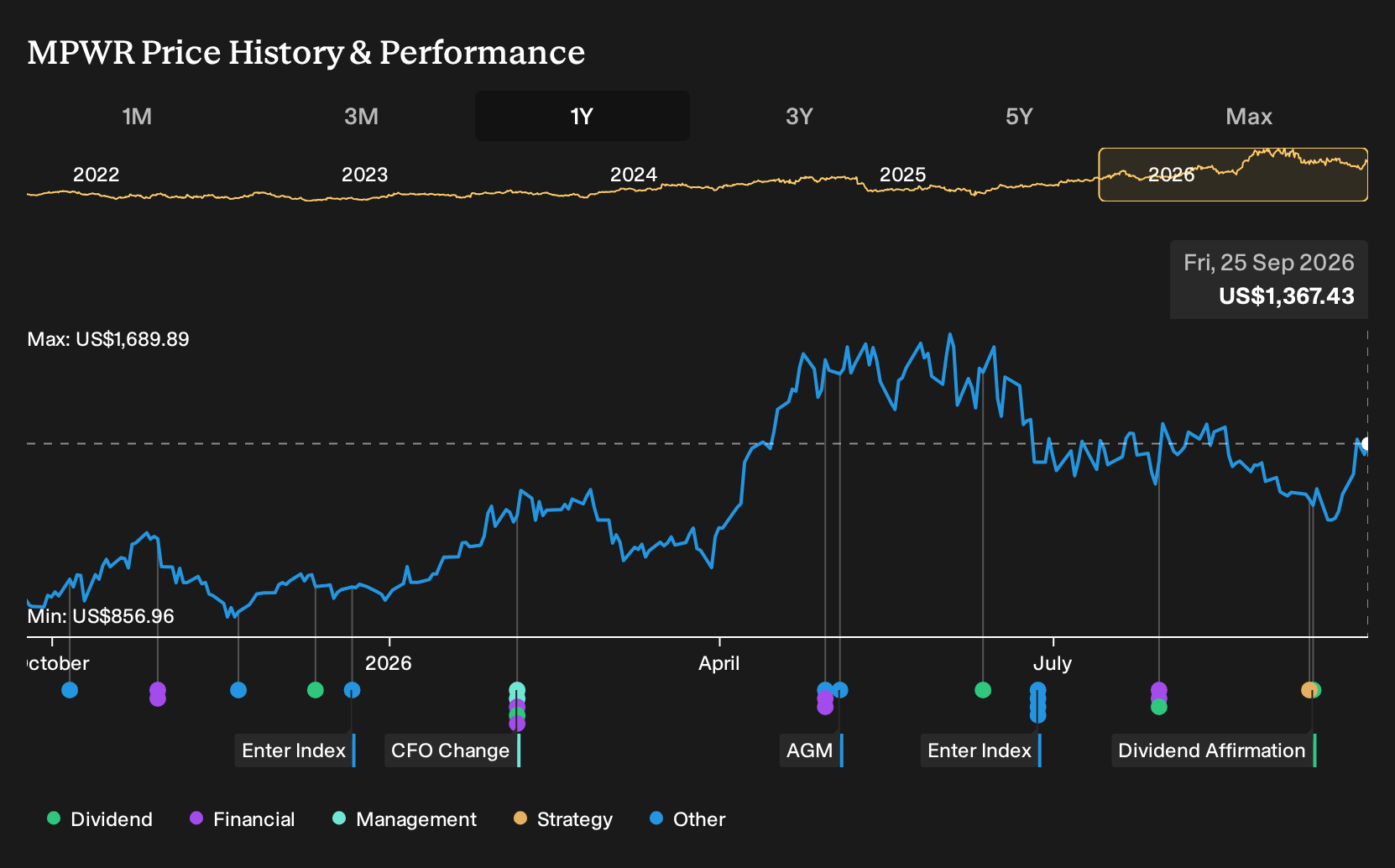
Monolithic Power Systems (MPWR)
Overview: Monolithic Power Systems designs power management chips that feed electricity efficiently to AI servers, GPUs, data center hardware, and other electronics.
Operations: Monolithic Power Systems generates about US$3.27b from semiconductors, with revenue concentrated in China at US$1.70b and Taiwan at US$770.90m.
Market Cap: US$67.20b
Monolithic Power Systems matters in this AI infrastructure screen because its power chips sit close to the action in AI servers and accelerators, and rising compute density keeps pulling more of its catalog into high-end racks.
"Investor optimism appears anchored in MPS's exposure to accelerating AI adoption in data centers (including design wins with major ASIC-based AI platforms and anticipated industry-wide server transitions to 48V/800V architectures), which could drive sustained revenue outperformance, even as end-market growth normalizes and competition increases."
The real swing factor is how one less visible cost pressure shapes the balance between that AI-fueled demand story and long-run margin strength.
That margin puzzle is exactly where the full narrative for Monolithic Power Systems picks up, unpacking how Monolithic Power Systems could balance AI acceleration with long term profitability pressures.
Taiwan Semiconductor Manufacturing (TWSE:2330)
Overview: Taiwan Semiconductor Manufacturing runs the foundries that build advanced chips for AI GPUs, data center processors, and other high performance computing.
Operations: Taiwan Semiconductor Manufacturing generates about NT$4.44t from its foundry business, with the United States contributing roughly NT$3.33t in revenue.
Market Cap: NT$64.18t
In the AI infrastructure story, Taiwan Semiconductor Manufacturing is the behind the scenes manufacturer turning soaring demand for Nvidia class accelerators into physical silicon. Any shift in AI capex or data center buildouts tends to ripple straight through to its fabs.
"Geopolitical concentration: Self-explanatory. TSMC might not exist, at least in its current form, if a certain regional bully gets its way."
The real pivot for Taiwan Semiconductor Manufacturing is how one unresolved supply chain and capacity constraint eventually filters into pricing power and returns.
That unresolved supply chain story is just the starting point, and the full narrative for Taiwan Semiconductor Manufacturing shows how Taiwan Semiconductor Manufacturing’s AI momentum could decouple from those geopolitical overhangs.

SK hynix (KOSE:A000660)
Overview: SK hynix produces memory chips and storage devices that feed AI accelerators, servers, PCs, mobiles, and connected electronics worldwide.
Operations: SK hynix generates ₩189,170,615 million from manufacturing and selling semiconductor products, with revenue tied to global demand for memory and storage.
Market Cap: ₩1,357,147,561 million
For the AI infrastructure theme, SK hynix matters because its high bandwidth memory and advanced DRAM sit directly in the data center buildout that Nvidia’s capital plans continue to spotlight.
"Intensifying geopolitical tensions, including tightening US export controls on China and persistent trade frictions, could severely restrict SK hynix's access to key international markets and disrupt the company's critical Chinese fab operations. This poses a meaningful risk to future revenue growth and long-term profitability, especially if validated end user status is lost or regulations tighten unexpectedly."
The bigger swing factor is how one supply and pricing shift in high bandwidth memory shapes the balance between AI driven demand and long run profitability.
That supply demand knife edge is exactly what the full narrative for SK hynix unpacks, showing where SK hynix’s AI opportunity could accelerate past export risk headlines.

Seeking Fresh Alternatives Beyond Nvidia?
Some of the most interesting breakout stories start quietly, before momentum is obvious on every chart. Scan these fresh ideas while they are still under the radar for now and consider how they might fit your strategy.
- Spot sturdier compounding potential by tracking companies in the list of solid balance sheet and fundamentals (24 results) that might weather shocks better while others are still getting caught off guard.
- Target faster price action by reviewing the 30 resilient stocks with low risk scores where volatility scores stay contained while fundamentals keep doing the heavy lifting.
- Ride structural demand trends by scanning the 40 power grid technology and infrastructure stocks that could benefit as electrification, data centers, and AI demand keep power infrastructure in focus.
This article by Simply Wall St is general in nature. We provide commentary based on historical data and analyst forecasts only using an unbiased methodology and our articles are not intended to be financial advice. It does not constitute a recommendation to buy or sell any stock, and does not take account of your objectives, or your financial situation. We aim to bring you long-term focused analysis driven by fundamental data. Note that our analysis may not factor in the latest price-sensitive company announcements or qualitative material. Simply Wall St has no position in any stocks mentioned.
Have feedback on this article? Concerned about the content? Get in touch with us directly. Alternatively, email editorial-team@simplywallst.com