
There’s Nothing ‘Precious’ About the Charts of Gold and Silver Prices Here
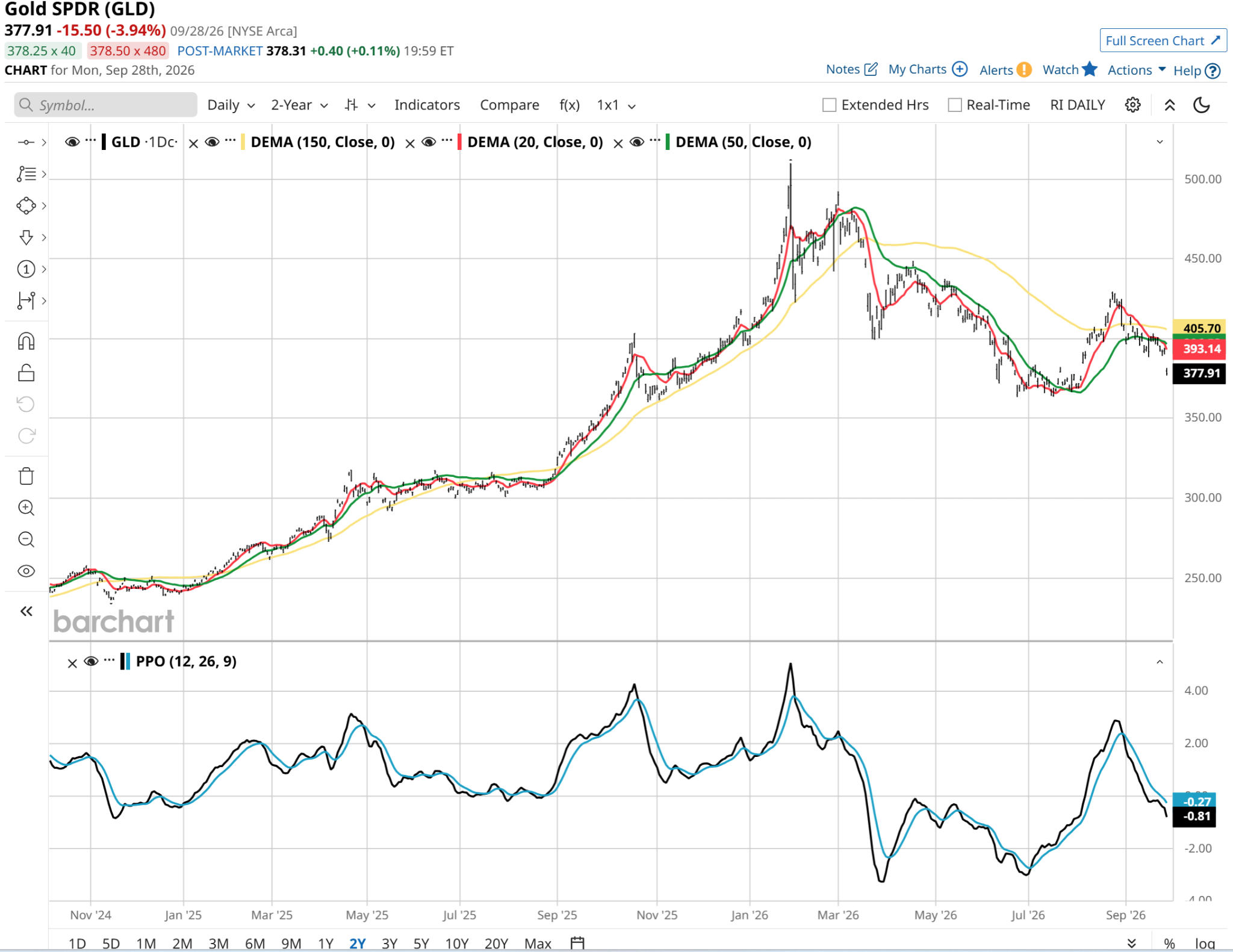
Gold (GCZ26) is the anti-inflation trade, the alternative currency, the asset to own when all is lost. At least that’s what Wall Street pundits have said for decades. I say, “that’s one of the worst charts I see right now. And I see a lot of charts.”
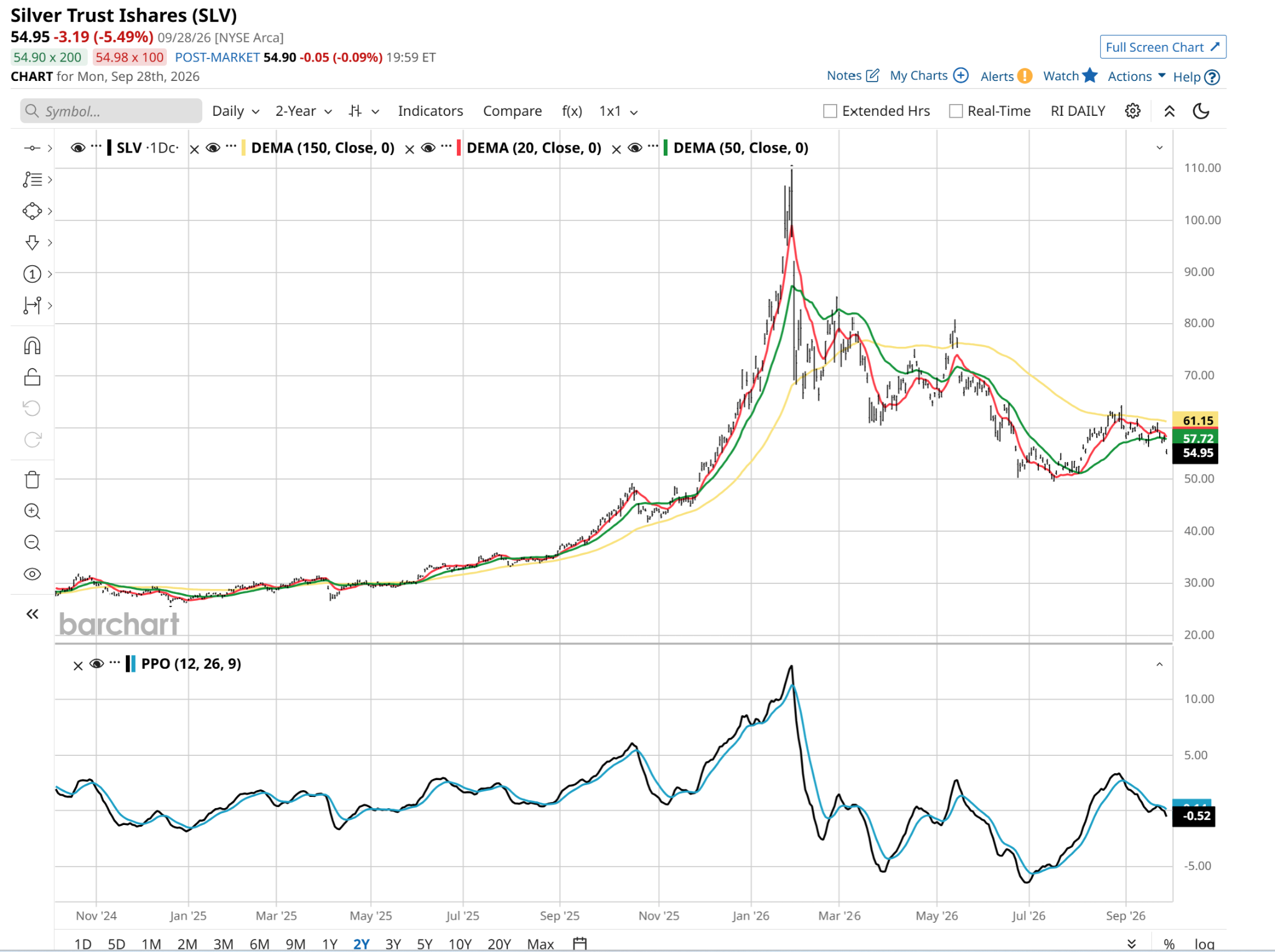
Surely silver (SLV) will buck the trend, right? Nope, that chart looks pretty risky too.
I have never viewed these two precious metals, or ETFs that track them, as safe havens. I have capitalized on their past price rises by owning funds and call options. But as we enter October, I’m much more likely to find my way into them via inverse ETFs, such as the ProShares UltraShort Gold ETF (GLL) or the ProShares UltraShort Silver ETF (ZSL). Because while every time inflation ticks up, geopolitical tensions flare, or federal deficits explode, the narrative is predictable: buy hard assets to protect your wealth.
As an active risk manager, I look at GLD and SLV today and see a way to bypass short-term Treasury bills that pay 4.5% and 5-year Treasuries that yield over 5% to instead hold non-yielding, highly volatile commodities. And there’s NO WAY I’m doing that with charts that look like these. If I had to break the tie for which of the two is worse, it would be gold. But that’s not saying much. This pair might as well be tin and lead.
Silver: Just a Dressed Up Industrial Metal
Silver is a wild card. It always has been. And fresh off suckering in true believers with the allure of quick upside, it now looks more like it is setting up for a repeat of its post-2011 dive that eroded more than 75% of SLV’s value.
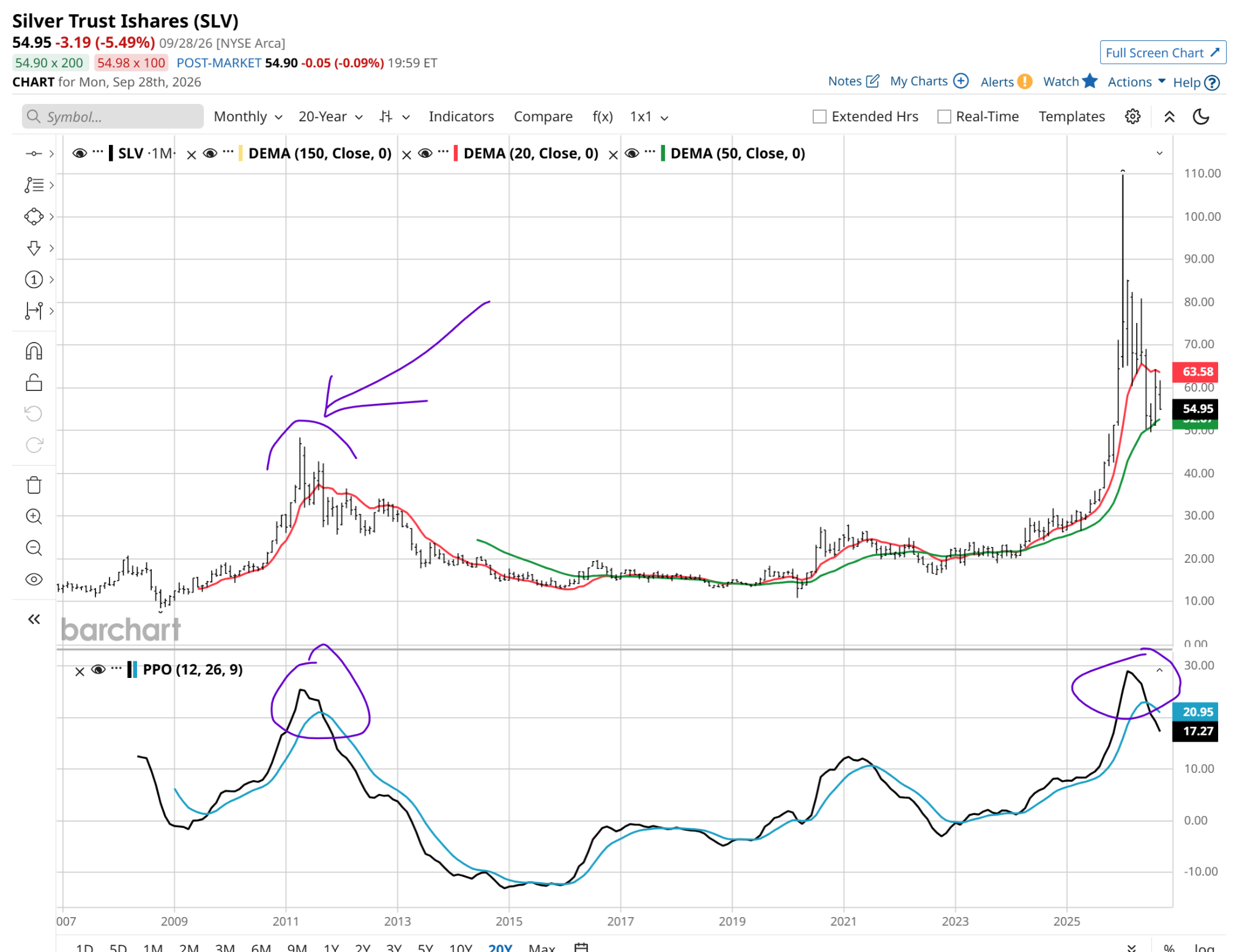
Gold bugs like to promote silver as “gold on steroids,” but the market treats it far more like an industrial base metal. Like copper (HGZ26), or the aforementioned lead. It has some tangible applications, certainly more than gold has. But this is just another commodity that investors, retail and otherwise, use as a trading tool.
Over 50% of global silver demand comes from industrial applications: electronics, solar panels, and manufacturing. However, when economic growth slows or manufacturing contracts, silver gets hit with a double whammy. Industrial demand collapses, as declining manufacturing activity pulls down silver’s own demand. And it becomes another high volatility asset. Silver’s annual price volatility rivals speculative tech stocks, routinely suffering 20%-35% drawdowns during market pullbacks.
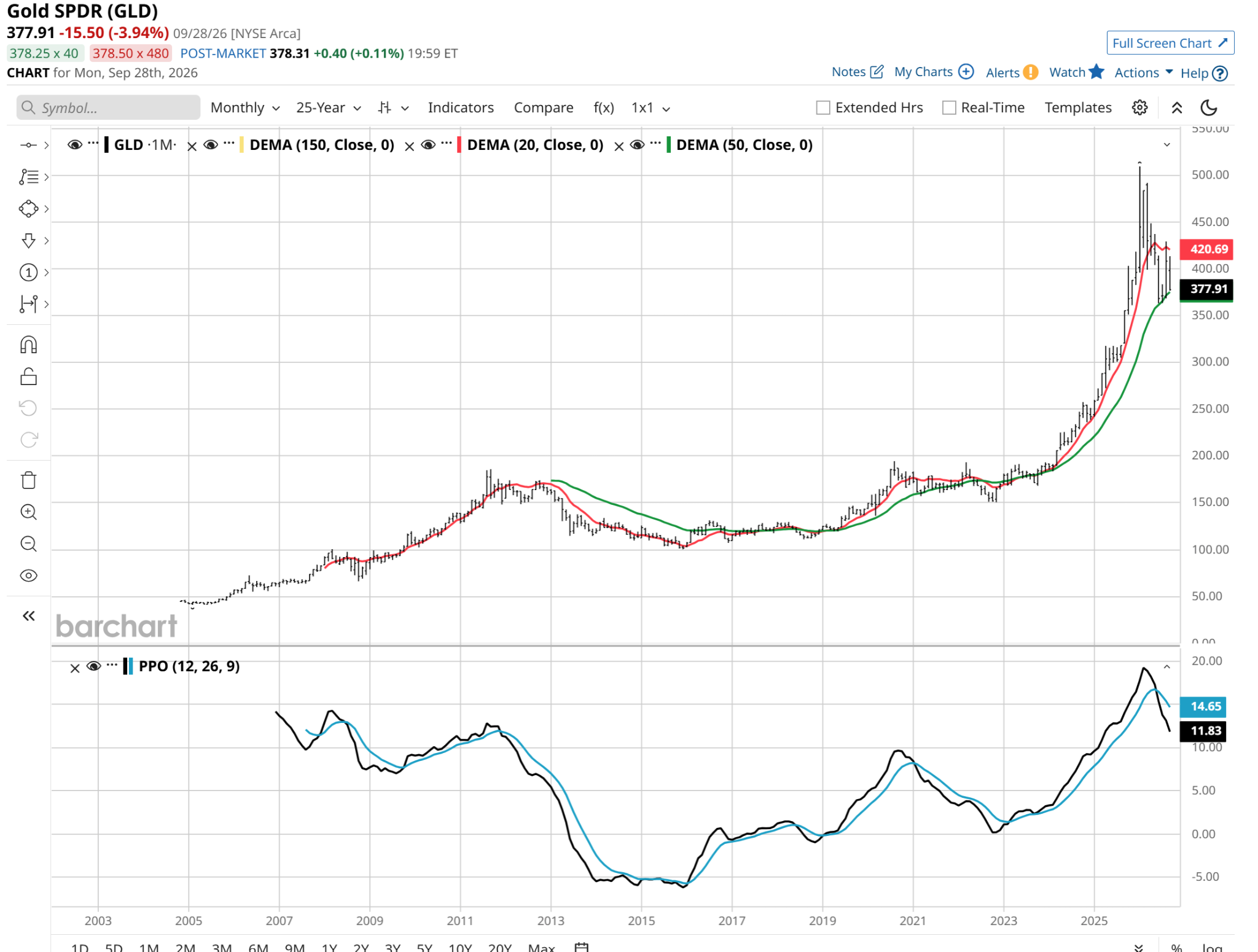
Not to be outdone, GLD’s long-term (monthly prices) chart looks similarly troublesome. The only saving grace for now is that the 20-month moving average has not collapsed the way the PPO at bottom did earlier this year.
Also Note: The Margin Call Liquidity Trap
The biggest myth in retail investing is that precious metals automatically surge when stock markets crash. History shows the exact opposite happens during the initial phase of a market liquidity panic.
When broad equities roll over and credit tightens, institutional investors don’t rush out to buy silver or gold. They face immediate margin calls on their leveraged stock and bond positions. To raise instant cash, they sell whatever is liquid and easily mark-to-market. Guess what that includes? GLD and SLV.
We saw this exact scenario in March 2020 and back during the 2008 financial crisis. Precious metals plunged in tandem with equities before recovering months later.
My Take: Trade the volatility. Don’t marry it. Treat it as a short-term tactical trade, not some type of multi-year venture.
Rob Isbitts is a semi-retired CIO, former fiduciary investment advisor, and Barchart columnist. Check out his other work at ETFYourself.com (featuring the Fresh Charts weekly trading post), and ROAR.PiTrade.com, helping investors to better-manage their own portfolios.
On the date of publication, Rob Isbitts did not have (either directly or indirectly) positions in any of the securities mentioned in this article. All information and data in this article is solely for informational purposes. For more information please view the Barchart Disclosure Policy here.