
Missed Emerson Electric's 22% Run? Here Is The Case That Held Up
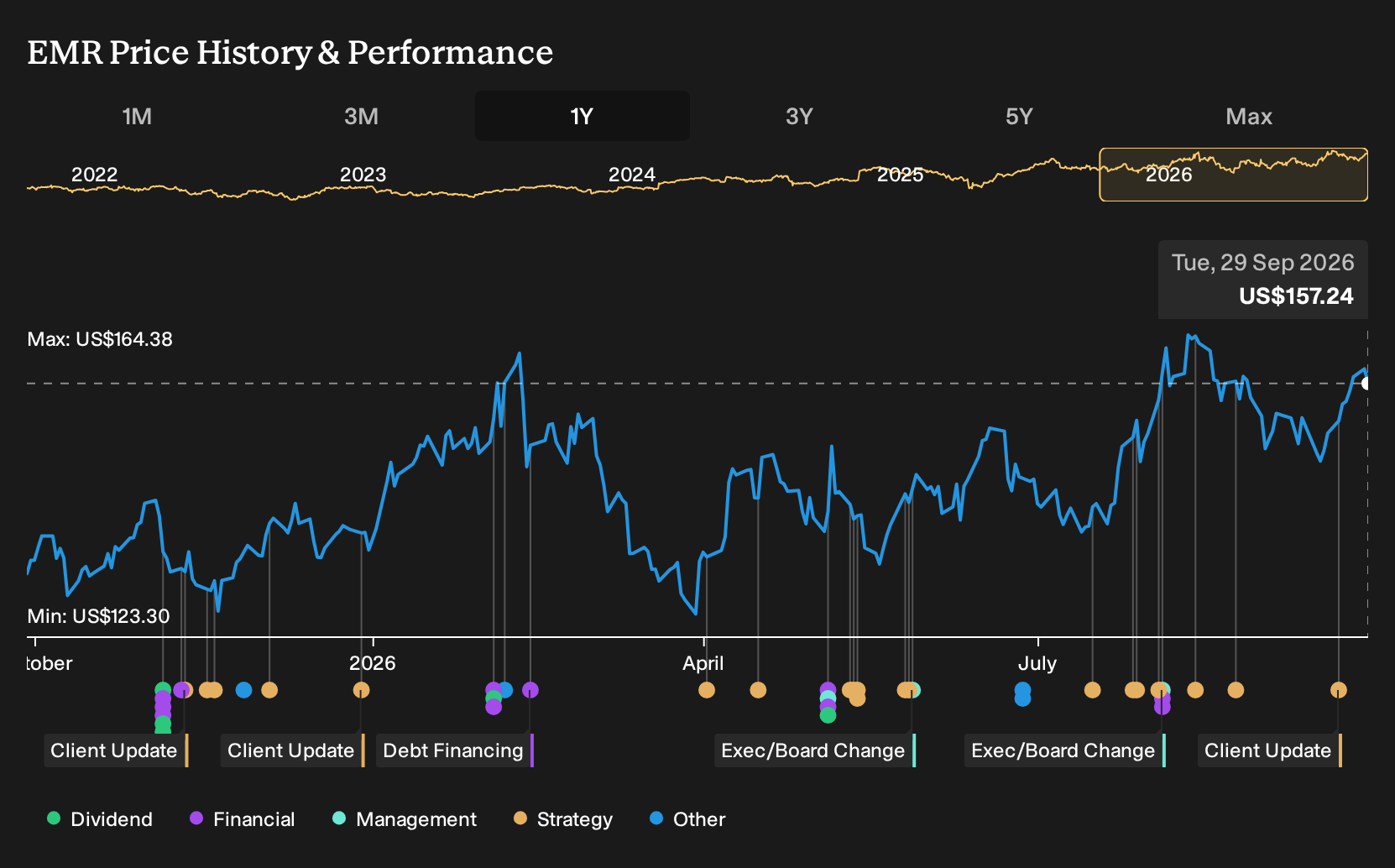
If you had been weighing Emerson Electric back on 29 September 2025, the past 12 months now look very different from the spreadsheets you were staring at. For Emerson Electric shareholders, the return over the past year was 21.7%, including dividends. If that entry decision was still open for you today, would the pull be the AI-heavy order book and software push that kept making headlines, or the tariff, integration and end market risks that never really went away?
Emerson Electric has already moved. Pinpoint other ways to investigate the theme among 92 robotics and automation stocks.
The Two Stories Emerson Electric Investors Were Arguing About
The shares cost US$129 at the start of the period, so anyone looking at Emerson Electric then had to decide which story felt more realistic.
The bullish narrative pointed to a Fair Value of US$151, a notional price based on ideas like 6.2% annual revenue growth and profit margins reaching 15.5% within three years.
The bearish script put Fair Value at US$108, hinging on risks such as rising tariffs and protectionism that could squeeze gross margins even if reported earnings moved higher.
What The Results Changed For The Emerson Electric Debate
Emerson Electric’s Q3 2026 figures gave the bullish story fresh support. Revenue was US$4.873b versus US$4.553b a year earlier, net income rose from US$580m to US$718m, and net margin moved from 12.7% to 14.7%. That margin step pointed in the same direction as the optimistic case, even as tariff and integration worries in the cautious script remained untested by these numbers.
The lesson is simple. When a thesis leans on margin expansion, track the actual net margin line each year and compare it with the scenario work, not just the revenue growth or the headline EPS.
What Emerson Electric's Price Now Asks You To Believe
Emerson Electric now trades at US$157 after a 21.7% gain over the past year. The selected Narrative places its Fair Value below that level, framing today’s quote as demanding a premium to its own assessment of the automation and software opportunity.
The same Narrative leans on long run automation, LNG and power demand, but keeps circling back to margin pressure, competition and integration risk. A buyer at US$157 is effectively assuming Emerson Electric can turn that project and software pipeline into durable earnings growth. The key question is how those supply chain and pricing pressures figure into that bet.
"Heightened global protectionism, integration challenges, and shifting customer preferences toward digital automation threaten Emerson's margins, revenue stability, and earnings momentum. Growing competition from low-cost and open-source providers, alongside weak industrial demand in key regions, undermines pricing power and long-term growth prospects."
That disagreement has a full argument behind it. → Uncover the lower Fair Value this Narrative argues for
Go Straight To The Source
You may be late to this rally, but that does not have to mean arriving late to every opportunity. Start with companies whose prices leave room for a different view of their future. Here are three trading below our estimates.
- Company 1 - 28% below our estimate - expands engine and power platforms to serve data center and low-emission needs.
- Company 2 - 37% below our estimate - converts a record backlog of complex projects into higher margin mechanical and electrical work.
- Company 3 - 38% below our estimate - grows private capital advisory and technology deal pipelines by hiring specialist advisory teams.
Those are three of them. See the full list of 31 companies trading below our estimate →
This article by Simply Wall St is general in nature. We provide commentary based on historical data and analyst forecasts only using an unbiased methodology and our articles are not intended to be financial advice. It does not constitute a recommendation to buy or sell any stock, and does not take account of your objectives, or your financial situation. We aim to bring you long-term focused analysis driven by fundamental data. Note that our analysis may not factor in the latest price-sensitive company announcements or qualitative material. Simply Wall St has no position in any stocks mentioned.
Have feedback on this article? Concerned about the content? Get in touch with us directly. Alternatively, email editorial-team@simplywallst.com