
Korean REIT Stocks In Focus As Lower Bond Supply Eases Rate Pressure
Korea’s bond market is shifting as excess tax revenue reshapes issuance plans, calms yield pressures, and sends a fresh signal about domestic demand and semiconductor strength. That kind of policy tailwind can quickly reprice companies that live and die by interest rates. Miss the turn and you risk watching others move first. This article walks through three Korean stocks exposed to that news and explains why each one might warrant closer review.
The three stocks below are just a sample, because the full screen on Korean interest rate sensitive domestic equities surfaced 15 more companies with equally detailed narratives that are not covered in this article. To identify potential high conviction ideas that fit your own criteria, head straight into the Korean Interest-Rate-Sensitive Domestic Equities screener.
SK Reits (KOSE:A395400)
SK Reits is a Seoul based real estate investment trust listed on the KOSPI. This makes it a direct play on Korean property income and domestic interest rates. The trust has a market cap of about ₩1.57t, placing it firmly in the larger end of the local REIT universe.
For investors focused on Korean rate sensitive equities, SK Reits links directly into this theme because its valuation and distributions move with domestic bond yields and cap rates. The recent government push to ease bond supply could matter a lot for how its funding costs, property yields, and future payout capacity line up against expectations if a single key assumption breaks.
If that assumption is starting to wobble for you, go straight to the 2 key rewards and 2 important warning signs (2 are major!) to see what might be accelerating or quietly stalling SK Reits.

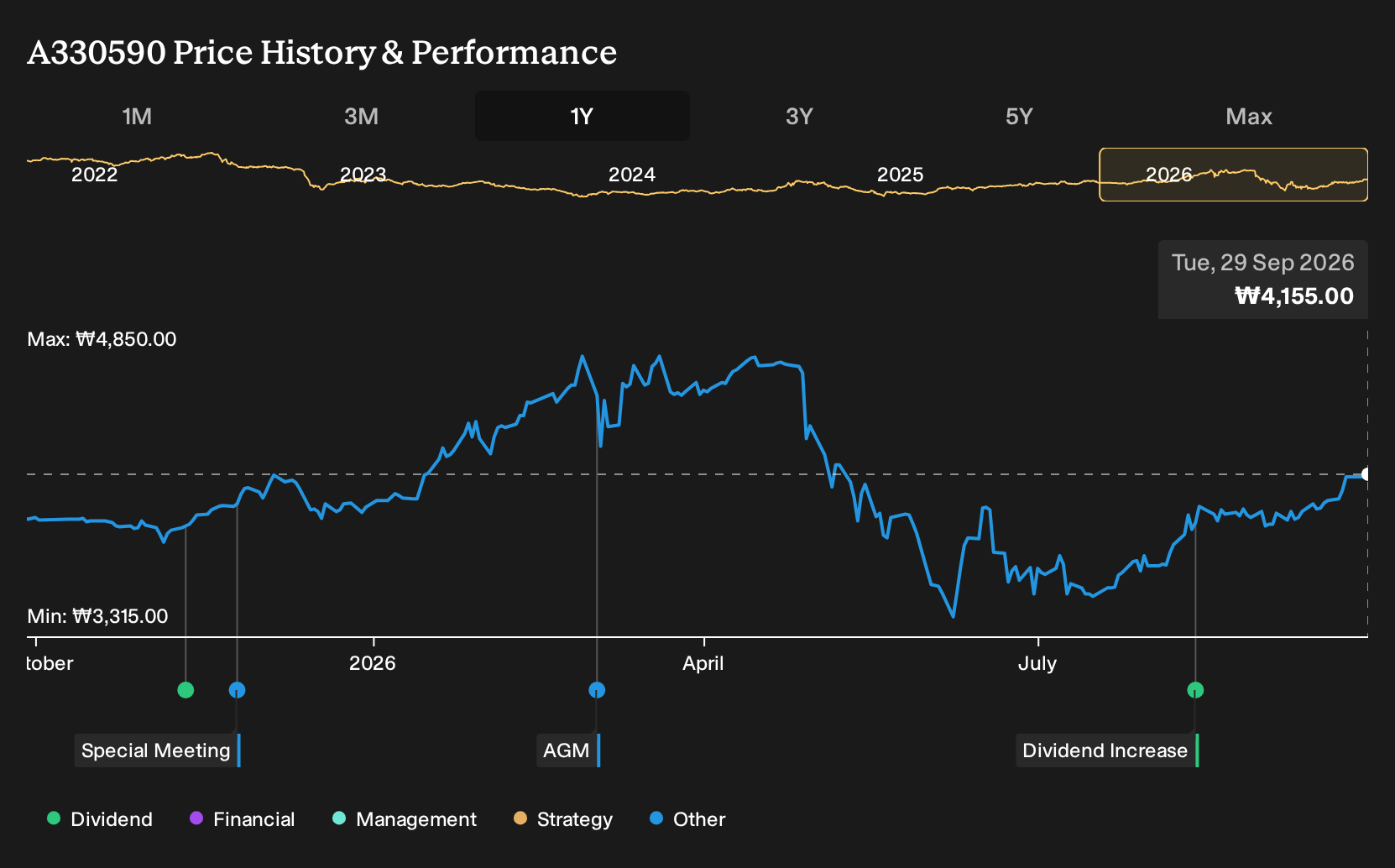
LOTTE REIT (KOSE:A330590)
LOTTE REIT is a Seoul based real estate investment trust that owns income producing property tied closely to Korean interest rates. Detailed segment data is not disclosed, but the trust has a market cap of about ₩1.20b, putting it among mid sized domestic REITs.
For rate focused investors, LOTTE REIT links property rental income directly to domestic yields, with KTB moves feeding into discount rates, asset values, and how its dividend stack compares with government bonds. The recent decision to curb bond issuance and support KTB prices could matter more than it first appears, depending on how one unseen pressure plays out.
That hidden pressure is exactly why the 4 key rewards and 2 important warning signs (1 is major!) is important to consider before any bond market shift fully feeds through LOTTE REIT’s payouts.
Hanwha REIT (KOSE:A451800)
Hanwha REIT is a Seoul based real estate trust focused on acquiring, developing, and leasing local properties, which ties its cash flows and valuations closely to Korean interest rates. The business has a market cap of about ₩959.1b.
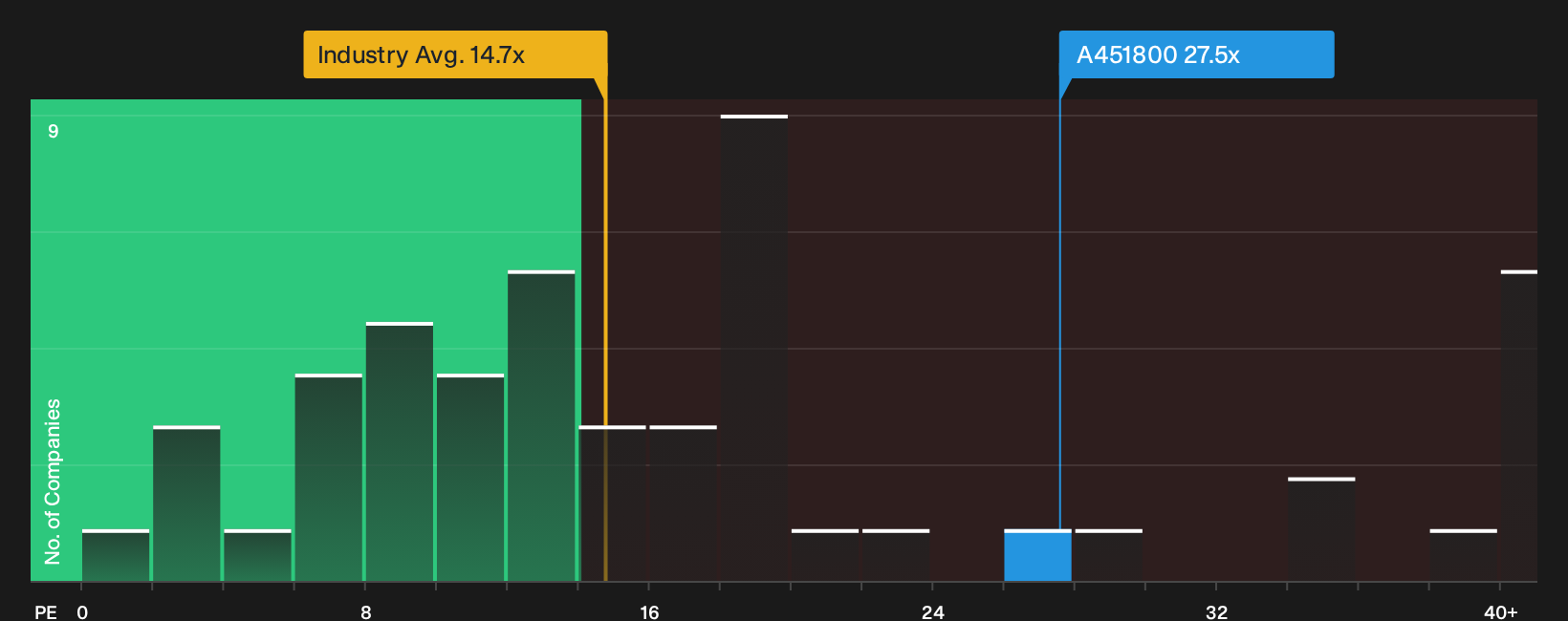
Hanwha REIT gives you pure Korean property exposure where cash flows, borrowing costs, and distributions are closely wired into domestic bond yields. A 5.06% dividend yield, a 27.5x P/E, and earnings that do not fully cover payouts all hinge on what happens if a single key assumption breaks.
When that payout math starts to look stretched, the 2 key rewards and 3 important warning signs (3 are major!) could highlight whether Hanwha REIT’s yield is masking strength or signaling a brewing imbalance.
Seeking Alternatives Beyond Korean REITs?
Fresh ideas move first. By the time every screen lights up with breakout momentum, the early entry window has flown. Scan these under the radar lists while it matters and review them promptly.
- Identify steady cash generators before the crowd by running your filters through the list of solid balance sheet and fundamentals (204 results). This can help you build a focused list of resilient, fundamentally sound businesses.
- Explore income opportunities supported by positive momentum using the curated 161 dividend fortresses. Find higher-yield payers where payout strength and balance sheet quality align.
- Look for potential future growth stories with durable foundations by scanning the hand picked 620 high quality undiscovered gems. Evaluate possible breakouts while they are still under the radar.
This article by Simply Wall St is general in nature. We provide commentary based on historical data and analyst forecasts only using an unbiased methodology and our articles are not intended to be financial advice. It does not constitute a recommendation to buy or sell any stock, and does not take account of your objectives, or your financial situation. We aim to bring you long-term focused analysis driven by fundamental data. Note that our analysis may not factor in the latest price-sensitive company announcements or qualitative material. Simply Wall St has no position in any stocks mentioned.
Have feedback on this article? Concerned about the content? Get in touch with us directly. Alternatively, email editorial-team@simplywallst.com