
3 Dividend Stocks That Could Benefit From Higher Rates
With U.S. Treasury yields at a 24-year high and the next inflation print looming, the gap between safe income and stock market risk feels wider than it has in years. That tension creates both potential traps and openings for dividend investors looking at individual stocks, not just the index. This article walks through three high-quality value stocks exposed to these rate moves and explains where the current setup may help or hurt them.
The stocks below are only a sample set, and the full screen surfaced 8 more large, dividend paying companies with similarly robust stories that are not covered here. To identify and analyze the highest conviction ideas directly, head into the High-Quality Dividend-Paying Value Stocks in a High-Rate Environment screener
Landstar System (LSTR)
Landstar System sits squarely in the high-quality dividend value bucket for this screen, with an asset-light freight network and insurance arm that aim to keep cash generation relatively steady even as interest rates stay elevated.
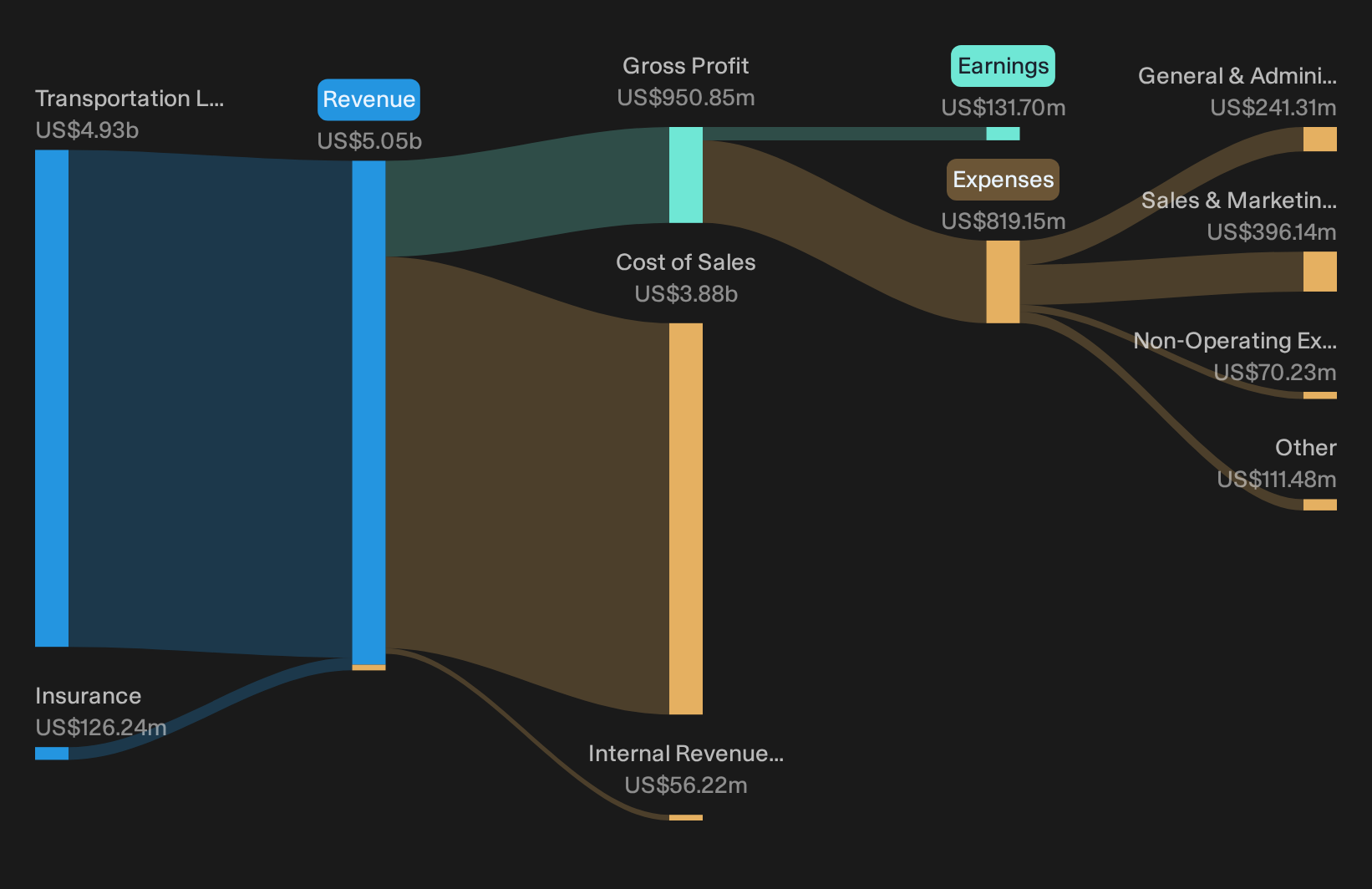
Landstar System generates most of its revenue from Transportation Logistics at about US$4.9b, with the Insurance segment contributing roughly US$126 million, and the group carries a market value of around US$5.6b.
Persistent industry digitization, together with Landstar System directing roughly 50% of its 2026 IT capital expenditure budget to AI tools and running live pilots that early users say deliver meaningful time savings and higher shipment throughput, points to further efficiency gains that can support net margins.
What happens to those margin ambitions if a single cost line that has been creeping higher suddenly proves harder to contain than expected?
If that risk is on your radar, the full narrative for Landstar System explains how those costs could affect Landstar System’s earnings and dividend profile.
Bunge Global (BG)
Bunge Global is a large agribusiness that fits this high-rate dividend screen because it handles essential food and feed flows that tend to stay in demand even when financing conditions tighten.
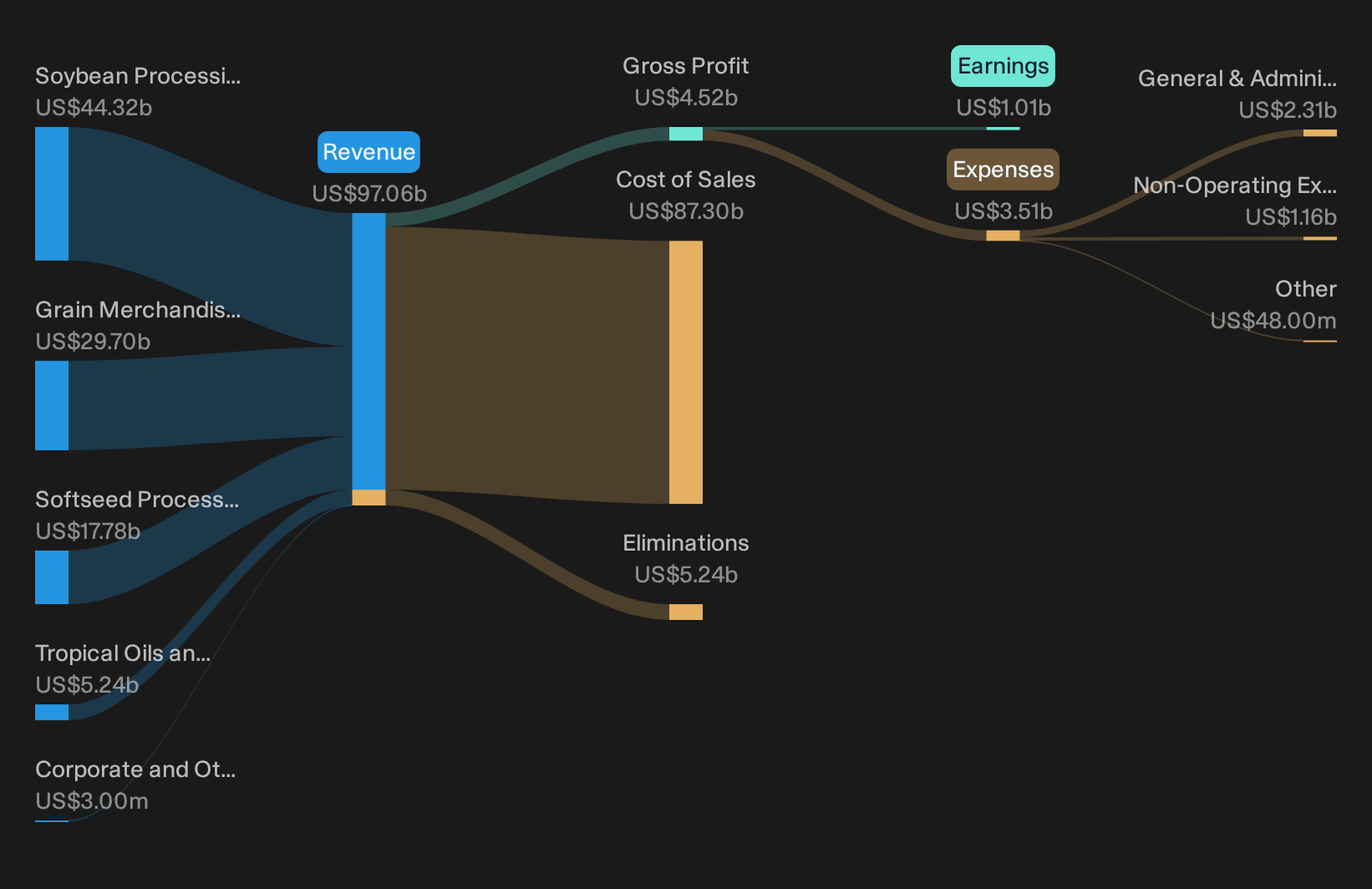
Bunge Global runs a global oilseeds, grains and food ingredients operation, with Soybean Processing and Refining generating about US$44.3b in revenue, Grain Merchandising and Milling around US$29.7b, Softseed Processing and Refining roughly US$17.8b, and Tropical Oils and Specialty Ingredients about US$5.2b, and the stock carries a market value near US$21.0b.
"The completion and integration of the Viterra merger provides substantial cost and commercial synergies, expands Bunge Global's global origination, processing and distribution footprint, and positions the company to capture greater market share in higher growth regions, which can support higher revenue and operating margins over time."
What investors really need to watch is how one less visible pressure around funding and cash conversion shapes those future margin outcomes.
That funding squeeze is exactly what the full narrative for Bunge Global unpacks, explaining how Bunge Global could turn tighter cash cycles into an accelerating edge over slower rivals.
Universal Logistics Holdings (ULH)
Universal Logistics Holdings fits this high-rate dividend screen as a mature transportation specialist, with recurring logistics contracts that lean more toward steady service income than speculative growth stories.
Universal Logistics Holdings generates most of its revenue from Contract Logistics at about US$1.1b, with Trucking contributing roughly US$246 million and Intermodal around US$209 million, and the stock carries a market value near US$463 million.
Universal Logistics Holdings gives income-focused investors exposure to contract-heavy freight and logistics services that can hold their footing better when borrowing costs stay elevated, especially for customers that prize reliability and integrated support over headline rate shopping.
"The company's deep and expanding partnerships with major North American automotive OEMs and Tier 1 suppliers, as well as the ongoing integration of value-added contract logistics programs and acquisitions (such as Parsec), position Universal for long-term earnings visibility and revenue stability even as cyclical headwinds currently suppress performance."
What investors cannot ignore is how one unresolved funding and leverage pressure could reshape that stability story if borrowing costs bite harder for longer.
If that funding risk has your attention, read the full narrative for Universal Logistics Holdings to see how Universal Logistics Holdings could turn elevated borrowing costs into an accelerating earnings edge.

Seeking Alternatives Before The Crowd?
Fresh opportunities do not wait. Breakout trends gather momentum, quiet laggards get caught flying higher, and mispriced assets stop dropping under the radar for now. Act early and focus on preparation and research.
- Explore potential early-stage upside by scanning 9 elite penny stocks with strong financials that pair small market values with balance sheets and cash flows built to handle real-world stress.
- Target resilient income by working through the 6 dividend fortresses and focus on businesses where cash coverage supports payouts that may remain stable when conditions get tougher.
- Position ahead of emerging technology themes by reviewing the 93 robotics and automation stocks featuring automation-focused companies that are working to translate adoption trends into contract pipelines.
This article by Simply Wall St is general in nature. We provide commentary based on historical data and analyst forecasts only using an unbiased methodology and our articles are not intended to be financial advice. It does not constitute a recommendation to buy or sell any stock, and does not take account of your objectives, or your financial situation. We aim to bring you long-term focused analysis driven by fundamental data. Note that our analysis may not factor in the latest price-sensitive company announcements or qualitative material. Simply Wall St has no position in any stocks mentioned.
Have feedback on this article? Concerned about the content? Get in touch with us directly. Alternatively, email editorial-team@simplywallst.com