
Top 3 Dividend Stocks To Watch In September 2026
With U.S. Treasury yields sitting near multi decade highs, cash and bonds are paying more, and expensive growth stories are under pressure. That creates a window for solid businesses that quietly raise their dividends while keeping payout ratios in check. This article breaks down three stocks from a curated list of dividend growers with yields around 2% to 5%, so you can see how steady income and earnings can work together.
The three stocks covered below are just a starting sample, and the full screen surfaced 49 more companies with similarly compelling income stories and payout profiles that are not covered in this article.
To identify, analyze, and focus on the dividend payers that best fit your risk and income goals, head straight into the Growing Dividend Payers with 2-5% yield screener
CVS Health (CVS)
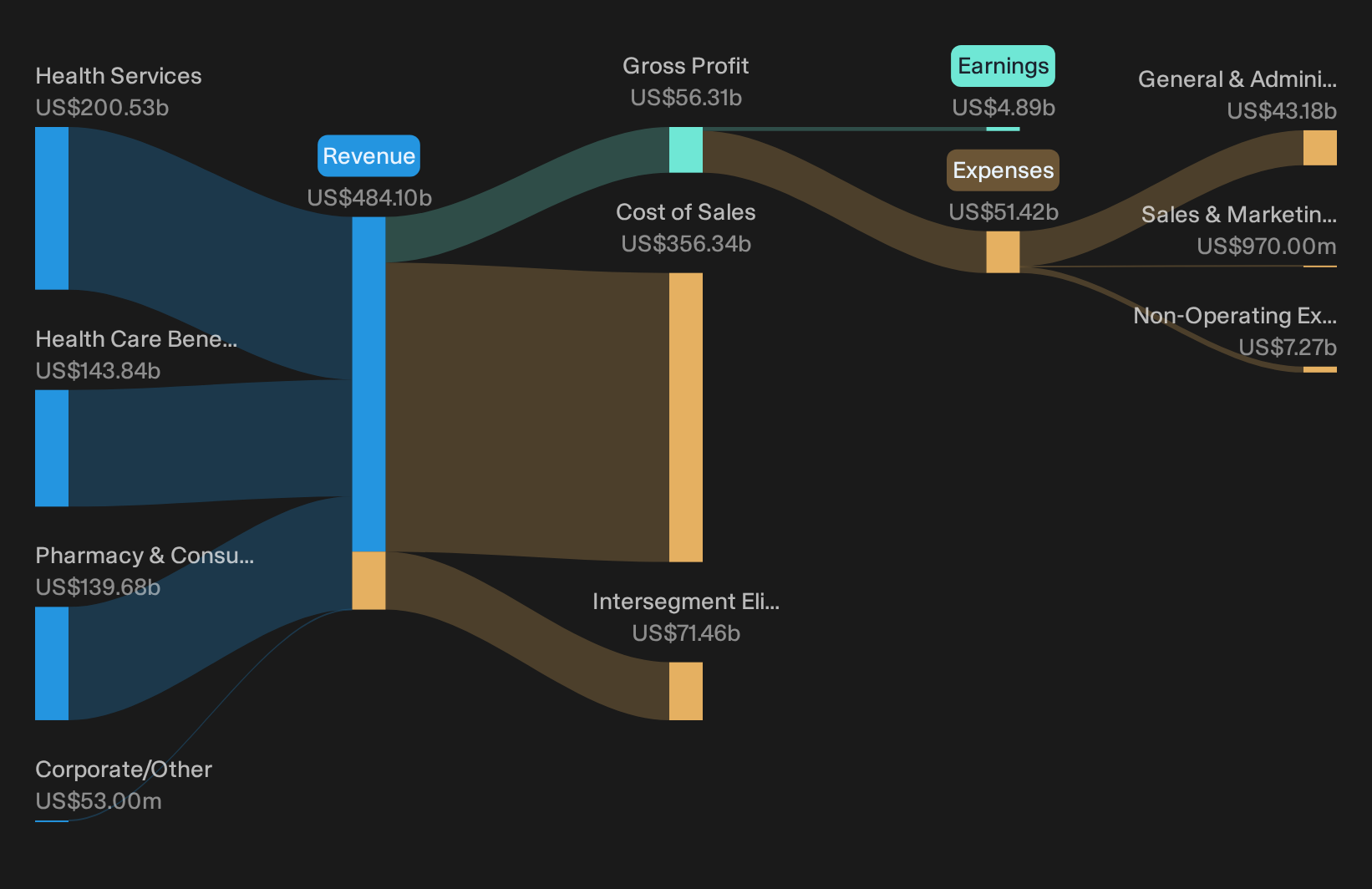
Overview: CVS Health is a U.S. healthcare group that combines insurance, pharmacy benefit management, and retail pharmacies to deliver recurring, service-based cash flow.
Operations: CVS Health generates about US$200.5b from Health Services and US$143.8b from Health Care Benefits, with nearly all revenue sourced in the United States.
Market Cap: US$112.4b
For this screener, CVS Health matters because its Caremark PBM and specialty pharmacy engines generate steady cash flows that can support a 2 to 5% dividend while the wider healthcare platform works through its reset.
"The decline is contributed largely to a $1.1 billion charge connected with its Medicare and Individual Exchange businesses and a whopping $1.2 billion restructuring charge for store closures."
The real story for CVS Health now turns on how one unresolved cost pressure reshapes the path of future margins and dividend headroom.
That margin question is exactly what sits at the center of the full narrative for CVS Health. This narrative maps how cost pressures, reset spending, and the dividend policy could be decoupling.
Caledonia Mining (CMCL)
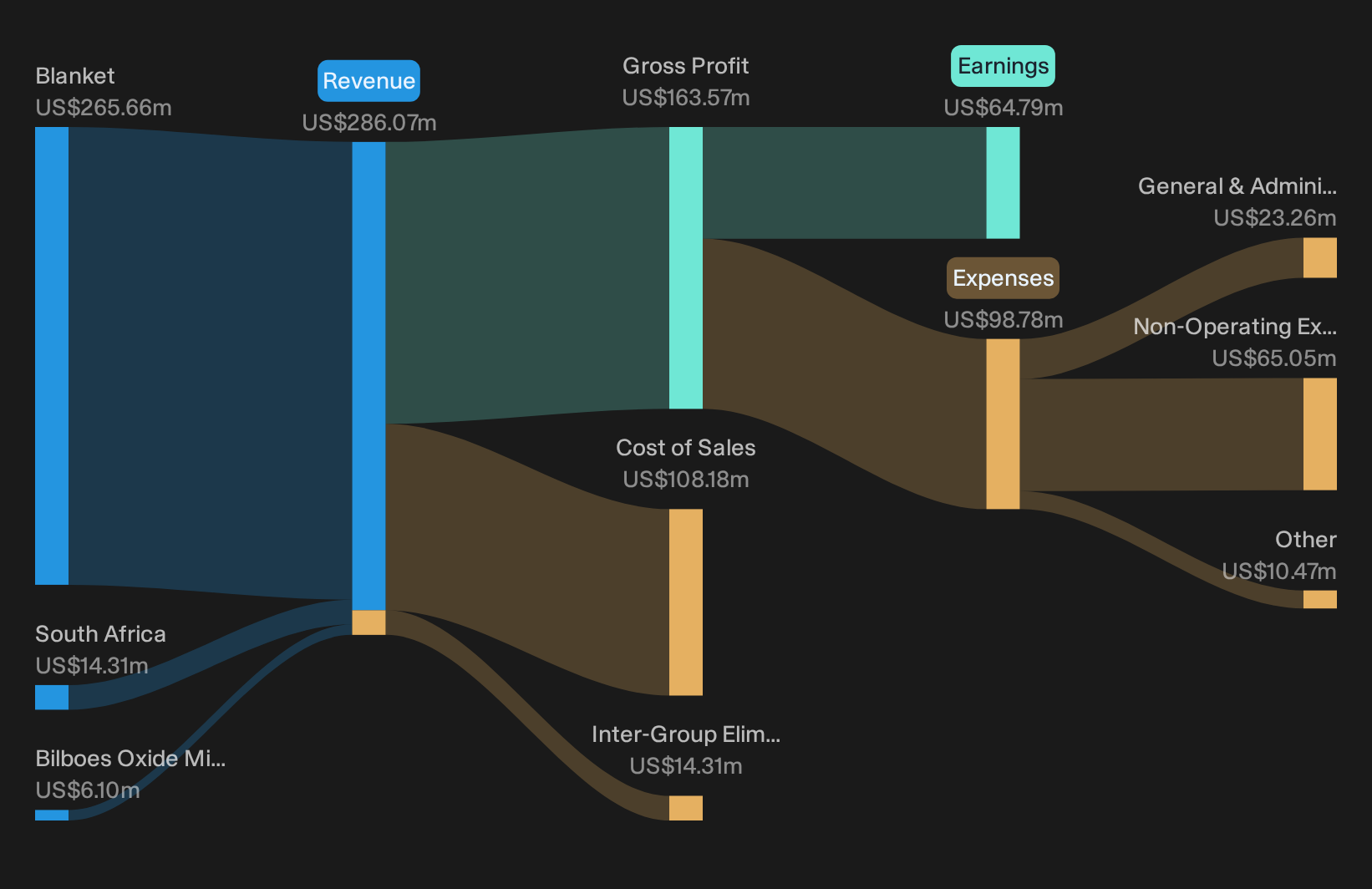
Overview: Caledonia Mining operates and develops gold mines in Zimbabwe, using cash flow from its Blanket Mine to support a progressive dividend.
Operations: The business generates about US$265.7 million from the Blanket Mine, with smaller contributions from South Africa and Bilboes Oxide operations.
Market Cap: US$451 million
Caledonia Mining matters in this dividend-growth screen because Blanket Mine throws off cash that can fund a modest but growing payout. At the same time, new projects build optionality around how long that income stream can keep rising.
"Because CMCL's assets are located entirely in Zimbabwe, institutional models apply a severe localized discount rate penalty (typically 1,000 to 1,500 basis points above standard equity risk premiums) due to localized regulatory, currency, and infrastructure risks."
What happens to that carefully built dividend story if a single assumption about future cash generation or jurisdiction risk quietly shifts?
If that risk premium starts to compress, the full narrative for Caledonia Mining shows how Caledonia Mining's dividend story could accelerate beyond the headline jurisdiction debate.
Procter & Gamble (PG)
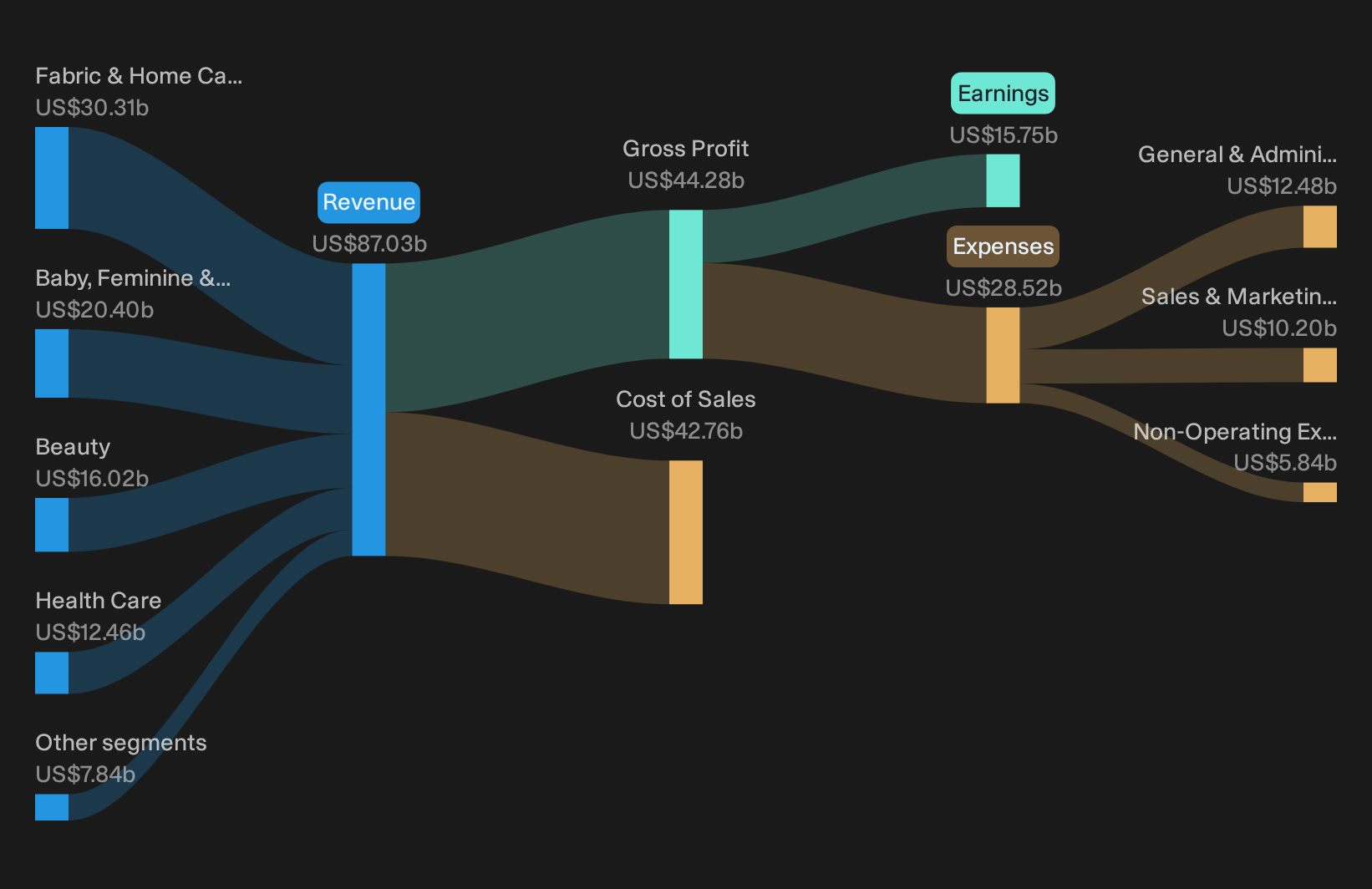
Overview: Procter & Gamble sells everyday consumer products like Tide, Pampers, Gillette, and Febreze, with its Fabric & Home Care brands providing steady, theme-aligned cash flows that support sustainable dividend and earnings growth within a broader diversified portfolio.
Operations: Procter & Gamble generates about US$30.3b from Fabric & Home Care, US$20.4b from Baby, Feminine & Family Care, and US$16.0b from Beauty, with revenue split between roughly US$45.3b internationally and US$41.7b in the United States.
Market Cap: US$346.1b
For a Type 2 dividend screen built around 2% to 5% yields and dependable earnings, Procter & Gamble matters because Tide, Downy, Gain, and Febreze give the business recurring household spend that can underpin an income stream without relying on one off growth stories.
"Procter & Gamble operates within a very competitive environment. However, its higher operating margins and wide moat is a clear sign it still operates with competitive advantages over its competitors as well as it has the capability of raising prices if needed."
What investors really need to watch now is how one unseen pressure on that pricing power shapes the next leg of dividend growth.
That pricing pressure question is exactly where the full narrative for Procter & Gamble picks up, explaining how Procter & Gamble's brand strength may support its cash flow and dividend ambitions.
Seeking Fresh Alternatives Before They Fly
Fresh opportunities move fast. Some are building quiet momentum, others are dropping into bargain territory or still under the radar for now. Before the crowd catches on, investors may want to act promptly.
- Spot established cash generators before they get fully priced by institutions by scanning the curated list of solid balance sheet and fundamentals (25 results) while the ideas presented there may still be underfollowed.
- Look for early leaders in automation with revenue models that already appear clearly defined by reviewing the tight shortlist of 93 robotics and automation stocks ahead of any potential increase in trading interest.
- Track the next wave of compute infrastructure suppliers that are currently attracting attention by scanning the focused 88 AI infrastructure stocks while expectations and valuations are still being formed.
This article by Simply Wall St is general in nature. We provide commentary based on historical data and analyst forecasts only using an unbiased methodology and our articles are not intended to be financial advice. It does not constitute a recommendation to buy or sell any stock, and does not take account of your objectives, or your financial situation. We aim to bring you long-term focused analysis driven by fundamental data. Note that our analysis may not factor in the latest price-sensitive company announcements or qualitative material. Simply Wall St has no position in any stocks mentioned.
Have feedback on this article? Concerned about the content? Get in touch with us directly. Alternatively, email editorial-team@simplywallst.com