
Buy Upgrade Could Be A Fresh Angle On Netflix Stock (NFLX)
- Netflix is back in the spotlight after Deutsche Bank upgraded the stock to Buy, pointing to long-term opportunities tied to international expansion and the use of artificial intelligence across content production, recommendations, and advertising.
- The shift in focus toward Netflix’s overseas engagement and AI driven efficiency speaks directly to core issues like content spend, viewing time, and future margin potential rather than short term sentiment swings.
- We will now look at how Netflix’s investment narrative could shift given Deutsche Bank’s renewed focus on international and AI execution.
See how Netflix compares to other streamers under pressure from competition and engagement shifts by reviewing our curated list of 32 high quality undervalued stocks.
Netflix Investment Narrative Recap
To own Netflix through this volatility, you need to believe the company can keep turning its streaming scale, ad tier and international footprint into steady earnings growth despite heavier competition from YouTube and other screens. The recent Deutsche Bank upgrade does not change the near term reality that the key catalyst is engagement stabilisation, especially in the US where viewing time has been soft.
The biggest risk still sits on the other side of that same coin. If viewing time and subscriber activity drift further toward user generated platforms, Netflix may need to keep raising content and marketing spend just to hold share, which could pressure margins even with live programming, gaming and podcasts broadening the product.
The selective push into live sports, including the move from two to five exclusive NFL games with global rights this season, is the clearest recent announcement that ties directly to these catalysts. Live events create appointment viewing that can lift time spent on Netflix and open up premium ad slots, which matters as the ad tier and in house ad tech scale.
This sports approach also carries execution risk. If occasional marquee events fail to drive recurring engagement or justify higher content costs, the firm could end up layering more expense onto an already large content budget without a clear payoff, which would matter for a stock that still trades on a higher P/E than some entertainment peers.
Netflix's narrative projects US$65.5b revenue and US$19.8b earnings by 2029. This implies 10.6% yearly revenue growth and an earnings increase of about US$6.2b from US$13.6b today.
Discover how Netflix's fair value indicates a 34% potential upside to its current price, which could close sooner than many investors expect.
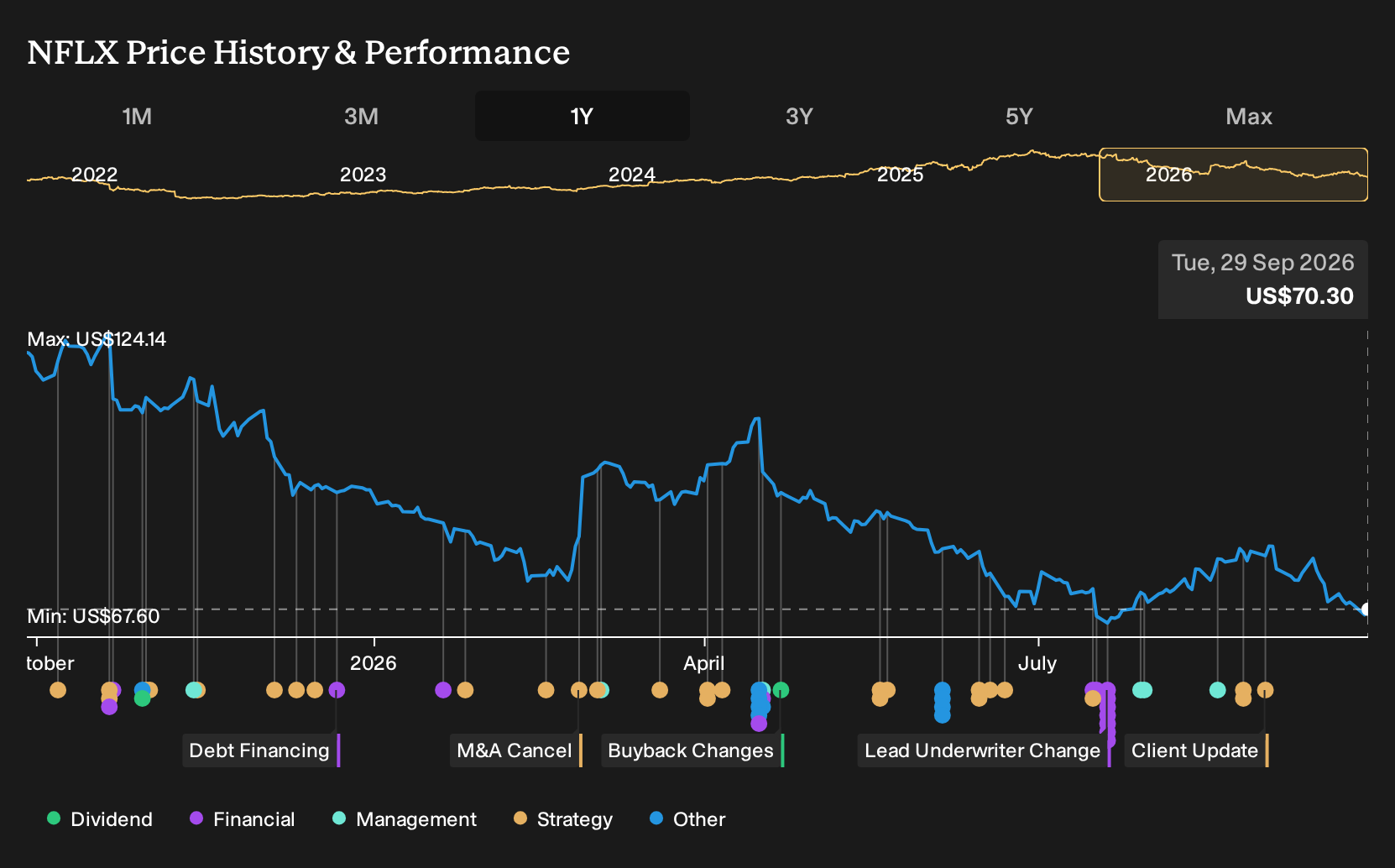
Exploring Other Perspectives
Some of the lowest ranked analysts focus on a different risk. They worry that surging content spend will swamp Netflix’s earnings power. Before this Deutsche Bank upgrade, that group was only pencilling in about US$63.5b of revenue and US$17.1b of earnings by 2029. Their view is more cautious, and it shows how widely opinions can differ. Use it as a prompt to explore multiple scenarios rather than anchoring on any single forecast.
Explore 43 other Netflix fair value estimates, including one that suggests as much as 14% downside from the current price.
Form Your Own Verdict
Don't just follow the ticker. Dig into the data and build a conviction that's truly your own.
- A great starting point for your Netflix research is our analysis highlighting 3 key rewards and 2 important warning signs that could impact your investment decision.
- See our latest analysis for Netflix. The report includes a comprehensive fundamental analysis summarized in a single visual, the Snowflake, making it easy to evaluate Netflix's overall financial health at a glance.
Looking for more Netflix style investment ideas?
If this Netflix story has sharpened how you think about pricing power, content spend and earnings potential, you can use that same framework to scan other opportunities with the Simply Wall St Screener before you put fresh capital to work.
- Target potential growth outliers at the smaller end of the market by reviewing 9 elite penny stocks with strong financials, which already show relatively strong financial foundations.
- If resilience matters most to you, focus on businesses with healthier balance sheets and consistent fundamentals by starting with this list of solid balance sheet and fundamentals (25 results).
- For a broader hunting ground that still keeps quality in view, cast the net over 17 high quality undiscovered gems, which combine robust numbers with lower visibility among investors.
This article by Simply Wall St is general in nature. We provide commentary based on historical data and analyst forecasts only using an unbiased methodology and our articles are not intended to be financial advice. It does not constitute a recommendation to buy or sell any stock, and does not take account of your objectives, or your financial situation. We aim to bring you long-term focused analysis driven by fundamental data. Note that our analysis may not factor in the latest price-sensitive company announcements or qualitative material. Simply Wall St has no position in any stocks mentioned.
Have feedback on this article? Concerned about the content? Get in touch with us directly. Alternatively, email editorial-team@simplywallst.com