
The Resonac Debate Was About Costs, Not Shrinking Sales
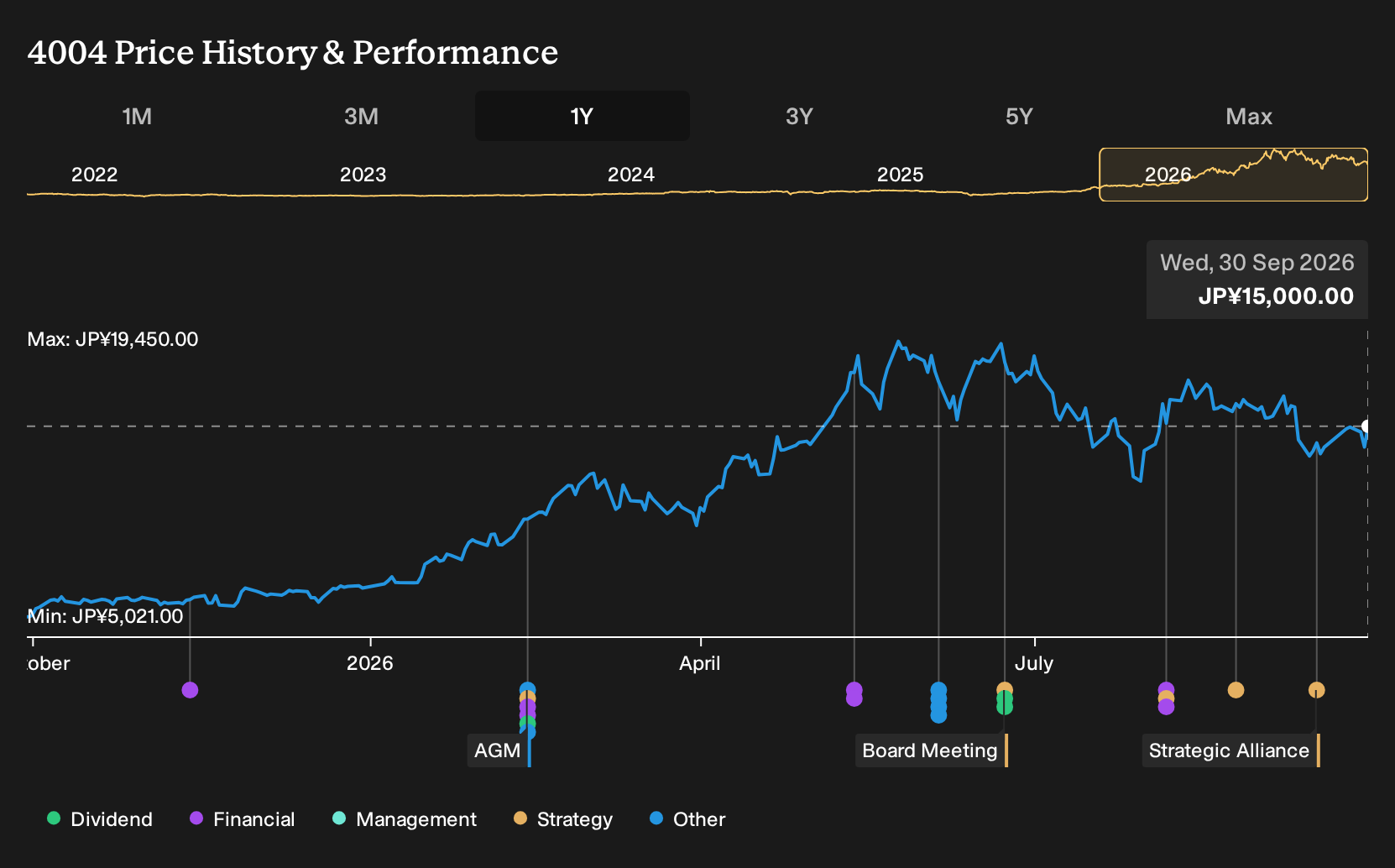
If you had bought Resonac on 30 September 2025 and simply held on, the result would have been hard to ignore. For Resonac shareholders, the return over the past year was 201.5%, including dividends. That outcome now throws an old fork in the road into sharper relief. Were early buyers right to prioritise semiconductor materials growth and portfolio reshaping over shrinking chemicals revenue and rising costs, or did they just get lucky with timing?
The move put Resonac in the middle of this trade. Scan 35 best rare earth metal stocks for other companies exposed to it.
The Two Resonac Stories Investors Had To Weigh
The shares cost ¥5,045 at the start of the period, and anyone looking at Resonac then had to decide which story felt more realistic.
On the optimistic side, the bull camp saw a Fair Value of ¥5,700, a price implied by their forecasts, tied to semiconductor materials and advanced graphite driving higher growth and segment EBITDA margins above 30%. They also assumed portfolio streamlining would free up cash for specialty chemicals and long term flexibility.
The cautious view, with a Fair Value of ¥3,300 based on more restrained expectations, focused on shrinking revenue of 6% a year and aging, capital hungry assets. Rising sustainability and regulatory demands were treated as a key risk that could lift ongoing investment needs and squeeze free cash flow.
What The Results Changed For Resonac
The clearest update came from Resonac’s Q2 2026 report. Revenue moved from ¥320,932m in Q2 2025 to ¥368,960m in Q2 2026, while net income climbed from ¥10,900m to ¥33,168m and net margin widened from 3.4% to 9.0%. That pattern aligned with the more optimistic case, which focused on higher profitability from semiconductor and advanced materials.
The lesson is simple. When a story hinges on a mix shift toward higher margin lines, it is useful to track net margin and segment disclosure over time rather than just headline revenue.
What Resonac's Current Price Already Assumes
Resonac now trades at ¥15,000, a level that embeds a strong one year gain of 201.5% over the past year from ¥5,045. The selected Narrative’s Fair Value sits below the current price, so its author sees today’s quote as embedding optimistic expectations.
The Narrative leans on resilience in semiconductor materials while stressing heavy spending needs, regulatory pressure, and merger execution risk. Anyone paying ¥15,000 is implicitly judging that earnings can keep absorbing sustainability, capex, and integration burdens without crimping long run profitability.
"The accelerating global focus on sustainability and decarbonization is prompting tighter environmental regulations and an industry-wide pivot towards greener chemistries. Resonac, with sizable exposure to fossil-derived products in its Chemicals and Mobility segments, faces potentially costly transitions that could inflate capital expenditures and compliance costs, limiting future free cash flow and compressing earnings margins."
That disagreement has a full argument behind it. → Uncover the lower Fair Value this Narrative argues for
Where Could You Get There Earlier?
By the time a rally makes headlines, you are reading about returns someone else has already earned. Why not go straight to the source and look for your own contrarian opportunity? These three companies trade below our estimated value.
- Company 1 - 50% below our estimate - builds security, fintech and AI platforms as subsidiaries expand services and independence.
- Company 2 - 42% below our estimate - targets core fans with focused content, merchandising and tighter cost control after scaling back expansion.
- Company 3 - 38% below our estimate - opens gender-focused fitness clubs while adding higher-margin health merchandise and subscription offerings.
That is three of the list. See the full list of 19 companies trading below our estimate →
This article by Simply Wall St is general in nature. We provide commentary based on historical data and analyst forecasts only using an unbiased methodology and our articles are not intended to be financial advice. It does not constitute a recommendation to buy or sell any stock, and does not take account of your objectives, or your financial situation. We aim to bring you long-term focused analysis driven by fundamental data. Note that our analysis may not factor in the latest price-sensitive company announcements or qualitative material. Simply Wall St has no position in any stocks mentioned.
Have feedback on this article? Concerned about the content? Get in touch with us directly. Alternatively, email editorial-team@simplywallst.com