
3 Banking Stocks Built For Higher Bond Yields
Government bond yields have ripped higher, money is flowing back into cash and markets are rapidly rethinking what long term returns are worth when safer assets pay more. That shift can punish some areas of the market while handing fresh pricing power to others. This article walks through three stocks linked to these higher yield trends and explains how each might either benefit or face new pressures from this rate reset.
The three stocks covered next are just a starting sample of this higher yield theme, and the full screen surfaced 14 more financial firms with equally compelling deposit and cash-management stories that do not fit into one article.
If you want to identify and analyze more potential beneficiaries of this rate reset, head straight to the Beneficiaries of Higher Yields: Banks, Insurers, and Cash/Money-Market Platforms screener and use it to focus on the opportunities that best match your own conviction.
KCB Group (NASE:KCB)
Overview: KCB Group is a large East African banking group providing corporate, retail, treasury, mortgage, insurance and wealth services across seven countries.
Market Cap: KES297.25b
KCB Group fits this higher-yield theme because its broad deposit base and rate-sensitive lending book tie net interest income directly to rising government and policy yields.
Rapid rollout of new digital banking channels, including a mobile app enabling end-to-end account opening, positions KCB Group to benefit from growing mobile and digital adoption in East Africa. This may support growth in customer acquisition, increased transaction volumes, and lower cost-to-income ratios, and in turn support both revenue expansion and margins.
What matters next is how one unresolved credit quality pressure interacts with this stronger earnings engine to shape future profitability.
How that trade off evolves is exactly what the full narrative for KCB Group unpacks, including where digital momentum could be masking brewing credit stress.

WaFd (WAFD)
Overview: WaFd is a US regional bank that offers lending, deposit, money market and cash-management services to households and businesses.
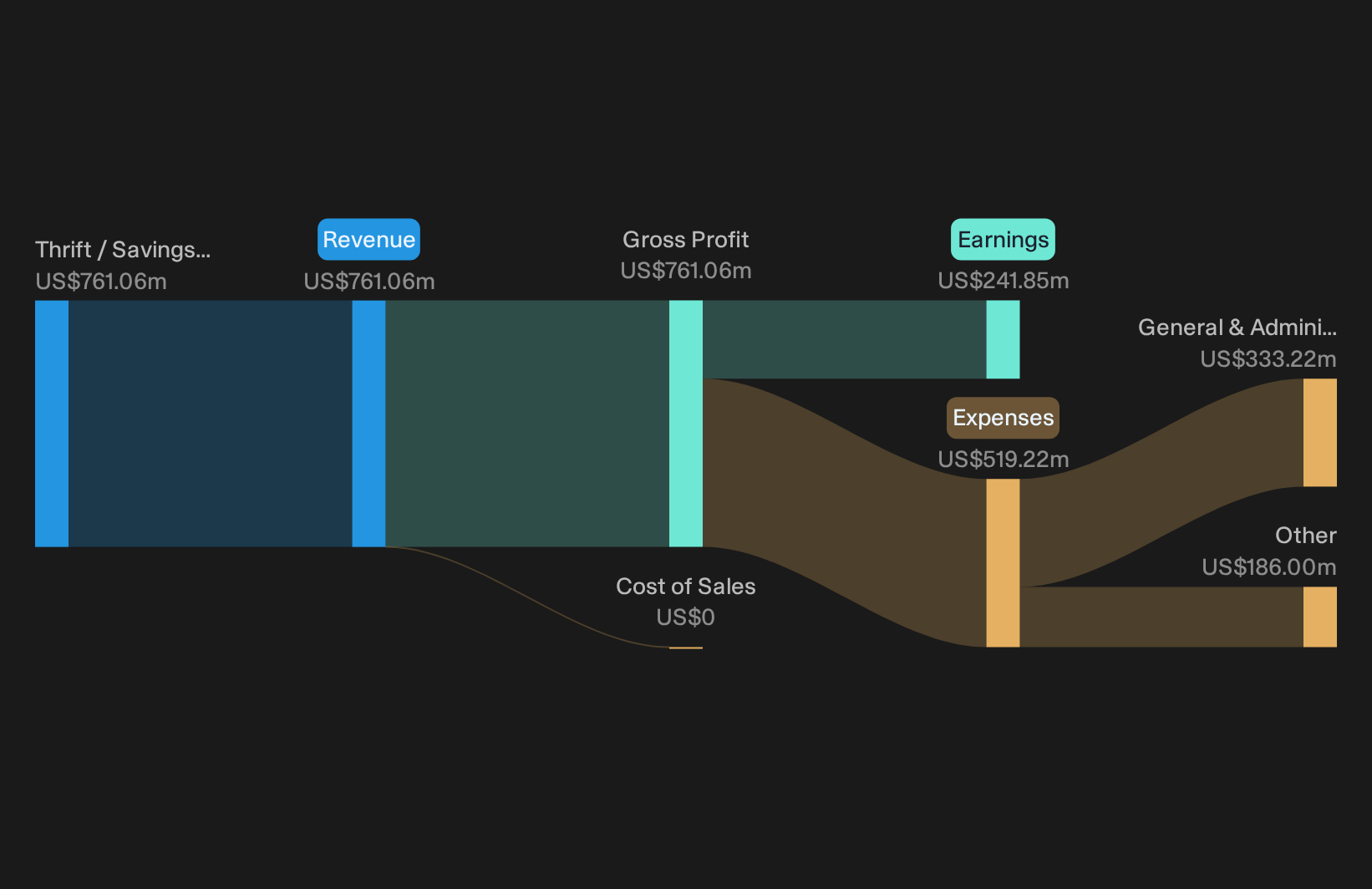
Operations: WaFd generated about US$761 million of revenue from thrift and savings and loan activities entirely within the United States.
Market Cap: US$2.24b
WaFd matters for this higher yield theme because its deposit franchise, loan book and cash-management offering are closely linked to where interest rates settle.
Ongoing runoff of low yielding single family mortgage loans and redeployment into higher yielding agency mortgage backed securities with no credit risk is expected by some market participants to structurally lift asset yields and net interest margin over time, which they believe could improve net income.
The key factor is how a change in funding costs versus loan pricing ultimately shapes those rate driven margins.
That funding puzzle is exactly what the full narrative for WaFd unpacks. It reveals where WaFd’s margin story could be quietly accelerating or stalling as rates reset.
Equity Group Holdings (NASE:EQTY)
Overview: Equity Group Holdings is a pan East African bank offering deposit, lending, payments, wealth and insurance services to individuals and businesses.
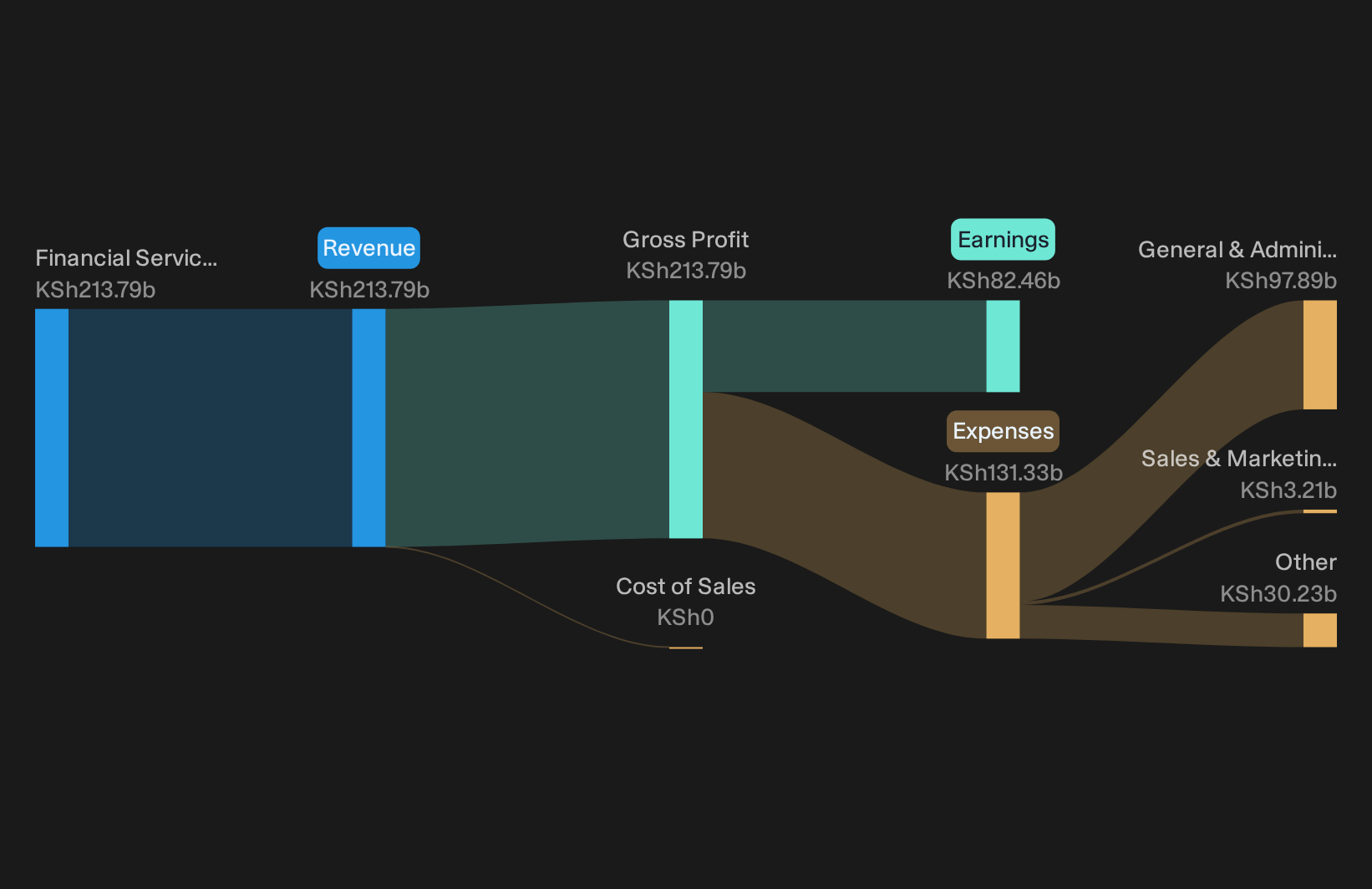
Operations: Equity Group Holdings reports KES213.79b of revenue from financial services to individuals and small and medium sized enterprises.
Market Cap: KES396.24b
Equity Group Holdings fits this higher yield screen because its broad deposit base and SME focused loan book directly tie earnings power to where government and money market rates settle.
The bank is in the early stages of a major balance sheet optimization, reallocating up to KES 450+ billion from low-yielding government securities (approximately 8 to 9% yield) into higher-yielding loans for SMEs and other customers (approximately 14 to 16% yield), which could affect net interest income and bottom-line earnings as this is executed.
What happens to Equity Group Holdings’ margins if one critical credit quality pressure does not improve as that higher yielding book scales up.
If that credit risk does start to bite, the full narrative for Equity Group Holdings shows where Equity Group Holdings could still see earnings momentum accelerating or quietly stalling.
Seeking Alternatives Before Momentum Flies
Fresh ideas move first. By the time every headline catches a breakout, the smoother entry points are often gone. Scan these under the radar lists while it matters and act now.
- Spot strong balance sheets before the crowd by running the list of solid balance sheet and fundamentals (205 results) and see which businesses still look resilient while prices have not fully caught up.
- Consider potential income opportunities by checking the 160 dividend fortresses and track which high yield payers might remain attractive if rates change.
- Explore the next automation wave through the 93 robotics and automation stocks and review which specialists could benefit if demand for smarter factories grows.
This article by Simply Wall St is general in nature. We provide commentary based on historical data and analyst forecasts only using an unbiased methodology and our articles are not intended to be financial advice. It does not constitute a recommendation to buy or sell any stock, and does not take account of your objectives, or your financial situation. We aim to bring you long-term focused analysis driven by fundamental data. Note that our analysis may not factor in the latest price-sensitive company announcements or qualitative material. Simply Wall St has no position in any stocks mentioned.
Have feedback on this article? Concerned about the content? Get in touch with us directly. Alternatively, email editorial-team@simplywallst.com