
Phillips 66 Stock And 2 Energy Shares Facing The Next Oil Supply Test
Energy headlines are no longer just background noise. With major producing regions on edge and policymakers scrambling to keep markets steady, shocks in oil and gas can ripple quickly into portfolios. That creates both openings and traps for anyone watching global integrated energy and oil majors. This article walks through three stocks exposed to the latest news and explains why some investors are leaning in while others are stepping back.
The stocks covered below are only a sample of what is happening across global integrated energy and oil majors, and the full screen surfaced 11 more large players with equally compelling stories that are not discussed here. To look past headlines and identify which giants best fit your own risk, income, and price views, head straight into the Global Integrated Energy & Oil Majors screener.
Phillips 66 (PSX)
Overview: Phillips 66 is a large integrated energy company focused on refining, midstream, chemicals, marketing and renewable fuels that gives investors broad exposure to traditional oil value chains.
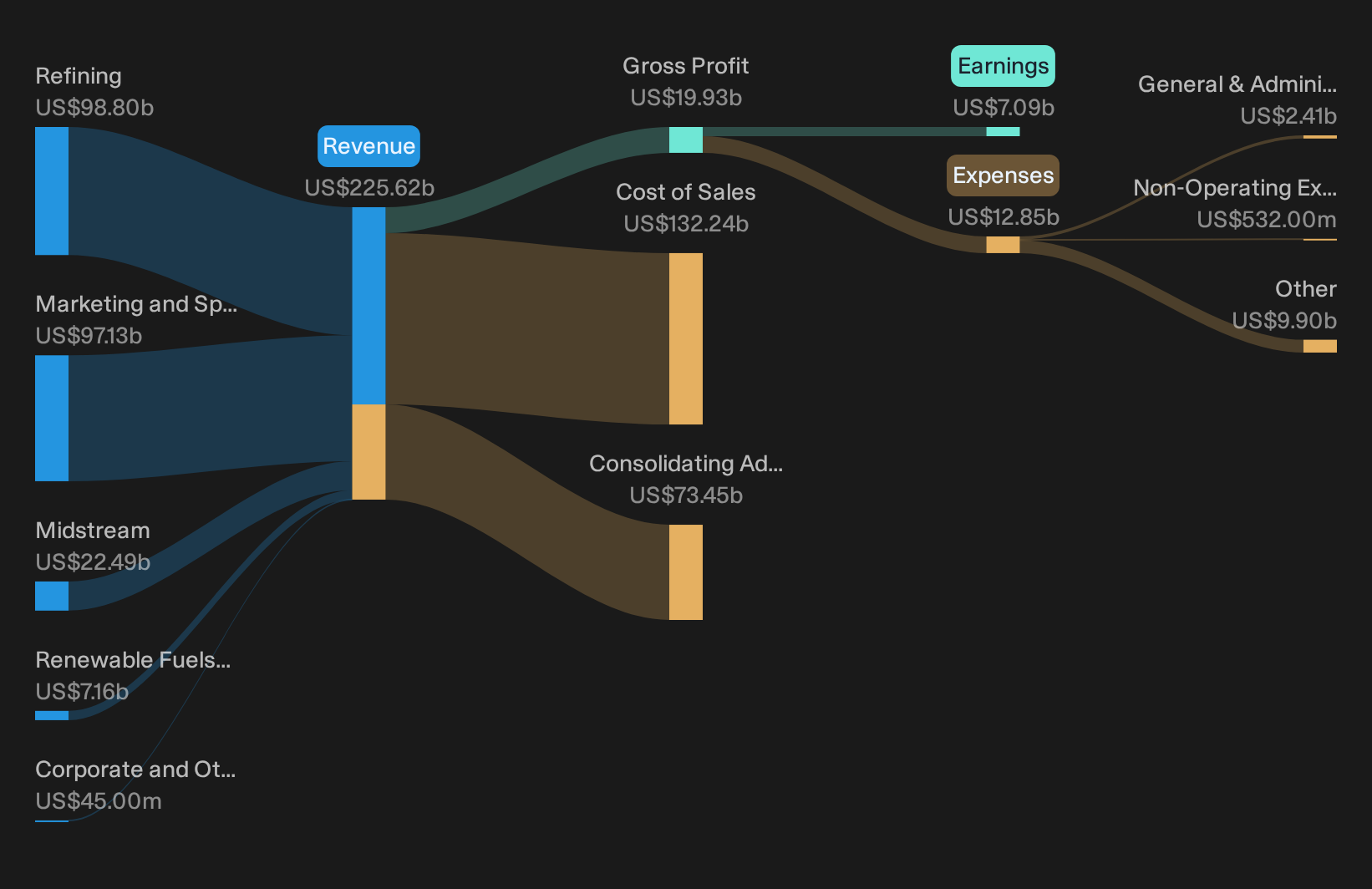
Operations: Phillips 66 generates most of its revenue from Refining at about US$98.8b and Marketing and Specialties at roughly US$97.1b, with additional contribution from Midstream at around US$22.5b.
Market Cap: US$101.2b
For an investor looking at global integrated energy and oil majors, Phillips 66 matters because its downstream heavy model can translate sharp moves in crude and product markets into refining, marketing and midstream earnings that are closely tied to real world fuel demand.
"Expansion of the Midstream platform, including gas plants like Dos Picos II and Iron Mesa plus the Coastal Bend pipeline build out, is expected to support higher NGL transportation and fractionation volumes over time."
The real swing factor for Phillips 66 is what happens to refining margins if one unresolved supply pressure tightens product markets further.
If that margin wildcard matters for you, read the full narrative for Phillips 66 to see how Phillips 66’s refining leverage, midstream build out and risks really stack up.
Viva Energy Group (ASX:VEA)
Overview: Viva Energy Group runs an integrated fuel supply, refining and convenience retail network across Australia, Singapore and Papua New Guinea, tying its fortunes closely to traditional oil value chains and regional energy security.
Operations: Viva Energy Group generates A$12.8b from Convenience & Mobility, A$17.2b from Commercial & Industrial and A$7.6b from Energy & Infrastructure, before inter-segment eliminations.
Market Cap: A$5.1b
Viva Energy Group taps directly into the screener theme because it controls both fuel production and distribution in key Asia-Pacific markets, which can matter a lot when supply shocks push energy security to the top of government and corporate agendas.
"Significant synergies and cost reduction initiatives from the integration of recent acquisitions, operational efficiency improvements, and technology upgrades are on track to deliver approximately $90 million of run-rate earnings uplift by end-2026, directly supporting margin expansion and EBITDA growth."
The real test for Viva Energy Group is what happens to margins and cash generation if a single policy shift changes how that uplift is shared.
That policy wildcard is exactly what full narrative for Viva Energy Group unpacks, separating one-off margin uplift from longer term earning power and where Viva Energy Group could still be mispriced.

CVR Energy (CVI)
Overview: CVR Energy runs U.S. refineries, renewable diesel operations and nitrogen fertilizer plants, tying fuel markets directly to agricultural demand.
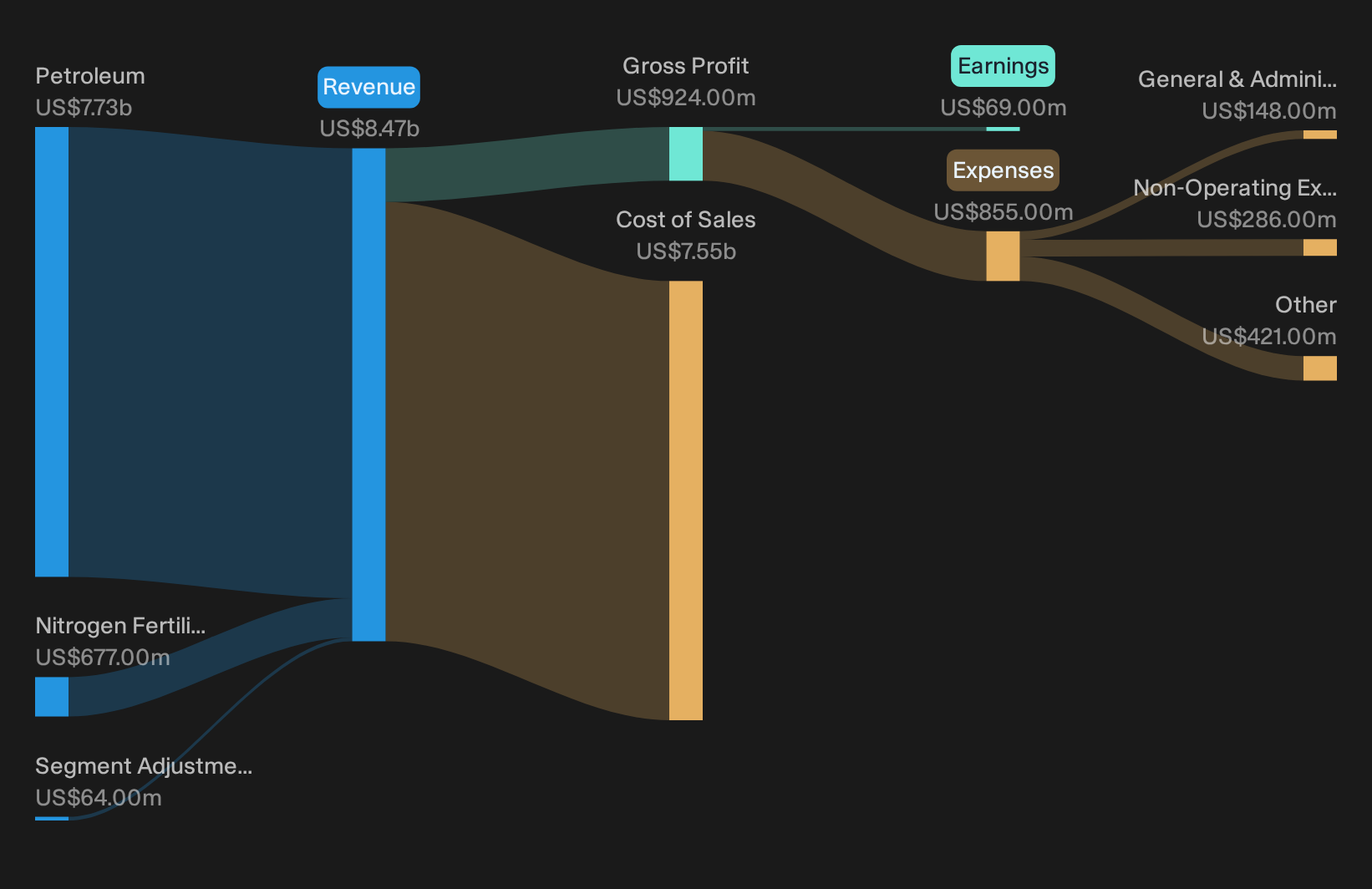
Operations: CVR Energy generates about US$7.7b from Petroleum and US$677 million from Nitrogen Fertilizer, almost entirely from customers in the United States.
Market Cap: US$5.1b
CVR Energy gives this screener a slightly different flavor, since it links classic refining exposure with fertilizer and renewables that respond in their own way when supply risks push fuel and feedstock prices around.
“With no additional turnarounds planned until 2027, CVR Energy reports expectations for increased throughput and efficiency, with the potential to affect revenue and net margins by reducing operational interruptions.”
The real swing factor for CVR Energy is what happens to refining and fertilizer pricing if one unresolved policy decision shifts input costs again.
When that policy decision finally lands, full narrative for CVR Energy shows how CVR Energy’s refining and fertilizer earnings could decouple, with risks and upside often overlooked by the market.
Seeking Alternatives Before The Crowd?
Fresh ideas move first. Stocks with real momentum often get re-rated quickly once attention catches up, so use these curated shortlists while it matters and get in early.
- Target durable cash flows with companies screened for balance sheet strength and fundamentals using the list of solid balance sheet and fundamentals (25 results).
- Ride structural demand for electricity upgrades by scanning curated power grid technology and infrastructure players through the 39 power grid technology and infrastructure stocks.
- Position ahead of potential demand shifts by reviewing hand-picked nuclear energy infrastructure opportunities inside the 19 nuclear energy infrastructure stocks.
This article by Simply Wall St is general in nature. We provide commentary based on historical data and analyst forecasts only using an unbiased methodology and our articles are not intended to be financial advice. It does not constitute a recommendation to buy or sell any stock, and does not take account of your objectives, or your financial situation. We aim to bring you long-term focused analysis driven by fundamental data. Note that our analysis may not factor in the latest price-sensitive company announcements or qualitative material. Simply Wall St has no position in any stocks mentioned.
Have feedback on this article? Concerned about the content? Get in touch with us directly. Alternatively, email editorial-team@simplywallst.com