
Siemens (SIE) Holders Are Up 22% On A Case The Market Still Treated Too Narrowly
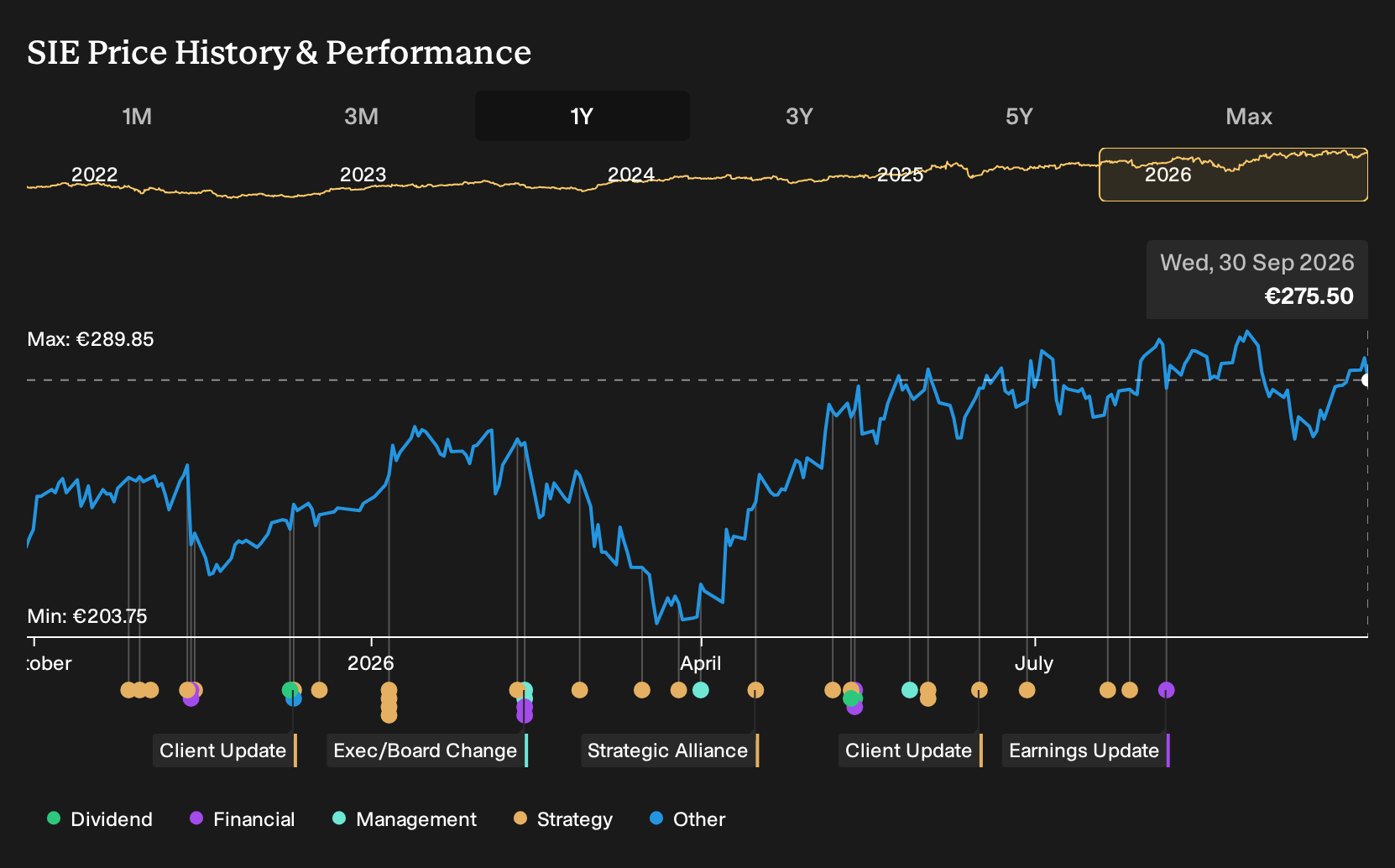
If you were weighing Siemens in late September 2025, you saw upbeat expectations for electrification and industrial software alongside worries about weak automation demand and tougher Chinese competitors. For Siemens shareholders, the return over the past year was 21.6%, including dividends. That outcome arrived as the group reported higher revenue and net income in Q3 2026 and rolled out new AI and grid initiatives. So what exactly in the original thesis really justified taking that risk?
On Simply Wall St, a Narrative is an investor's thesis written down: the reasoning, plus the numbers it rests on. Run those numbers and you get an estimated Fair Value.
The move put Siemens in the middle of this trade. Scan 39 power grid technology and infrastructure stocks for other companies exposed to it.
The Two Siemens Stories Investors Had To Weigh
The shares cost €229 at the start of the period, and anyone looking at Siemens then was really choosing between two very different stories that both sounded plausible.
On the optimistic side, the bull Narrative put Fair Value at €246, assuming 6.1% annual revenue growth and a profit margin of 11.2%. That view leaned on electrification, data center demand, and a €117b order backlog in areas like Mobility and Smart Infrastructure.
The more cautious bear Narrative set Fair Value at €208, built on 5.0% annual revenue growth and a 17.0% industrial profit margin. This view treated Siemens’ own 5% to 7% revenue target and an 18.0x future P/E as reasonable, but not something to pay a higher price for upfront.
What The Siemens Evidence Actually Tested
Siemens announcing a new €6b share buyback alongside Q2 order growth of 18%, a record €124b backlog and 6% higher revenue clearly leaned toward the optimistic case that electrification and software demand would support growth. Q3 2026 results backed that up, with revenue, net income and net margin all rising versus Q3 2025, so the evidence largely supported the bull Narrative.
The key lesson is simple. When a thesis hinges on growth and profitability, you check whether reported revenue, absolute profit and margin all move in the direction the original forecast required. Then you ask if the price already assumes that.
What Siemens' Current Price Already Assumes
Today Siemens trades at €276, after a 21.6% gain over the past year. The selected bullish Narrative still places its Fair Value above that level, arguing the market treats Siemens more like a traditional industrial group than a digital infrastructure platform.
The central claim is that today’s price underplays how far Siemens can embed software, AI and simulation into long-lived industrial systems.
"Siemens today does not merely sell machines; it sells decision-making capability through digital twins, simulation, and AI-driven optimization. The Moat: Why Siemens Is Hard to Attack Siemens’ competitive advantage is not a single product. It is an ecosystem."
One Narrative has put a figure on that disagreement. → See the Narrative with its higher Fair Value, assumptions and all
Where Could You Get There Earlier?
What if your next investment idea came before the headlines? Go straight to the companies whose prices and our estimates still disagree. Three places to start, with the names waiting behind the link.
- Company 1 - 38% below our estimate - uses digital channels and richer data to expand higher margin lending.
- Company 2 - 24% below our estimate - tightens project discipline while adding energy and infrastructure design mandates via acquisitions.
- Company 3 - 23% below our estimate - shifts earnings mix toward branded packaged foods and higher margin beverage products.
That is three of the list. See the full list of 189 companies trading below our estimate →
This article by Simply Wall St is general in nature. We provide commentary based on historical data and analyst forecasts only using an unbiased methodology and our articles are not intended to be financial advice. It does not constitute a recommendation to buy or sell any stock, and does not take account of your objectives, or your financial situation. We aim to bring you long-term focused analysis driven by fundamental data. Note that our analysis may not factor in the latest price-sensitive company announcements or qualitative material. Simply Wall St has no position in any stocks mentioned.
Have feedback on this article? Concerned about the content? Get in touch with us directly. Alternatively, email editorial-team@simplywallst.com