
Is Buyback Completion Altering The Investment Case For Kawasaki Kisen Kaisha Stock?
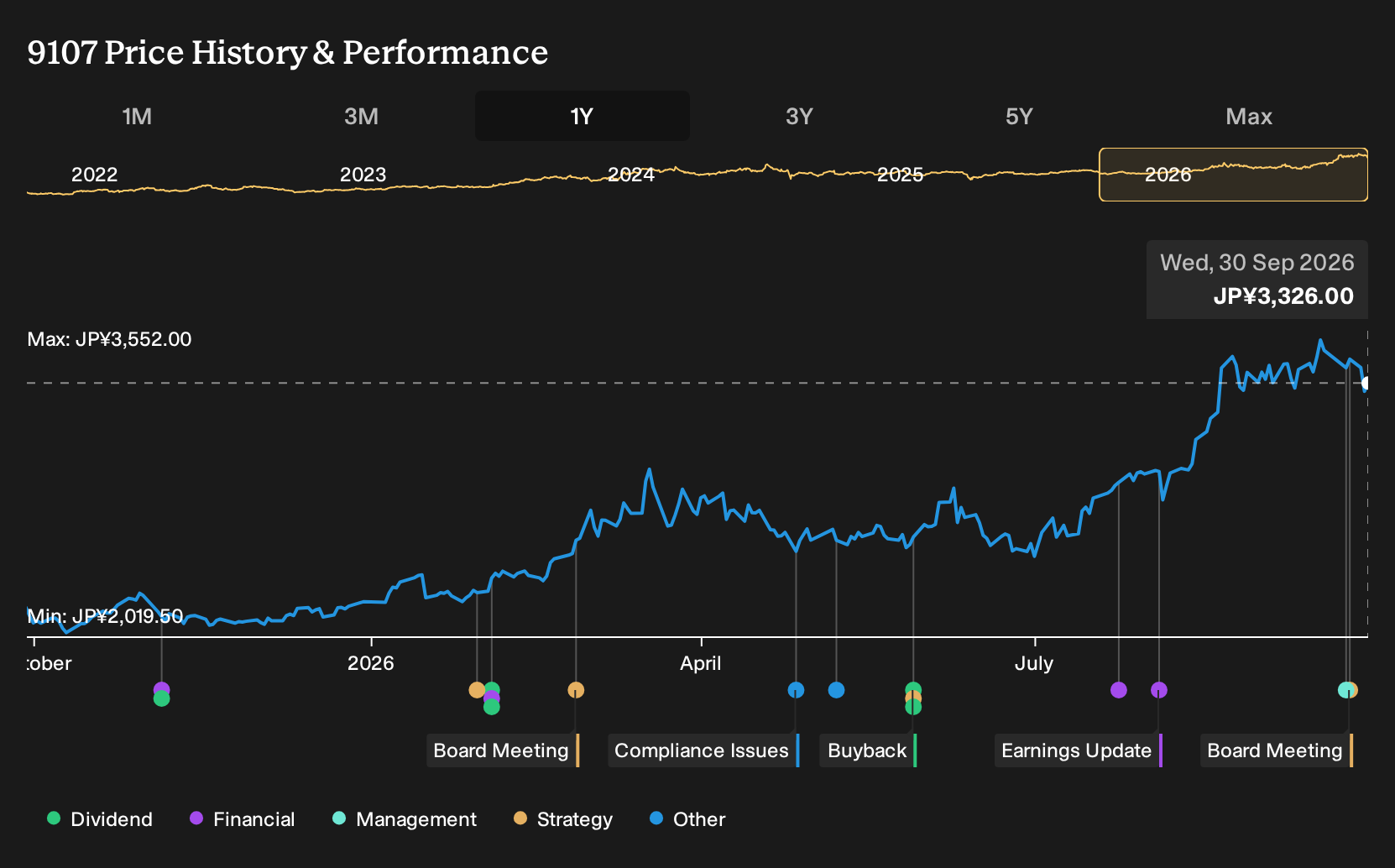
- Kawasaki Kisen Kaisha has completed a ¥122,480.51 million buyback of 44,429,000 shares, about 7.15% of its equity, and its board has met to consider cancelling a portion of the treasury stock, alongside the resignation of an independent outside director that reduced the Audit Committee to four members.
- The combination of a large completed repurchase and potential cancellation of those treasury shares could reshape Kawasaki Kisen Kaisha’s capital structure at a time when shipping markets face trade, capacity, and decarbonisation pressures.
- The focus now turns to how Kawasaki Kisen Kaisha’s investment narrative could shift as management completes a major share repurchase program.
Scan how Kawasaki Kisen Kaisha’s capital return moves compare with other companies reshaping their balance sheets through buybacks and cancellations by reviewing the list of solid balance sheet and fundamentals (23 results) in one place.
Kawasaki Kisen Kaisha Investment Narrative Recap
Kawasaki Kisen Kaisha attracts shareholders who buy into a simple idea. You are backing a large transporter that leans on long charters in energy logistics while absorbing more volatile car carrier, container, and dry bulk exposure. The big short term swing factor is freight pricing and volumes across those cyclical segments. The latest buyback completion and potential share cancellation do not change that operating reality in a material way.
What could matter more is whether Kawasaki Kisen Kaisha can keep funding decarbonisation, fleet renewal, and digital projects without eroding returns as trade patterns shift and overcapacity lingers. Execution risk around replacement timing, emissions compliance spending, and maintaining margins in soft markets still looks like the key pressure point.
The most relevant development around this news is the September 25 board meeting to consider cancellation of treasury stock. If a significant portion of the 44,429,000 repurchased shares is retired, the capital structure tightens while the underlying issues of trade headwinds, vessel supply, and regulatory costs remain the same.
For you as a holder, the interest is how this potential cancellation interacts with existing catalysts. A smaller share count could magnify any future earnings progress, yet the same exposure to regionalisation of supply chains, containership overcapacity, and emission driven capex persists. Attention still sits on how Kawasaki Kisen Kaisha manages cash generation, fleet investment, and risk in its more cyclical shipping segments.
Kawasaki Kisen Kaisha Forecasts Behind the Buyback Story
Analysts currently frame Kawasaki Kisen Kaisha against a relatively modest growth backdrop. Consensus expects revenue to rise by 3.3% a year over the next three years, with profit margins moving from 11.9% today to 12.2% by around 2029. Earnings are projected to reach ¥142.1b by that 2029 horizon, compared with ¥126.4b in earnings today, which implies an earnings increase of about ¥15.7b over the period. Those projections sit alongside an expectation that the share count will decline by roughly 4.24% each year for the next three years as repurchases continue to bite.
Kawasaki Kisen Kaisha's narrative projects ¥1,169.9b revenue and ¥142.1b earnings by 2029. This assumes 3.3% yearly revenue growth and an earnings increase of about ¥15.7b from ¥126.4b of earnings today.
On valuation, the analyst framework leans heavily on those 2029 earnings estimates. For the current price targets to line up, Kawasaki Kisen Kaisha would need to trade on a P/E of 12.5x in 2029, versus about 16.7x today and above the 11.3x figure cited for the broader Japanese shipping group. That setup means the consensus view combines two moving parts: modest earnings progress paired with a lower multiple than today. For you, the question is how comfortable you are with that combination in a sector where freight cycles, long term charters, and decarbonisation capex can all pull in different directions at the same time.
Uncover why Kawasaki Kisen Kaisha's fair value indicates a 14% potential downside to its current price, a valuation premium that may not hold if sentiment cools.
Exploring Other Perspectives
Some of the most optimistic analysts anchor on resilient car carrier demand rather than trade risk, arguing Kawasaki Kisen Kaisha could support about ¥1,663.5b of revenue and ¥153.5b of earnings by 2029. Those views were formed before this buyback and potential cancellation, so you may see opinions shift once this capital return is fully absorbed.
Explore 2 other Kawasaki Kisen Kaisha fair value estimates, including one that suggests up to 16% upside from the current price.
Reach Your Own Conclusion
Disagree with existing narratives? Extraordinary investment returns rarely come from following the herd, so go with your instincts.
- A great starting point for your Kawasaki Kisen Kaisha research is our analysis highlighting 1 key reward and 2 important warning signs that could impact your investment decision.
- See our latest analysis for Kawasaki Kisen Kaisha. The report includes a comprehensive fundamental analysis summarized in a single visual, the Snowflake, making it easy to evaluate Kawasaki Kisen Kaisha's overall financial health at a glance.
Looking For More Ideas Beyond Kawasaki Kisen Kaisha?
If the Kawasaki Kisen Kaisha story has sharpened your thinking about capital allocation, widen the lens and compare it with other opportunities using the Simply Wall St Screener. A broader watchlist helps you stress test your thesis and avoid anchoring on a single stock.
- For investors who want quality at a measured entry point, review a 18 high quality undervalued stocks that screen strongly on fundamentals and valuation checks.
- If income is a priority, scan a focused set of 20 dividend fortresses that combine higher yields with supporting financial metrics.
- When capital preservation matters most, filter for 21 resilient stocks with low risk scores that score well on balance sheet strength and earnings stability.
This article by Simply Wall St is general in nature. We provide commentary based on historical data and analyst forecasts only using an unbiased methodology and our articles are not intended to be financial advice. It does not constitute a recommendation to buy or sell any stock, and does not take account of your objectives, or your financial situation. We aim to bring you long-term focused analysis driven by fundamental data. Note that our analysis may not factor in the latest price-sensitive company announcements or qualitative material. Simply Wall St has no position in any stocks mentioned.
Have feedback on this article? Concerned about the content? Get in touch with us directly. Alternatively, email editorial-team@simplywallst.com