
JPMorgan Chase (JPM) CEO Pushes US Europe Trade Pact As Bank Backs Michigan LIFT
- JPMorgan Chase (NYSE:JPM) CEO Jamie Dimon has proposed a new US Europe free trade pact that includes allied democracies as a counterweight to China.
- Dimon linked the trade vision to security cooperation, arguing that closer economic ties between the US and Europe could reinforce Western alliances.
- JPMorgan is a lead private partner in the Michigan LIFT initiative with Ford and public entities, focused on US manufacturing competitiveness, supply chain resilience, and critical technology commercialization.
- Jamie Dimon's US Europe trade pact push and JPMorgan's Michigan LIFT role merit weighing against the rest of our analysis. Our analysis turns up 1 warning sign for JPMorgan Chase as well.
This bank is far from the only business exposed to big shifts in trade policy and industrial reshoring, so it is worth scanning our screener containing 17 high quality undiscovered gems.
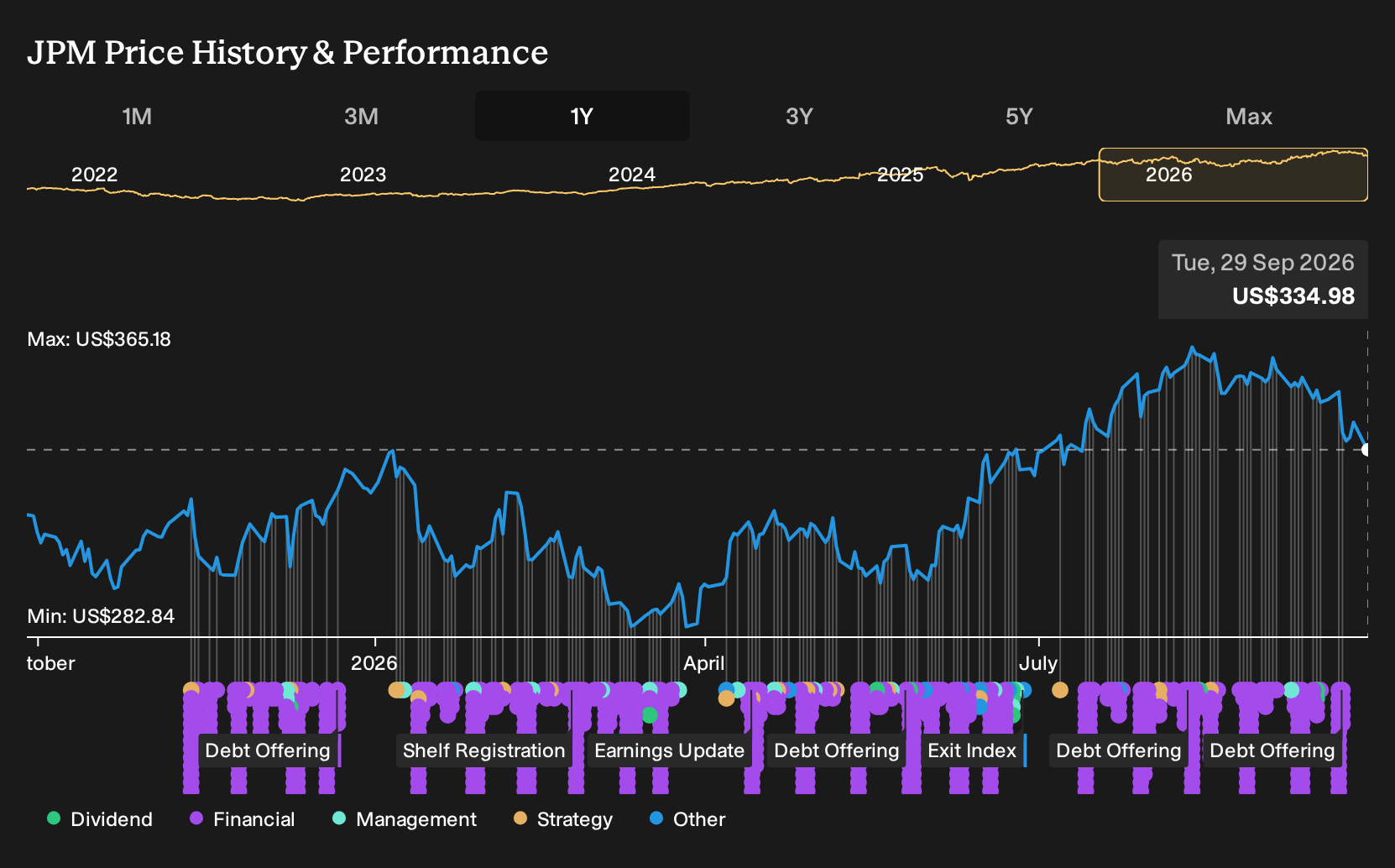
JPMorgan Chase, a US based banking and financial holding company with a market capitalization of $894.7b, operates across multiple regions where trade rules and industrial policy shape demand for financing, advisory work, and support for projects like Michigan LIFT that link capital to manufacturing and critical technologies.
See which insiders are buying and selling JPMorgan Chase following this latest news.
What Jamie Dimon’s trade push signals for JPMorgan Chase investors
For JPMorgan Chase, Dimon’s push for a broad US Europe trade pact and the bank’s $1b financing commitment to Michigan LIFT both point in the same direction. Management is tying the balance sheet more tightly to long term themes like reshoring, supply chain resilience, and Western security alliances. That reinforces the idea of JPMorgan Chase as a policy aligned partner for governments and large manufacturers rather than just a transaction lender. It does not rewrite the investment case, but it adds another data point that the bank is leaning into cross border advisory work, industrial financing and geopolitical relationships as core profit engines, alongside its existing payments and wealth businesses.
The cleanest way to judge whether this matters is to watch how much Michigan LIFT related financing actually gets deployed and discussed on upcoming management forums such as the 23 September 2026 J.P. Morgan CEO Call Series. Concrete updates on signed supplier loans, contract volumes tied to LIFT and any follow on trade related mandates with European clients would show whether today’s policy rhetoric is turning into fee and interest income or just staying as talking points.
The JPMorgan Chase detail most holders rarely pause to check
The loud stories are about trade deals, factories, and balance sheets, yet the quieter question of who actually pulls the levers at JPMorgan Chase and how that group is rewarded rarely gets a closer look. See who is actually steering JPMorgan Chase, and how they are paid.
This article by Simply Wall St is general in nature. We provide commentary based on historical data and analyst forecasts only using an unbiased methodology and our articles are not intended to be financial advice. It does not constitute a recommendation to buy or sell any stock, and does not take account of your objectives, or your financial situation. We aim to bring you long-term focused analysis driven by fundamental data. Note that our analysis may not factor in the latest price-sensitive company announcements or qualitative material. Simply Wall St has no position in any stocks mentioned.
Have feedback on this article? Concerned about the content? Get in touch with us directly. Alternatively, email editorial-team@simplywallst.com