
3 US Stocks Tied To Consumer Spending And Housing Demand
Stronger U.S. GDP numbers, firm consumer spending and a pickup in housing investment have put domestic demand back in the spotlight, and that can quietly reshape which U.S. stocks benefit most from everyday wallets opening. When growth leans on shoppers and homebuyers, some businesses gain a powerful tailwind while others are left behind. This article unpacks that story and walks through 3 stocks from the screener that are exposed to this news.
The three stocks below are a small sample of what shows up when domestic demand takes center stage, while the full screen surfaced 42 more U.S. Consumer and Domestic Demand Beneficiaries with equally detailed narratives that are not covered here. To identify your own highest conviction ideas, head straight into the U.S. Consumer and Domestic Demand Beneficiaries screener
Haverty Furniture Companies (HVT)
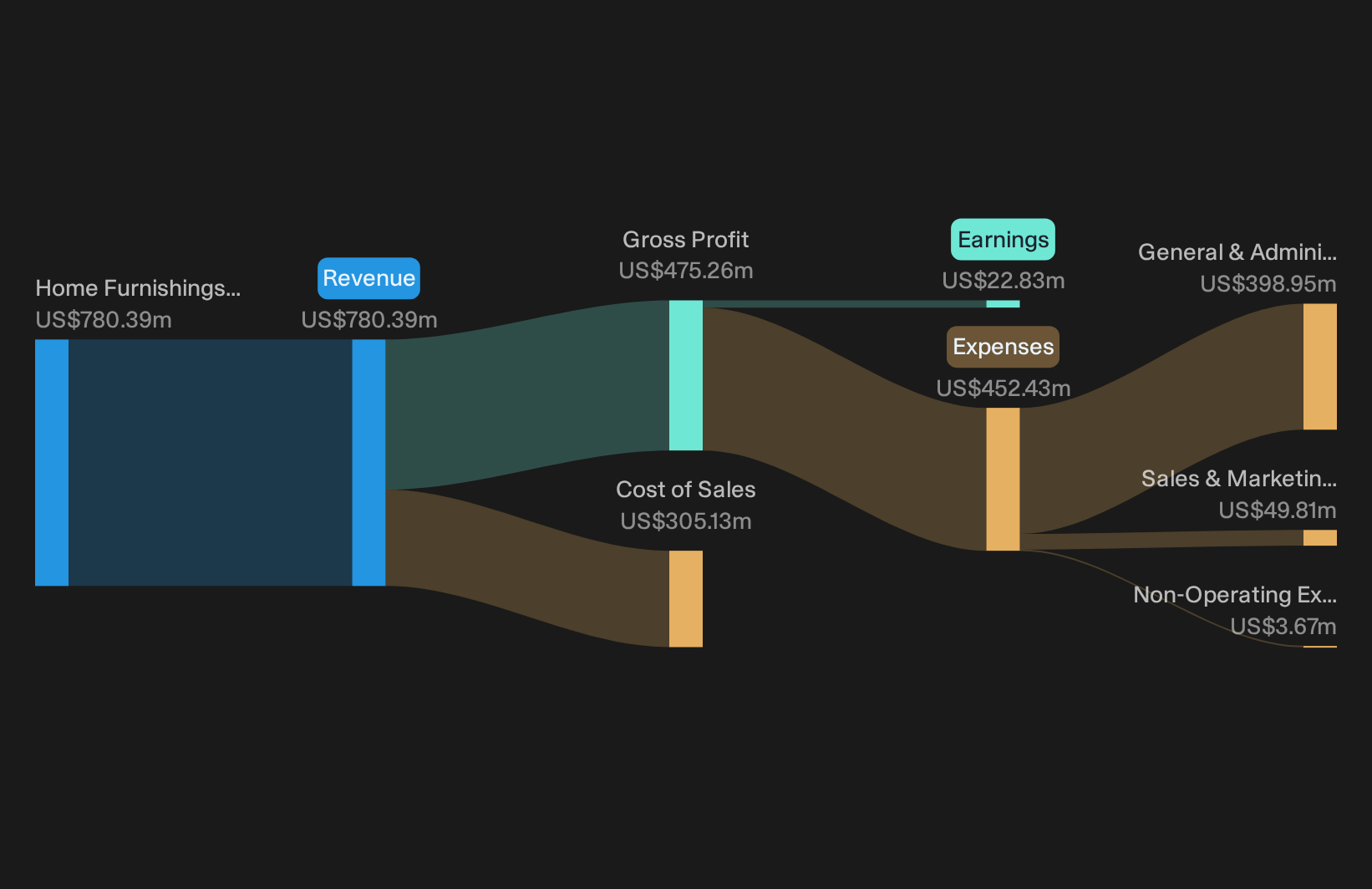
Haverty Furniture Companies plugs directly into the U.S. Consumer and Domestic Demand Beneficiaries theme, with a pure focus on residential furniture and accessories that relies on household spending. The retailer generated about $780 million from home furnishings retailing and has a market value of roughly $434 million.
Haverty Furniture Companies sits firmly in the domestic demand story because it sells furniture and mattresses to U.S. households through showrooms and its website, so its fortunes are closely tied to how willing people feel to refresh or refurnish their homes.
"Rising household formation among millennials and Gen Z, coupled with an aging U.S. housing stock, is expected to drive long-term demand for home furnishings, and Haverty may see steady revenue if these cohorts enter peak home-buying years and invest in their homes."
What really matters from here is how one pressure point around profitability and cash returns to shareholders ultimately shapes that demand story.
That pressure point is only the starting line, and the full narrative for Haverty Furniture Companies shows how Haverty Furniture Companies could see that profitability tension either ease or accelerate.
Shoe Station Group (SHOE)
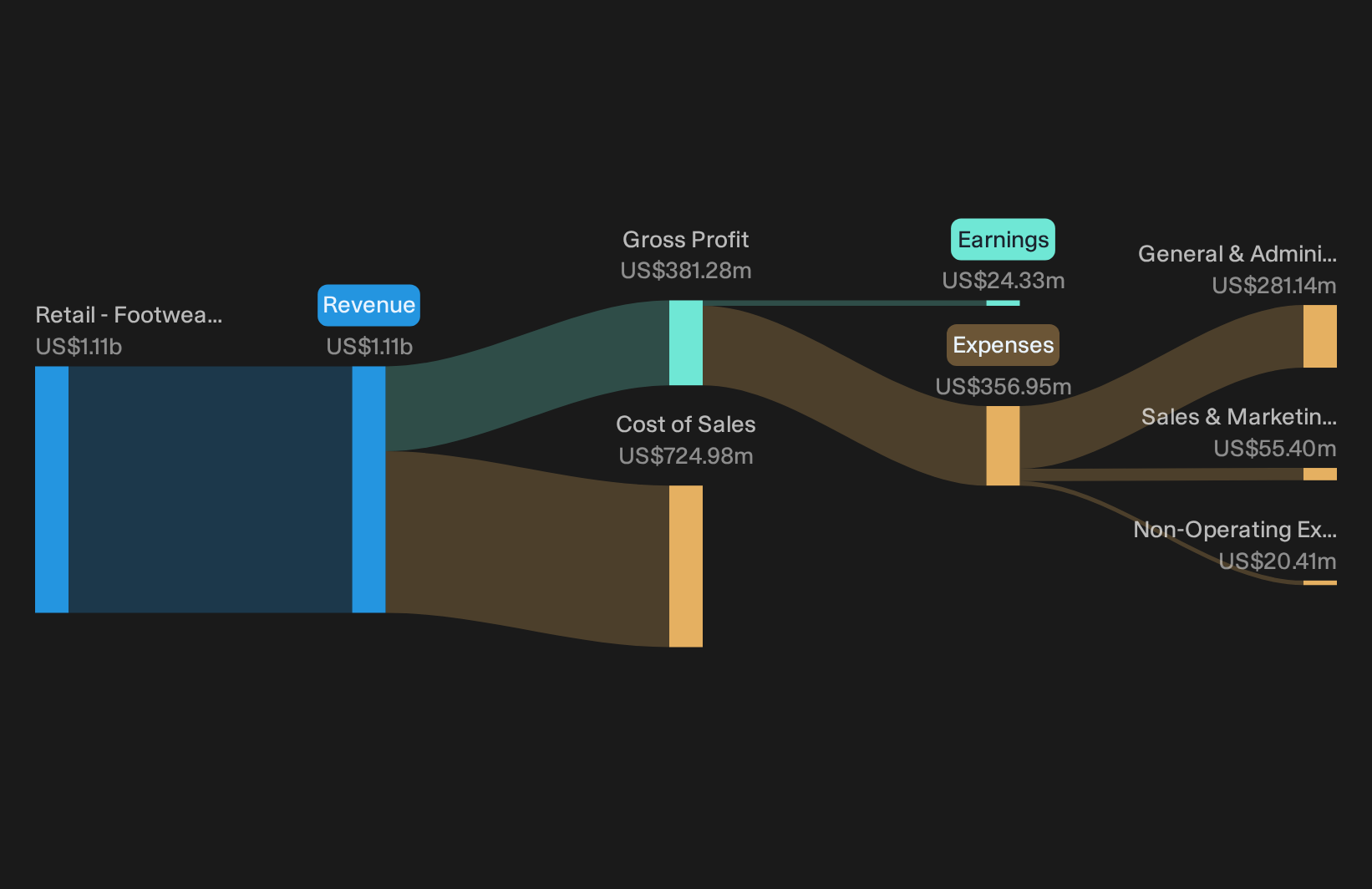
Shoe Station Group plugs into the U.S. Consumer and Domestic Demand Beneficiaries theme as a specialist footwear retailer serving everyday shoppers through stores, online channels and a mobile app, generating about US$1.1b from retail footwear with a market value near US$355 million.
Where Haverty taps housing linked purchases, Shoe Station Group leans into day to day discretionary spending on sneakers, boots and kids’ shoes, which often tracks how confident households feel about their paycheques and budgets.
"The company, having $2.44 of free cashflow and trading at less than 60% of its tangible book value (that is, actual real assets minus intangibles like IP and Goodwill), is also in the midst of a transition to take better advantage of differences in local taste, as well as optimizing their inventory turnover following an accretive recent acquisition."
What ultimately matters for investors is how one quiet shift inside that store level model feeds through to margins if domestic demand keeps humming or softens unexpectedly.
If that store level shift is what you care about most, the full narrative for Shoe Station Group shows how Shoe Station Group’s model could be accelerating or quietly stalling.
Beazer Homes USA (BZH)
Beazer Homes USA is one of the purest plays in this screener on U.S. domestic demand, with every dollar tied to Americans forming households and buying new places to live.
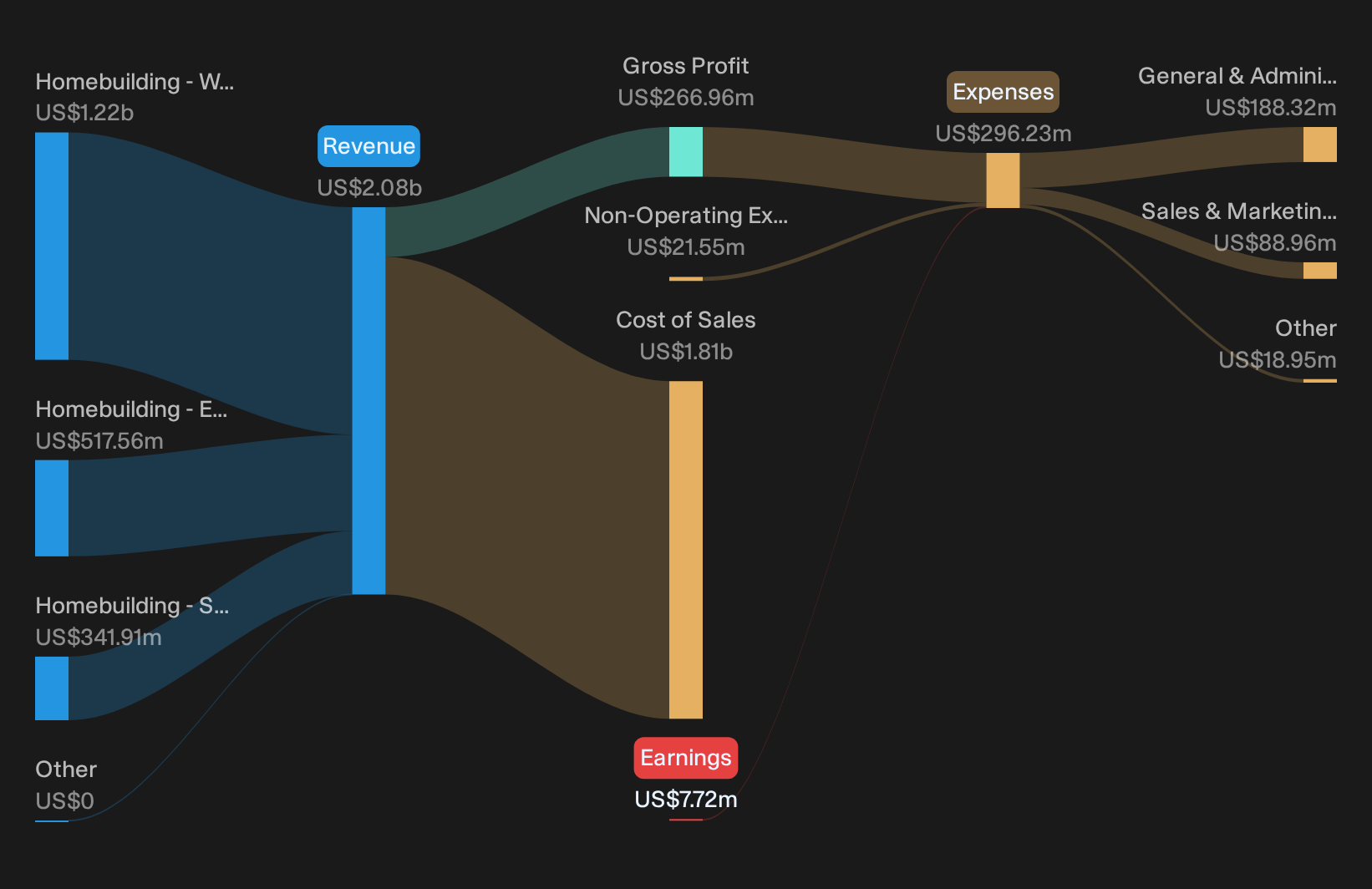
Beazer Homes USA designs and builds single family homes, condos, villas and duets across the U.S., generating about $1.2b from Homebuilding West, $518 million from Homebuilding East and $342 million from Homebuilding Southeast, with a market value near $860 million.
"Beazer's differentiated focus on energy-efficient, Zero Energy Ready homes positions it to capture share from buyers increasingly sensitive to operating costs. This supports higher average selling prices (ASP) and expanding gross margins as energy efficiency becomes a more important purchase criterion."
The real swing factor for Beazer Homes USA is how one unresolved piece of the housing cycle ultimately filters through to pricing power and profitability.
That pricing power question is exactly what the full narrative for Beazer Homes USA unpacks, showing where Beazer Homes USA might be accelerating, stalling, or quietly masking its real housing cycle exposure.
Seeking Fresh Alternatives Before They Fly
Some potential future breakouts may move first while attention sits elsewhere. Then momentum can accelerate and entry points may become less accessible. Review these fresh ideas in advance so you can evaluate them on your own timeline.
- Scan for resilient cash generators with robust finances using the curated list of solid balance sheet and fundamentals (25 results) before they move out of your preferred valuation range.
- Explore potential AI-related opportunities by shortlisting profitable operators through the hand picked 37 profitable AI stocks that aren't just burning cash while they may still be less widely followed.
- Look for income ideas with yields that may support portfolios using the focused 6 dividend fortresses before those payouts begin drawing broader attention.
This article by Simply Wall St is general in nature. We provide commentary based on historical data and analyst forecasts only using an unbiased methodology and our articles are not intended to be financial advice. It does not constitute a recommendation to buy or sell any stock, and does not take account of your objectives, or your financial situation. We aim to bring you long-term focused analysis driven by fundamental data. Note that our analysis may not factor in the latest price-sensitive company announcements or qualitative material. Simply Wall St has no position in any stocks mentioned.
Have feedback on this article? Concerned about the content? Get in touch with us directly. Alternatively, email editorial-team@simplywallst.com