
3 Transport Stocks Investors Are Watching As Diesel Costs Roil U.S. Fuel Markets
Fuel markets are in turmoil as crude jumps about 40% during the Iran war, diesel supplies tighten and Washington openly weighs a US export ban. That mix is painful for diesel-heavy operators, yet potentially helpful for a few whose cost structures, contracts or niches leave them less exposed. This piece spots three transportation and logistics stocks tied to these headlines and explains how the same fuel shock can shape very different stories for your portfolio.
The stocks covered next are just a starting sample, and the full screen on U.S. diesel-intensive transportation and logistics operators surfaced 10 more companies with equally compelling narratives that are not discussed in this article.
If you want to identify and analyze potential high-conviction plays in this corner of the market, head straight to the U.S. Diesel-Intensive Transportation and Logistics Operators screener
Delta Air Lines (DAL)
Overview: Delta Air Lines runs a large domestic and international passenger and cargo network, where fuel costs closely tie its fortunes to refined oil markets.
Operations: Delta generates about US$61.7b from its Airline segment and US$8.2b from its Refinery, with roughly US$48.6b from U.S. customers.
Market Cap: US$55.5b
For a fuel-sensitive screen like this, Delta Air Lines brings something different: an airline that also owns a refinery and carries meaningful exposure to refined middle distillates.
"As with all major US airlines, its balance sheet is somewhat strained and always at risk of sudden, exogenous shocks such as another pandemic or a trade war in North America going rogue."
What happens to Delta’s earnings power if a single unseen pressure on fuel spreads and financing costs starts to ease at the same time?
That turning point is exactly what the full narrative for Delta Air Lines tackles, showing how Delta Air Lines could see fuel risk, capital structure and demand cycles start decoupling.

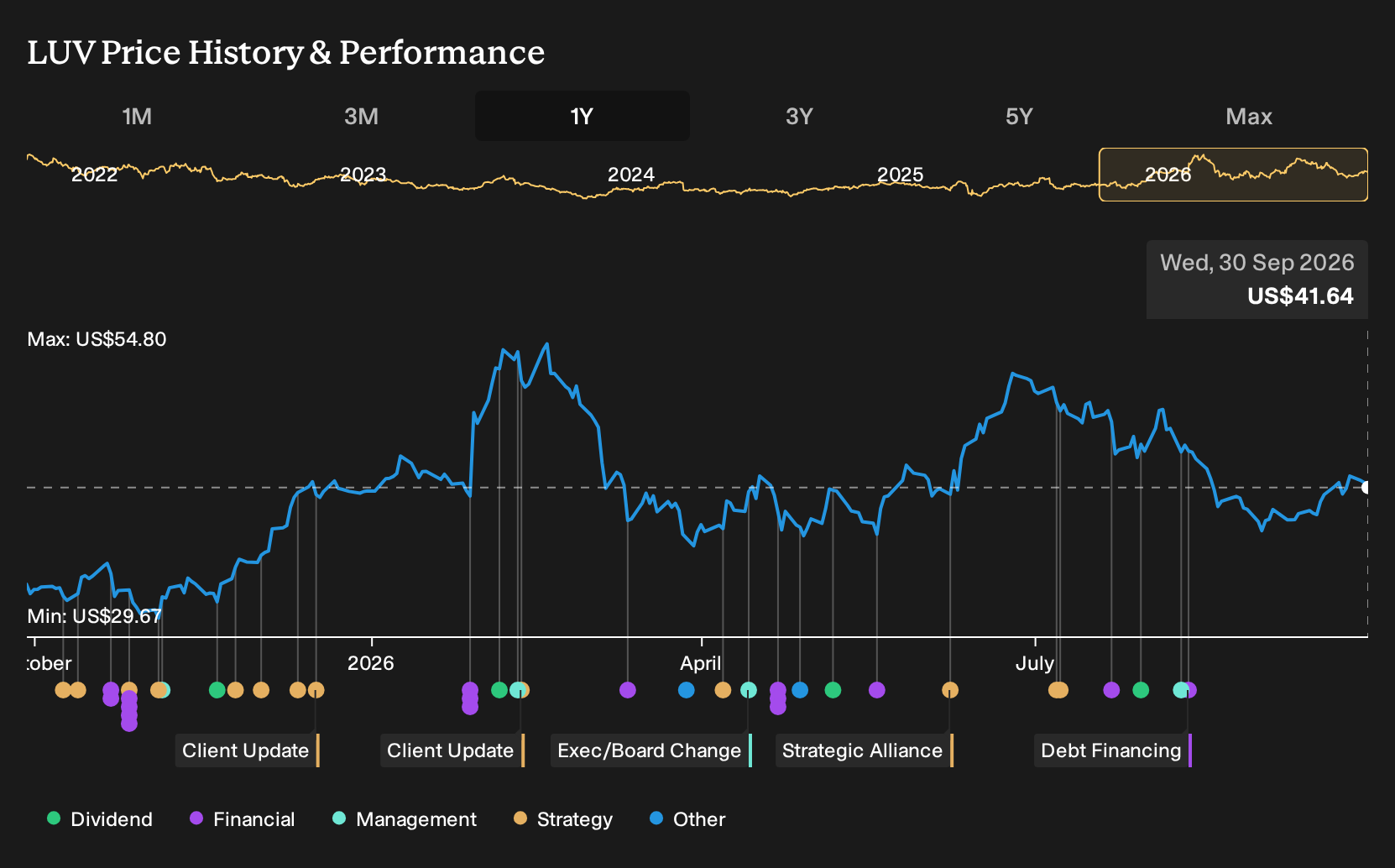
Southwest Airlines (LUV)
Overview: Southwest Airlines runs a large U.S. focused passenger network offering low cost flights, loyalty rewards, and growing premium travel extras.
Operations: Southwest generates about US$30.1b in revenue from its Transportation, Airlines segment, reflecting its focus on scheduled passenger air services.
Market Cap: US$20.6b
Southwest Airlines matters in a fuel sensitive screen like this because it couples a heavily domestic jet fuel bill with a business model now leaning harder on higher margin extras.
"Planned introduction of premium and assigned seating, along with basic economy offerings, can enhance revenue yield through differentiated pricing strategies catering to varied consumer preferences, thereby potentially affecting net margins and overall earnings."
What really matters is how movements in fuel costs interact with that revenue mix to influence margins.
That revenue mix is only half the story, and the full narrative for Southwest Airlines shows how Southwest Airlines’ extras, fuel swings and balance sheet could be quietly reshaping its earnings path.
Marten Transport (MRTN)
Overview: Marten Transport runs a refrigerated and dry-freight trucking and brokerage network across the U.S., Mexico and Canada for temperature-sensitive goods.
Operations: Marten Transport generates about US$432 million from Truckload services, US$264 million from Dedicated contracts and US$152 million from Brokerage activities.
Market Cap: US$1.1b
Marten Transport sits squarely in the diesel intensive trucking group, with temperature controlled routes and a U.S. focused fleet in which fuel spend heavily shapes trip economics. Investors watching diesel policy moves may see an interesting setup here, because the difference between squeezed and healthier margins could come down to how one unseen pressure on fuel costs and freight demand actually resolves.
That hinge point is exactly where the 1 key reward and 3 important warning signs (1 is major!) comes in, so you can see whether fuel pressure is masking a stronger Marten Transport story or capping it.

Seeking Alternatives Before Momentum Flies
Fuel shocks move fast and the next breakout list rarely stays quiet for long. Fresh ideas get caught once the crowd piles in. Scan what is still under the radar for now and position early.
- Identify resilient cash generators before momentum traders focus on them by running the list of solid balance sheet and fundamentals (25 results) while financial strength still trades at reasonable prices.
- Focus on accelerating themes in artificial intelligence infrastructure by tracking the 90 AI infrastructure stocks while capital is still flowing to the early leaders.
- Seek exposure to long term demand for metals that power electrification by scanning the 17 top copper producer stocks before price moves fully reflect the story.
This article by Simply Wall St is general in nature. We provide commentary based on historical data and analyst forecasts only using an unbiased methodology and our articles are not intended to be financial advice. It does not constitute a recommendation to buy or sell any stock, and does not take account of your objectives, or your financial situation. We aim to bring you long-term focused analysis driven by fundamental data. Note that our analysis may not factor in the latest price-sensitive company announcements or qualitative material. Simply Wall St has no position in any stocks mentioned.
Have feedback on this article? Concerned about the content? Get in touch with us directly. Alternatively, email editorial-team@simplywallst.com