
3 Defensive Dividend Stocks For Rising Rate Income Investors
Recession warnings are flashing again as the U.S. yield curve flattens, the Federal Reserve lifts rates, and 10-year Treasuries offer eye-catching income. Income investors now face a real fork in the road: stay all-in on equities that might be squeezed by higher yields, or focus on companies whose dividends and balance sheets can better handle stress. This article highlights three stocks from our low-volatility, high-quality dividend screener with meaningful exposure to this macro shock.
The three stocks that follow are only a small sample, and the full screen surfaced 30 more large-cap dividend payers with equally compelling stories that do not fit into this short list. To see the broader opportunity set, identify resilient income ideas, and analyze which ones best match your risk tolerance, head straight into the U.S. Low-Volatility, High-Quality Dividend Equities screener.
National HealthCare (NHC)
National HealthCare runs skilled nursing, assisted and independent living, homecare, hospice and related services that fit the screener’s focus on defensive, income-focused healthcare. Most revenue comes from Inpatient Services at about $1.3b, with $160 million from Homecare and Hospice and $65 million from other lines, supporting a roughly $3.5b market cap profile.
National HealthCare lines up with this low-volatility dividend screen through its senior care focus, 9% profit margin and a quarterly dividend of $0.67 per share. However, it relies heavily on external borrowing in a rising rate backdrop, so the appeal of its cash flows depends on how one unseen pressure plays out.
That funding squeeze is the hinge, so check the National HealthCare financial health report to see how National HealthCare’s balance sheet might absorb higher rates or amplify the strain.

Artesian Resources (ARTN.A)
Artesian Resources is a regional water and wastewater utility that fits the low-volatility dividend theme through regulated, service-based cash flows. Most revenue comes from its Regulated Utility arm at about $109 million, with roughly $8 million from other services, all in the U.S., and the stock carries a market value near $344 million.
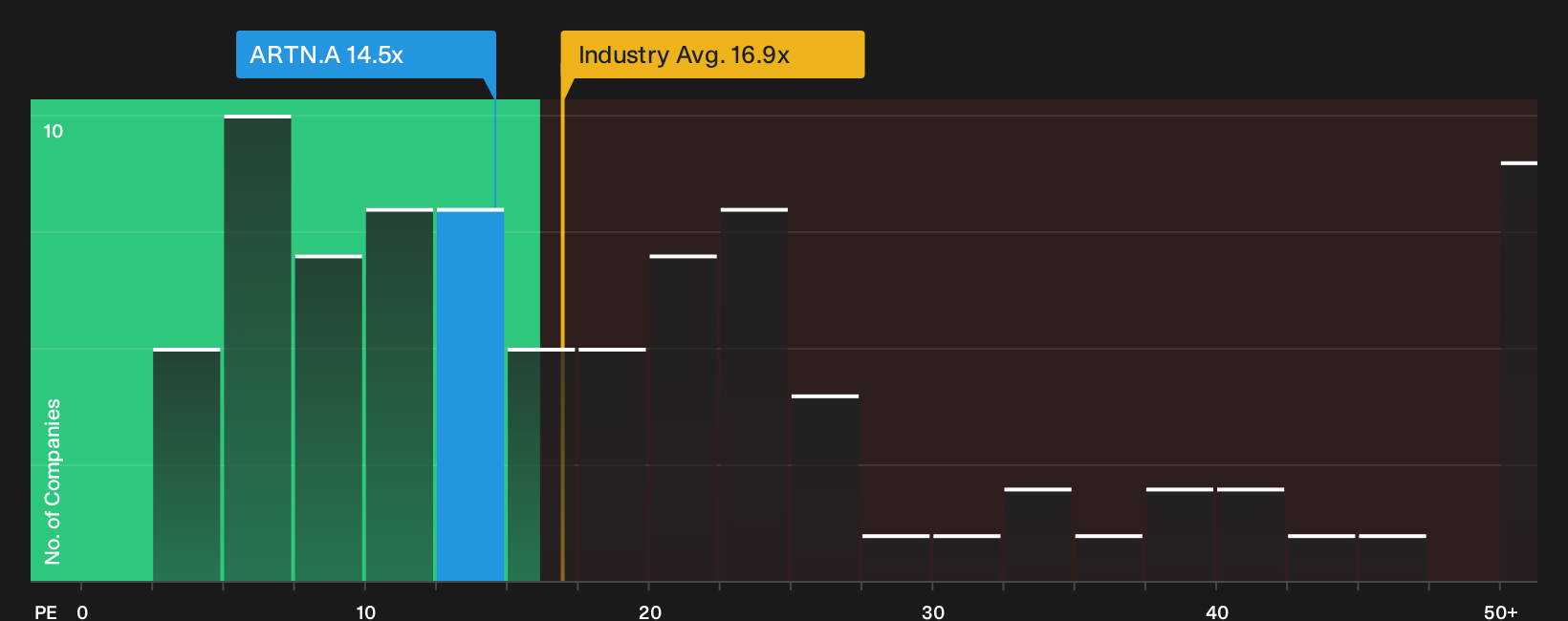
Artesian Resources provides a regulated water utility with a 3.85% dividend yield, steady earnings growth in recent years, and a P/E around 14.5x that sits below many water peers. It offers classic defensive income exposure as recession risk rises. The strength of that income stream depends on how one funding pressure develops over time.
That funding pressure is the real swing factor, so review the Artesian Resources financial health report to see whether Artesian Resources’ dividend is backed by balance sheet strength or hidden strain.
York Water (YORW)
York Water is a regulated utility that stores, treats, and delivers drinking water and wastewater services, which fits a low-volatility, dividend-focused income screen. All of its roughly $83 million in revenue comes from water utilities in the U.S., and the stock carries a market value near $499 million.
For investors leaning toward defensive income while the yield curve flattens and rates rise, York Water combines regulated water revenue, a regular dividend, and mid-20s profit margins with a P/E near 20.9x. The appeal of that steady profile ultimately hinges on how one unresolved funding and cash flow constraint plays out.
That funding constraint is the real story hook, so review the 3 key rewards and 3 important warning signs (1 is major!) to see what might be quietly reshaping York Water’s income profile.

Seeking Fresh Alternatives Before They Fly
Markets can move quickly and potential breakout ideas may not stay under the radar for long. Momentum can fade once many investors participate, so it can be useful to research opportunities early.
- Target dependable income streams by scanning a curated 7 dividend fortresses that focuses on high yields while the entry window may still be relevant for long term income plans.
- Spot early trendsetters with solid finances using the hand picked 19 high quality undiscovered gems before wider attention changes the relationship between quality and price.
- Explore the backbone of future computing by checking the focused 25 quantum computing stocks while these specialists may still be less widely followed.
This article by Simply Wall St is general in nature. We provide commentary based on historical data and analyst forecasts only using an unbiased methodology and our articles are not intended to be financial advice. It does not constitute a recommendation to buy or sell any stock, and does not take account of your objectives, or your financial situation. We aim to bring you long-term focused analysis driven by fundamental data. Note that our analysis may not factor in the latest price-sensitive company announcements or qualitative material. Simply Wall St has no position in any stocks mentioned.
Have feedback on this article? Concerned about the content? Get in touch with us directly. Alternatively, email editorial-team@simplywallst.com