
What Comes Next For Yamaha Motor After The 70% Run
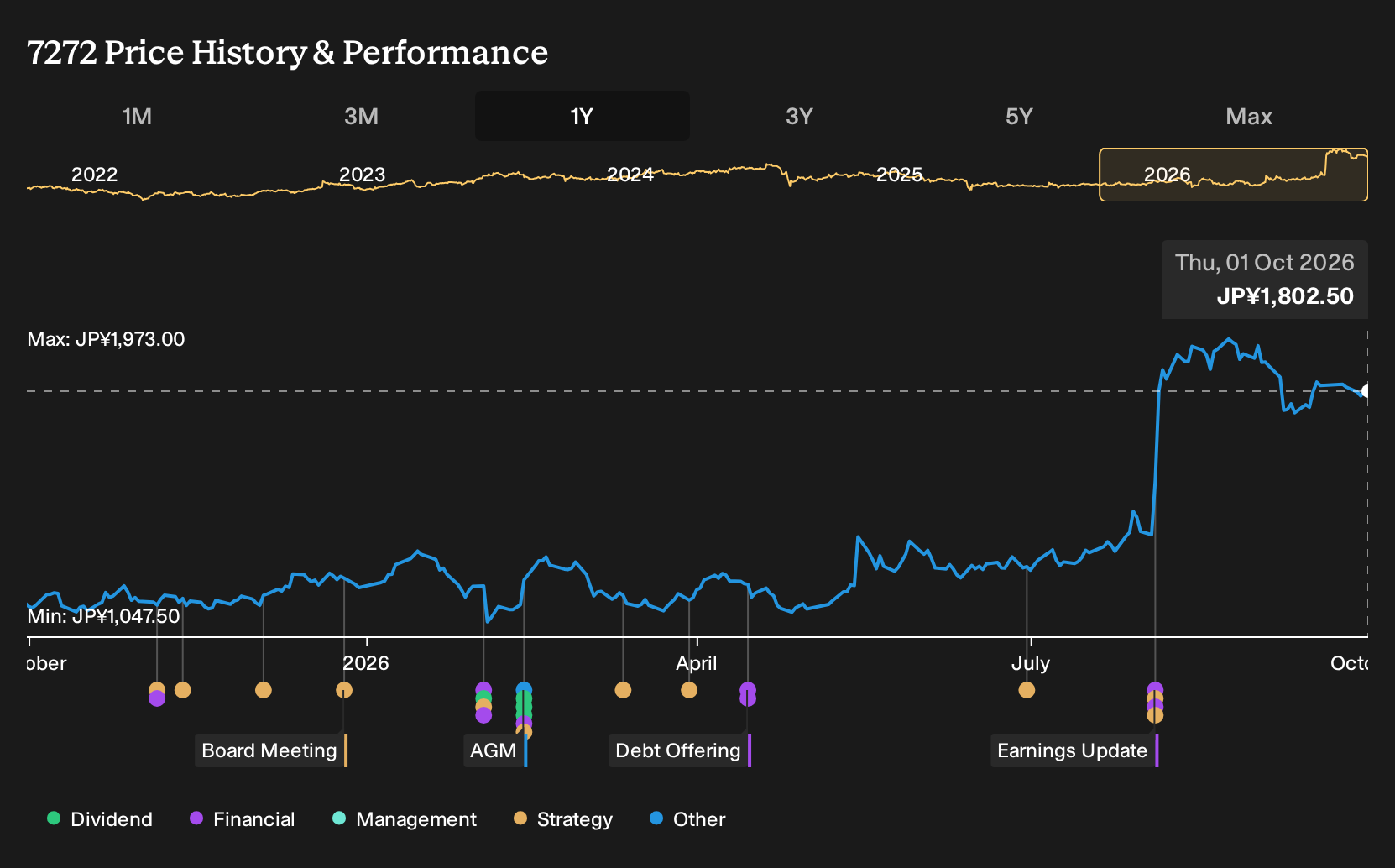
For Yamaha Motor shareholders, the return over the past year was 69.7%, including dividends. That kind of payoff invites a harder look at the fork in the road last October. If you had been weighing bullish talk about premium bikes, marine expansion, and electrification against concerns over regulation, shared mobility, and exposure to emerging markets, which side of that debate would have seemed more convincing at the time?
Yamaha Motor has already moved. Pinpoint other ways to investigate the theme among 92 robotics and automation stocks.
The Argument You Would Have Been Weighing On Yamaha Motor
The shares cost ¥1,102 at the start of the period, and Yamaha Motor sat between two very different stories about what urbanization and electrification might mean for a diversified mobility group.
The bullish narrative put Fair Value at ¥1,300, a price implied by assumptions of revenue growing 6.9% a year and margins rising from 1.9% to 7.2% as premium models, marine, and digital services reshaped the mix.
The bearish view saw Fair Value at ¥1,000, again an implied price, hinging on concerns that regulation, shared mobility, and slower electrification would cap growth at a 0.1% annual decline and pressure earnings despite modest margin improvement.
What The Results Changed For Yamaha Motor
Yamaha Motor then reported Q2 2026 revenue of ¥767,868 million and net income of ¥72,640 million, with net margin moving to 9.5% from 3.4% a year earlier. That combination of higher sales and a wider margin supported the optimistic case that premium products, motorcycles, and better cost control could lift profitability, even as marine and outdoor vehicles lagged.
The lesson is simple. When a thesis hinges on margin expansion, check whether net margin, not just revenue, is actually moving toward the story investors bought into.
What Today's Yamaha Motor Price Already Assumes
Yamaha Motor now trades at ¥1,802 after a 69.7% gain over the past year, and the selected Narrative’s Fair Value still sits above that level.
The argument leans on premium bikes, marine recovery, and robotics to support resilient margins. What it claims the current price does not fully credit is how far outdoor vehicle reforms and higher mix could support that margin profile.
"With a unique, synergistic portfolio spanning recreational vehicles, e-bikes, marine, and robotics, Yamaha has positioned itself as a dominant brand in the fast-growing global leisure and automation markets, enabling outsized revenue diversification and meaningful margin resilience relative to more cyclical competitors."
Not everyone reads the same price the same way. → See the higher figure this Narrative lands on, and how it gets there
Where Could You Get There Earlier?
You may be late to this rally, but that does not have to mean arriving late to every opportunity. Start with companies whose prices leave room for a different view of their future. Here are three trading below our estimates.
- Company 1 - 28% below our estimate - expands its maintenance-focused sales team to win more recurring service contracts.
- Company 2 - 29% below our estimate - offers a consolidated cybersecurity platform that replaces multiple separate threat-protection tools.
- Company 3 - 44% below our estimate - moves hiring budgets from fragmented channels into one AI-led recruitment advertising platform.
Three companies from the same screener. Open the full list of 23 financially solid companies →
This article by Simply Wall St is general in nature. We provide commentary based on historical data and analyst forecasts only using an unbiased methodology and our articles are not intended to be financial advice. It does not constitute a recommendation to buy or sell any stock, and does not take account of your objectives, or your financial situation. We aim to bring you long-term focused analysis driven by fundamental data. Note that our analysis may not factor in the latest price-sensitive company announcements or qualitative material. Simply Wall St has no position in any stocks mentioned.
Have feedback on this article? Concerned about the content? Get in touch with us directly. Alternatively, email editorial-team@simplywallst.com