
What You Can Learn From Nanosonics After A 34% Fall
If you only looked at Nanosonics’ early bullish and bearish research notes, the story sounded like a tug-of-war between margin expansion and hospital cost pressure. For Nanosonics shareholders, the loss over the past year was 34.0%, including dividends. If you had been weighing an investment in October 2025, how much of that eventual hit was hinted at in the starting debate over dependence on trophon and rising regulatory and tariff costs?
The easy part of this move is behind Nanosonics. Zero in on 4 high quality undervalued stocks for companies trading below our estimates.
The Two Nanosonics Stories Investors Had To Weigh
The shares cost A$4.31 at the start, and anyone looking at Nanosonics then faced two very different but plausible stories about where the business could head next.
On the bullish side, the Narrative pointed to a Fair Value of A$4.63, which is effectively the price implied if automated disinfection kept gaining traction. That view leaned on global demand for infection prevention, recurring consumable revenue and next generation products like trophon3 and trophon2 plus and CORIS.
The bearish camp anchored on a Fair Value of A$3.75, a lower implied price built on tougher assumptions. This version stressed hospital cost containment, dependence on trophon, rising regulatory and tariff expenses and the risk that newer disinfection technologies could chip away at Nanosonics’ pricing power.
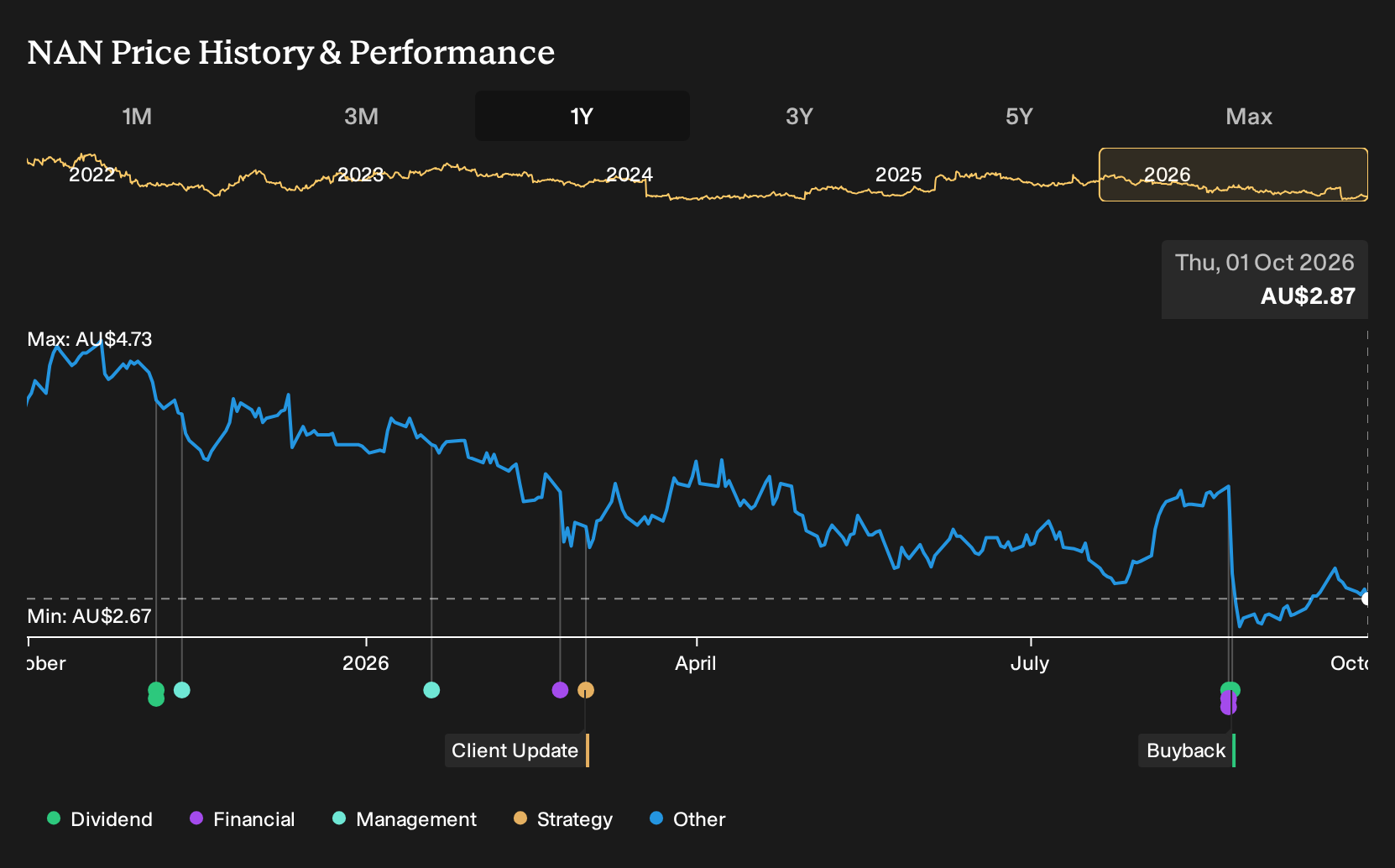
What The Nanosonics Results Actually Tested
The clearest new fact for Nanosonics shareholders arrived with the August 2026 report. Total revenue moved from A$105.033m in H2 2025 to A$101.662m in H2 2026, and net income slipped from A$10.916m to A$8.192m. Net margin went from 10.4% to 8.1%. That pattern challenged the more optimistic margin expansion story and leaned toward the cautious case on profitability.
The lesson is simple. When a thesis leans on rising profitability, track the net margin line first and ask whether it trends toward or away from the original claim in each set of results.
What Nanosonics’ Lower Price Is Asking You To Believe
Nanosonics now trades at A$2.87, well below where the story began a year ago. The selected Narrative’s Fair Value sits above the current price, based on a view that the infection prevention franchise has more to run than the share chart suggests.
The argument leans on expanding automated disinfection, new products like trophon3 and CORIS, and the earnings impact of the buyback. For that higher figure to be reached, a buyer today would need to believe recurring disinfection and subscription revenue keeps compounding from a larger installed base.
"Expansion of automated disinfection solutions and next-generation product launches are driving adoption, recurring revenue, and higher margins globally. Scalable operations and investment in innovation position the company for sustained earnings and margin growth as its product and geographic footprint expands."
Not everyone reads the same price the same way. → See the higher figure this Narrative lands on, and how it gets there
Go Straight To The Source
The next headline does not have to be where your research begins. Go straight to the companies and see whether a contrarian opportunity could be taking shape.
- Company 1 - 29% below our estimate - supplies commercial vehicle operators relying on specialist parts selection, logistics support and technical problem solving.
- Company 2 - 17% below our estimate - integrates complex audio visual, electrical and communications systems for large venues, offices and critical control rooms.
- Company 3 - 37% below our estimate - sells household tech and appliances through combined physical stores, online channels and bundled installation services.
That is three of the list. See the full list of 12 financially solid companies →
This article by Simply Wall St is general in nature. We provide commentary based on historical data and analyst forecasts only using an unbiased methodology and our articles are not intended to be financial advice. It does not constitute a recommendation to buy or sell any stock, and does not take account of your objectives, or your financial situation. We aim to bring you long-term focused analysis driven by fundamental data. Note that our analysis may not factor in the latest price-sensitive company announcements or qualitative material. Simply Wall St has no position in any stocks mentioned.
Have feedback on this article? Concerned about the content? Get in touch with us directly. Alternatively, email editorial-team@simplywallst.com