
How Investors May Respond To PORR (WBAG:POS) Perpetual Bond Offering
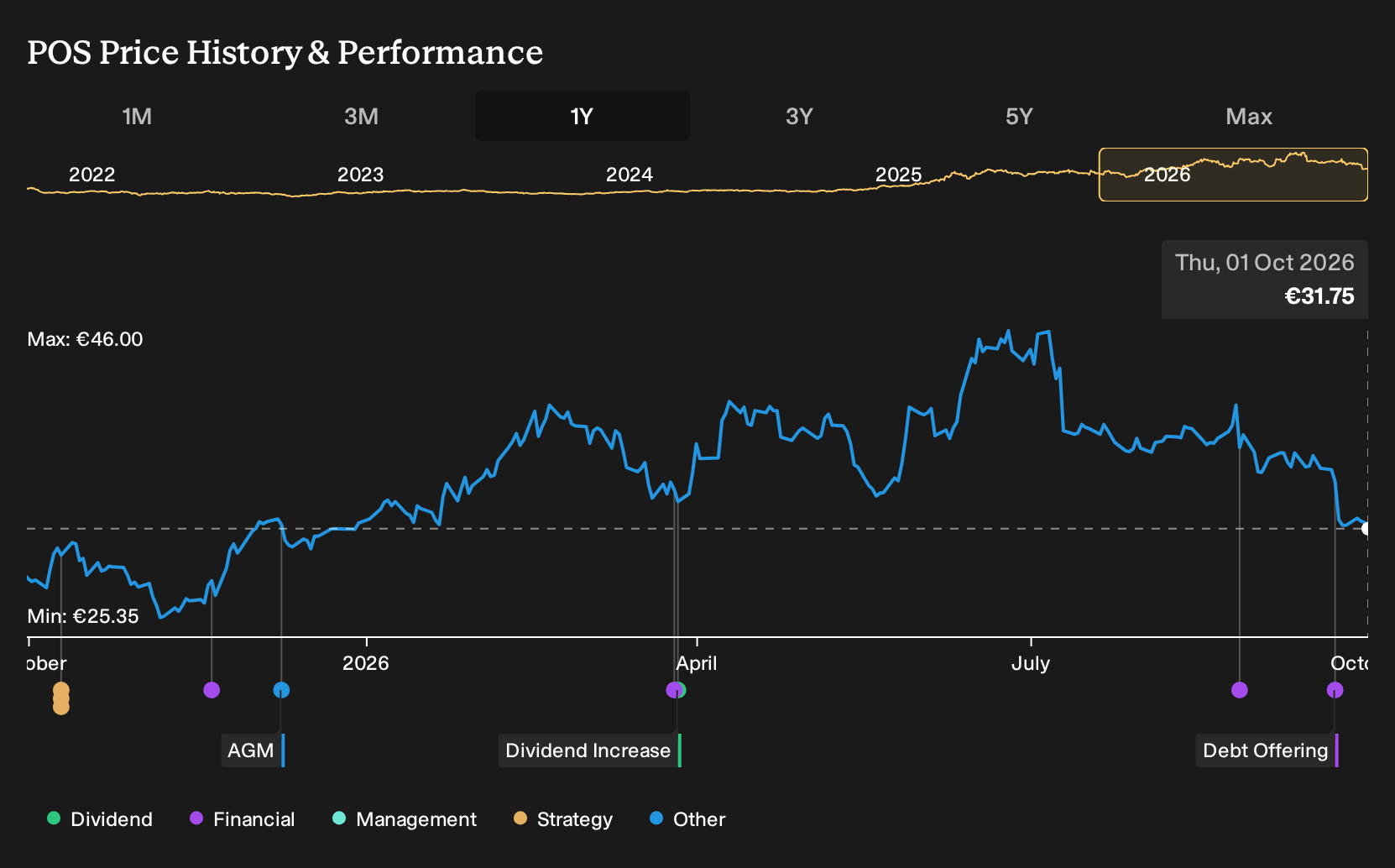
- PORR AG recently completed the issue of €150 million in fixed to floating rate perpetual subordinated convertible bonds, with callable and variable coupon features under Regulation S.
- The perpetual, subordinated and convertible structure gives PORR AG extra flexibility on long term financing, while raising questions for investors about dilution risk and the cost of hybrid capital in its funding mix.
- We will now look at how PORR AG's investment narrative could be reshaped by the new €150 million perpetual hybrid funding.
Scan how PORR's new hybrid bond fits into a broader funding playbook by comparing it with carefully filtered issuers in the list of solid balance sheet and fundamentals (207 results).
PORR Investment Narrative Recap
To own PORR, you need to be comfortable with a construction group that has growing earnings but still thin margins and heavy exposure to government infrastructure budgets. The core belief is that PORR can steadily turn its large order book in Austria, Germany and CEE into higher quality profits despite cost pressure and project timing issues. The €150 million perpetual hybrid does not appear to change the near term operational catalyst. The focus remains on execution in rail, road and civil projects already in the pipeline.
The biggest near term risk still appears to be delays and margin slippage on large infrastructure contracts, particularly where permitting or public tenders take longer than expected and personnel costs remain elevated. The new hybrid capital could modestly ease balance sheet strain and improve funding flexibility. It does not remove the earnings sensitivity to slow project starts or weak residential and commercial activity in key markets.
The fixed to floating rate perpetual bond is the clearest recent announcement to highlight here because it directly affects how PORR funds that growing project portfolio. Perpetual, subordinated, variable rate and convertible features mean this instrument sits between debt and equity in many investors’ minds. It can support long duration infrastructure work, but it also introduces coupon variability and potential dilution risk at the conversion option.
In terms of catalysts, the key question is whether this hybrid funding helps PORR continue investing in higher margin specialties such as tunneling, rail and data centers without stretching traditional borrowing too far. Investors already following earnings growth forecasts and analyst sentiment now need to weigh the cost of this hybrid capital against the potential benefit of securing capacity for EU backed infrastructure and decarbonization projects, while monitoring the firm’s still modest return on equity.
PORR hybrid funding against the analyst playbook
PORR's new perpetual hybrid sits against a consensus storyline that already assumes measured top line expansion, slightly better margins and higher earnings by the end of the decade. Analysts are working with revenue growth expectations and profit assumptions that treat the balance sheet as reasonably stable. This €150 million instrument becomes one more lever that could influence how that equity story is financed rather than rewriting the core thesis.
Forecasts in the stock research point to revenue growing by 3.4% a year over the next three years, with profitability moving from 1.8% today to 2.2% by around 2029. That margin uplift is paired with earnings today of €116.0 million and a consensus view that profit reaches €154.7 million by the same 2029 horizon. The implied earnings increase is about €38.7 million, which signals that analysts are baking in incremental improvement, not a wholesale reset of the business model.
On those numbers, the analyst framework for PORR hinges on 2029 revenue of about €7.0 billion and earnings of €154.7 million, with the equity valued on a P/E of 14.2x compared with 15.4x today. The perpetual hybrid can influence how investors judge that future multiple, because it nudges the funding mix toward hybrid capital that may be treated as part debt and part equity. That matters for how investors think about risk, potential dilution from conversion and the effective cost of capital that sits behind those 2029 earnings estimates.
The coupon structure of the hybrid, with its fixed to floating reset and subordinated ranking, can also feed into how some investors view the P/E assumptions built into analyst targets. A higher cost of hybrid capital could make the equity slice look slightly less attractive if returns on new projects do not comfortably exceed that hurdle. At the same time, the option to treat part of this capital as quasi equity may support credit metrics and reduce pressure on traditional borrowing lines, which can be relevant for a construction group managing large, long dated infrastructure contracts.
Analysts currently frame the stock around a consensus price target of €43.49 compared with a market price of €45.4, which implies only a small gap between trading levels and their fair value view. That pricing embeds the 3.4% yearly revenue growth and the €154.7 million earnings figure for 2029, all discounted at about 8.8% to 8.83%. For readers, the key question is whether the new hybrid funding strengthens confidence in PORR's ability to reach €7.0 billion of revenue and higher profits on those terms, or whether the added complexity and potential dilution make that same P/E multiple feel demanding.
PORR's narrative projects €7.0 billion revenue and €154.7 million earnings by 2029. This assumes 3.4% yearly revenue growth and an earnings increase of about €38.7 million from €116.0 million today.
Uncover why PORR's fair value indicates a 37% potential upside to its current price before the market closes that gap.
Exploring Other Perspectives
Five fair value estimates from the Simply Wall St Community cluster between about €43.26 and €61.64, so some retail investors see PORR as only slightly mispriced while others pencil in a much richer upside. Set that against margin pressure, project delays and the new €150 million hybrid, and you get sharply different opinions that are worth comparing before forming your own view.
Explore 4 other PORR fair value estimates, including one that suggests it could be worth just €43.26!
Decide For Yourself
Disagree with existing narratives? Extraordinary investment returns rarely come from following the herd, so consider your own research and judgment.
- A great starting point for your PORR research is our analysis highlighting 4 key rewards and 3 important warning signs that could impact your investment decision.
- See our latest analysis for PORR. The report includes a comprehensive fundamental analysis summarized in a single visual, the Snowflake, making it easy to evaluate PORR's overall financial health at a glance.
Looking for more PORR investment ideas?
If PORR has sharpened your focus on construction and infrastructure, it can help to widen the lens and compare it with other businesses that have different balance sheets, risk profiles and income characteristics. The Simply Wall St Screener is built for exactly that kind of side by side review, so you can pressure test your thesis on PORR against a wider watchlist.
- If you want potential value with quality fundamentals, scan companies that pass a tight filter on earnings strength and valuation using the 190 high quality undervalued stocks.
- For investors who care most about resilience and capital protection, narrow your shortlist to stocks with sturdier finances and lower risk scores through the 226 resilient stocks with low risk scores.
- If income is your main focus, build a watchlist of high yield payers that still have solid underpinnings by checking the 164 dividend fortresses.
This article by Simply Wall St is general in nature. We provide commentary based on historical data and analyst forecasts only using an unbiased methodology and our articles are not intended to be financial advice. It does not constitute a recommendation to buy or sell any stock, and does not take account of your objectives, or your financial situation. We aim to bring you long-term focused analysis driven by fundamental data. Note that our analysis may not factor in the latest price-sensitive company announcements or qualitative material. Simply Wall St has no position in any stocks mentioned.
Have feedback on this article? Concerned about the content? Get in touch with us directly. Alternatively, email editorial-team@simplywallst.com