
3 Bank Stocks Investors Are Watching As Treasury Yields Reset Higher
Bond markets are ripping up the old playbook, with the 10 year Treasury near 5.24% and mortgage rates around 7.28% reshaping how money is priced across the system. That kind of rate shock can reshuffle winners and losers in fixed income trading and securities financing. This article walks through three stocks closely exposed to this news and explains why their role in the plumbing of modern markets deserves your attention right now.
The stocks highlighted below are only a sample, and the full screen surfaced 20 more large cap intermediaries with equally compelling stories around fixed income trading and securities financing that are not covered here. To identify your own highest conviction angles in this corner of market plumbing, head straight into the U.S. Market-Structure Financials: Fixed-Income Trading and Securities-Financing Intermediaries screener and use it to filter and analyze the full universe.
Inter & Co (INTR)
Overview: Inter & Co is a Brazil based digital bank offering checking accounts, payments, lending, investments, insurance and e commerce services.
Operations: Inter & Co generated about R$5.5b from Banking & Spending in 2026, with all R$6.7b of reported revenue coming from Brazil.
Market Cap: US$2.4b
Inter & Co matters in this fixed income focused screen because it channels a large digital deposit base into credit and securities activities that can react quickly to changing rates.
"Ongoing rapid user growth and rising engagement, shown by consistently adding over 1 million active clients per quarter, improved activation rates, and 40M+ clients, positions Inter & Co. to capture an expanding addressable market driven by broader financial inclusion in Latin America; this is set to support future revenue expansion.
The real swing factor for Inter & Co is how one quiet shift in its credit risk cushions interacts with that growing scale.
That credit cushion is the hinge. Read the full narrative for Inter & Co to see how that safety buffer could interact with Inter & Co's scale in a fast moving rates world.

Simmons First National (SFNC)
Overview: Simmons First National is a regional bank holding company that offers deposit accounts, lending, and banking services to consumers and businesses across several U.S. states.
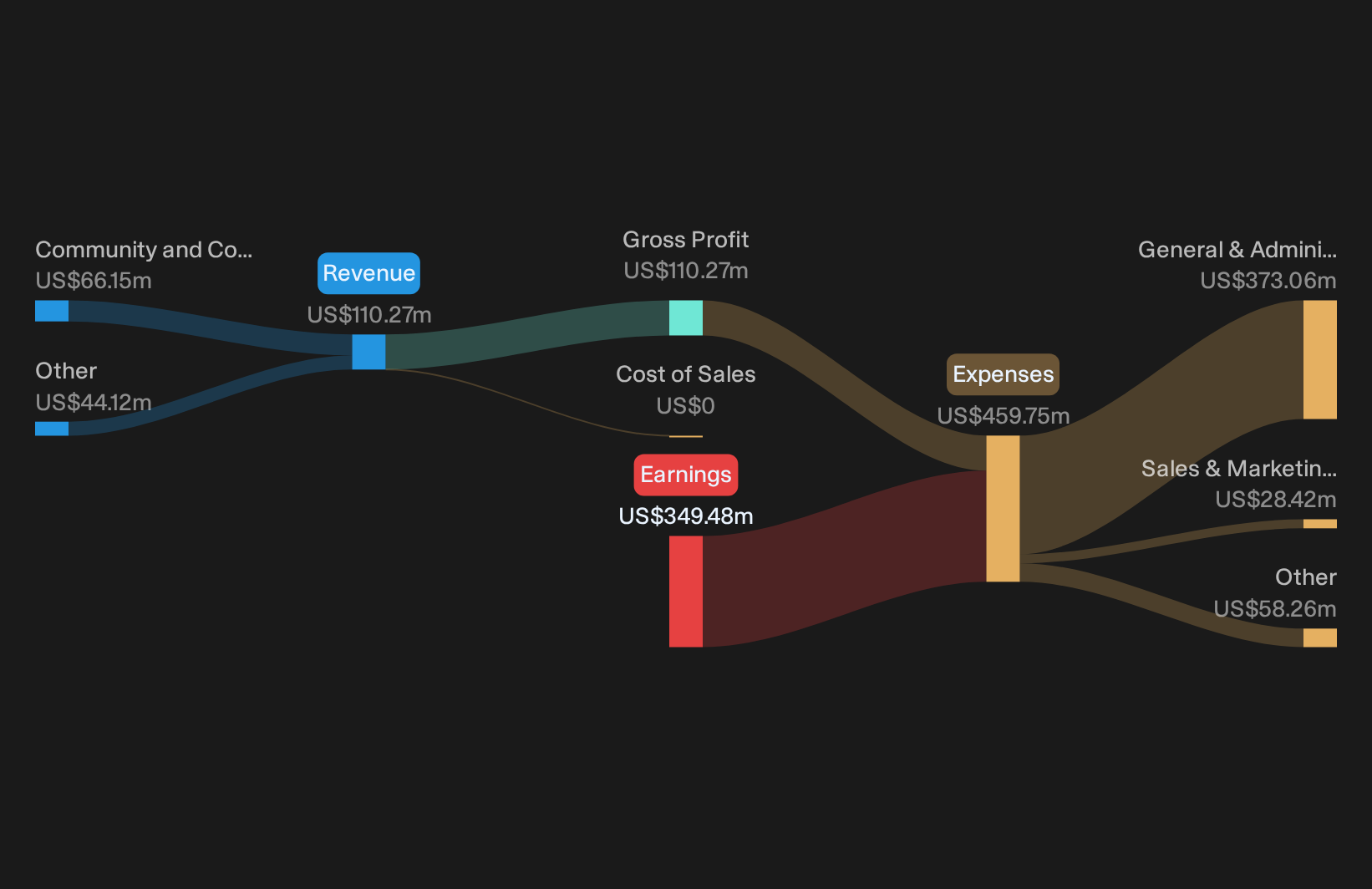
Operations: Simmons First National generated about $66 million from Community and Commercial Banking and $44 million from Other activities, all from the United States.
Market Cap: US$3.3b
Simmons First National sits in this fixed income focused screen because its treasury and balance sheet decisions help shape how regional deposits feed into loans and securities at a moment when bond volatility is rewriting funding costs.
"Continued remixing of the loan portfolio toward higher-yielding variable-rate loans and the repricing of legacy fixed-rate loans at higher rates present a tailwind for net interest margin expansion, enhancing core profitability."
What really moves the story from here is how one still developing pressure on its funding mix ultimately flows through to those margins.
That funding squeeze is the real plot point, and the full narrative for Simmons First National shows whether Simmons First National’s margin story is quietly accelerating or masking deeper balance sheet stress.
Beacon Financial (BBT)
Overview: Beacon Financial is a Boston based bank holding company offering deposit, lending, securities investment and wealth management services in multiple markets.
Operations: Beacon Financial generated about US$759 million from Banking activities, with all of that revenue coming from the United States.
Market Cap: US$2.3b
Beacon Financial matters in this fixed income focused screen because its lending book and securities portfolio directly reflect how a traditional regional bank responds when bond yields reset higher and funding stays competitive.
"Optimization of the balance sheet through runoff or sale of noncore portfolios, selective securities repositioning and disciplined CRE concentration management is likely to free capital for higher return lending and potential future buybacks, improving return on equity and earnings per share."
The real swing factor for Beacon Financial is what happens if a single pressure point in its commercial real estate exposure shifts faster than planned.
If that pressure point moves faster than planned, read the full narrative for Beacon Financial to see whether Beacon Financial’s earnings engine is quietly accelerating or masking deeper fault lines.

Seeking Alternatives Before Momentum Flies
Fresh ideas often move first. Slow money can get caught chasing breakouts while early entries ride the momentum under the radar for now. Consider acting while it still matters and seek opportunities early.
- Spot income workhorses before yields get crowded by tapping into the 7 dividend fortresses and filtering for payouts that are designed to remain in place when markets start dropping.
- Follow real-world infrastructure demand as it develops by scanning the 39 power grid technology and infrastructure stocks and tracking grids, hardware and services geared for long term capital flows.
- Look for high conviction operators in future computing by using the 25 quantum computing stocks and sifting for businesses positioned around practical applications before valuations start moving sharply.
This article by Simply Wall St is general in nature. We provide commentary based on historical data and analyst forecasts only using an unbiased methodology and our articles are not intended to be financial advice. It does not constitute a recommendation to buy or sell any stock, and does not take account of your objectives, or your financial situation. We aim to bring you long-term focused analysis driven by fundamental data. Note that our analysis may not factor in the latest price-sensitive company announcements or qualitative material. Simply Wall St has no position in any stocks mentioned.
Have feedback on this article? Concerned about the content? Get in touch with us directly. Alternatively, email editorial-team@simplywallst.com