
Why Toshiba's Expansion Plans Just Sent Western Digital Stock Lower
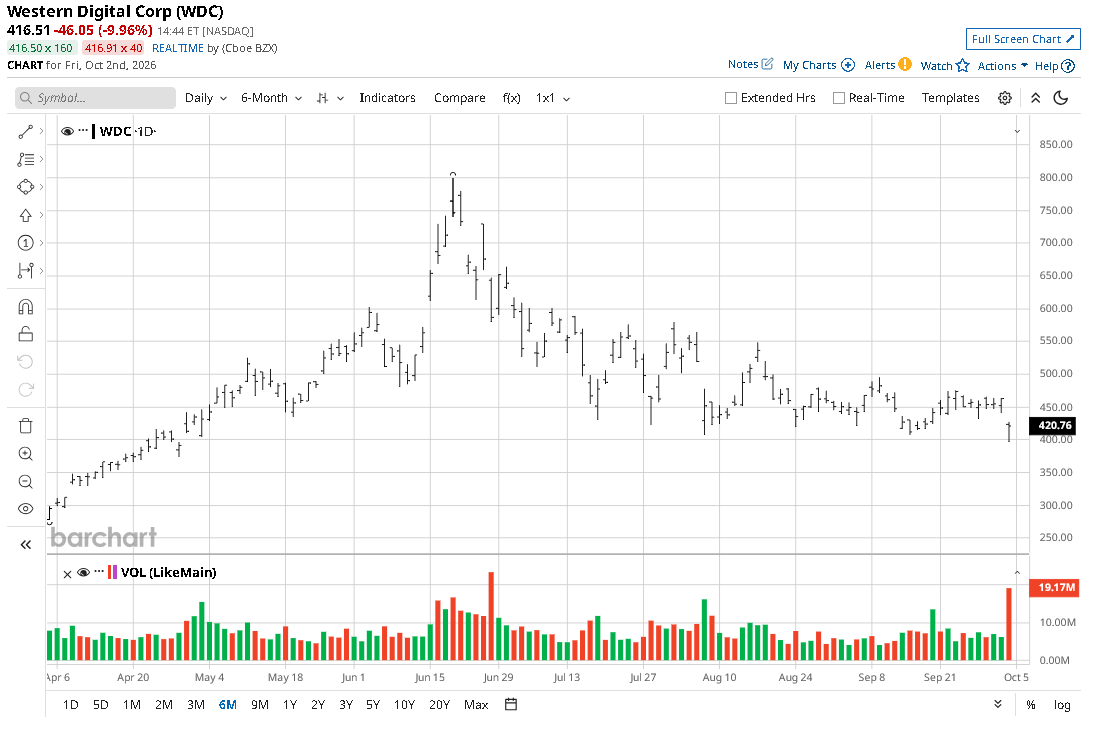
Western Digital (WDC) shares tanked on Oct. 2 after rival Toshiba (TSHTY) announced plans for a major capacity expansion to double its nearline hard disk drive (HDD) output for artificial intelligence (AI) data centers. As investors bailed on WDC, it crashed through its 20-day moving average (MA) this morning, indicating downward momentum could continue in the near term.
The news adds to pressure on Western Digital stock, which has already fallen out of favor with investors, currently down nearly 45% versus its year-to-date high.
What the Toshiba News Really Means for WDC Shares
Toshiba has set a rather ambitious medium-term target to double its HDD manufacturing capacity and capture a 30% share of the nearline storage market.
Because HDD manufacturing is an oligopoly dominated by Seagate (STX), Western Digital, and Toshiba, any aggressive market share play threatens the tight supply environment that’s driven record margins for these companies.
WDC shares are in the red today mostly because investors believe added supply from Toshiba could undermine the company’s pricing power and erode average selling prices (ASPs) for high-capacity enterprise drives.
Despite the sell-off, however, Western Digital is trading at more than 2x its price at the start of this year.
Should You Buy the Dip in Western Digital Stock?
For long-term investors, today’s pullback in Western Digital shares may only represent a buying opportunity. Why? Because Toshiba remains dependent on external suppliers for key components like recording media and heads, which could bottleneck how quickly that extra capacity reaches hyperscalers.
Plus, structural demand for mass-capacity storage, driven by enterprise AI workloads, continues to outpace long-term supply expectations.
Investors should also note that WDC is currently trading at a forward price-to-earnings (P/E) ratio of about 23x, which makes it relatively cheaper to own than peer Seagate.
Wall Street’s Remains Bullish on Western Digital
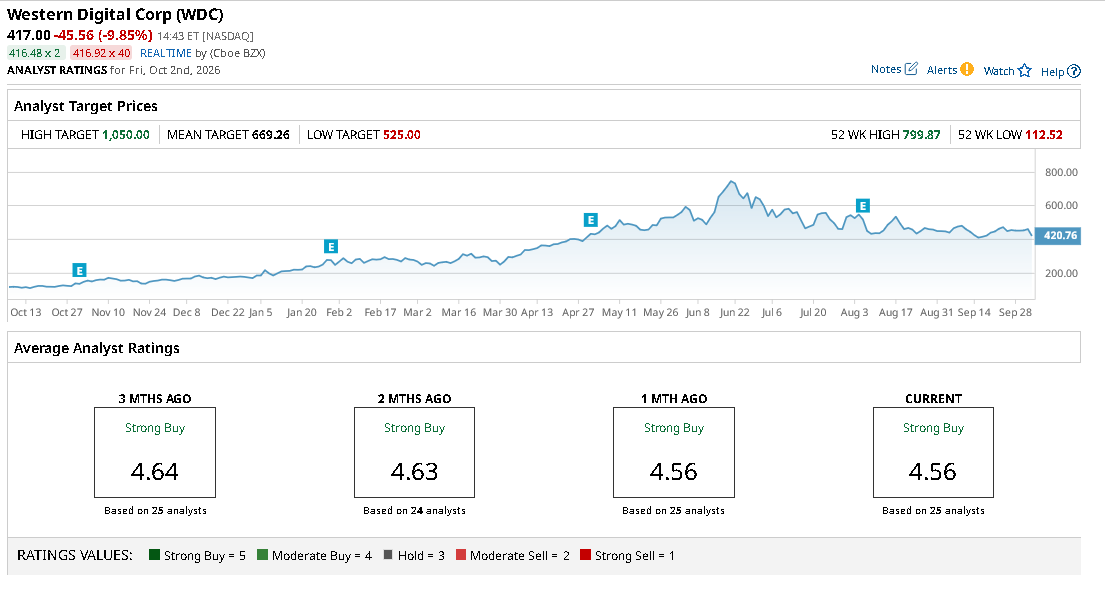
Crucially, the Toshiba announcement failed to deter Wall Street firms, which continue to rate WDC stock at “Strong Buy.”
According to Barchart, the mean price target on Nasdaq-listed Western Digital is set at nearly $670 as of writing, indicating potential upside of more than 60% over the next 12 months.
On the date of publication, Wajeeh Khan did not have (either directly or indirectly) positions in any of the securities mentioned in this article. All information and data in this article is solely for informational purposes. For more information please view the Barchart Disclosure Policy here.