
3 Bank Stocks Built to Benefit From Higher Long Term Treasury Yields
Long-term Treasury yields near multi-decade highs have shifted the ground under every asset class, squeezing richly priced growth stories while giving lenders fresh ways to earn on every dollar they extend. Investors who ignore how higher real borrowing costs ripple through bank and credit stocks risk missing important moves. This piece walks through 3 stocks exposed to this rate shock and explains why their stories now deserve a closer look.
The three lenders profiled below are only a sample, and the underlying screen surfaced 28 more U.S. commercial banks and alternative lenders with equally compelling rate-sensitive stories that are not covered here.
To identify and analyze the full set of higher-yield beneficiaries in this theme, head straight to the U.S. Commercial Banks and Alternative Lenders Positioned to Benefit from Higher Long-Term Corporate Borrowing Costs screener.
HomeTrust Bancshares (HTB)
HomeTrust Bancshares is a U.S. commercial bank focused on traditional loans and deposits, a setup that can benefit when long-term borrowing costs stay higher for longer. It generates about $210 million in banking revenue and has a market value of roughly $762 million.
For this screener, HomeTrust Bancshares matters because it is a pure-play U.S. lender whose business runs through the basic equation of funding deposits and pricing loans. Higher structural borrowing costs can widen that spread, and the bank already leans on net interest income supported by fee-based services and specialty areas like healthcare banking.
That mix of spread income and specialist niches raises a simple question. Run through the 3 key rewards and 1 important warning sign to see what might amplify or cap HomeTrust Bancshares from here.

Credicorp (BAP)
Credicorp is a Latin American financial group that sits in this higher-rate lending screen because it runs a large credit and deposit engine across Peru and neighboring markets, tying its earnings power to real borrowing costs even though its U.S. exposure is limited.
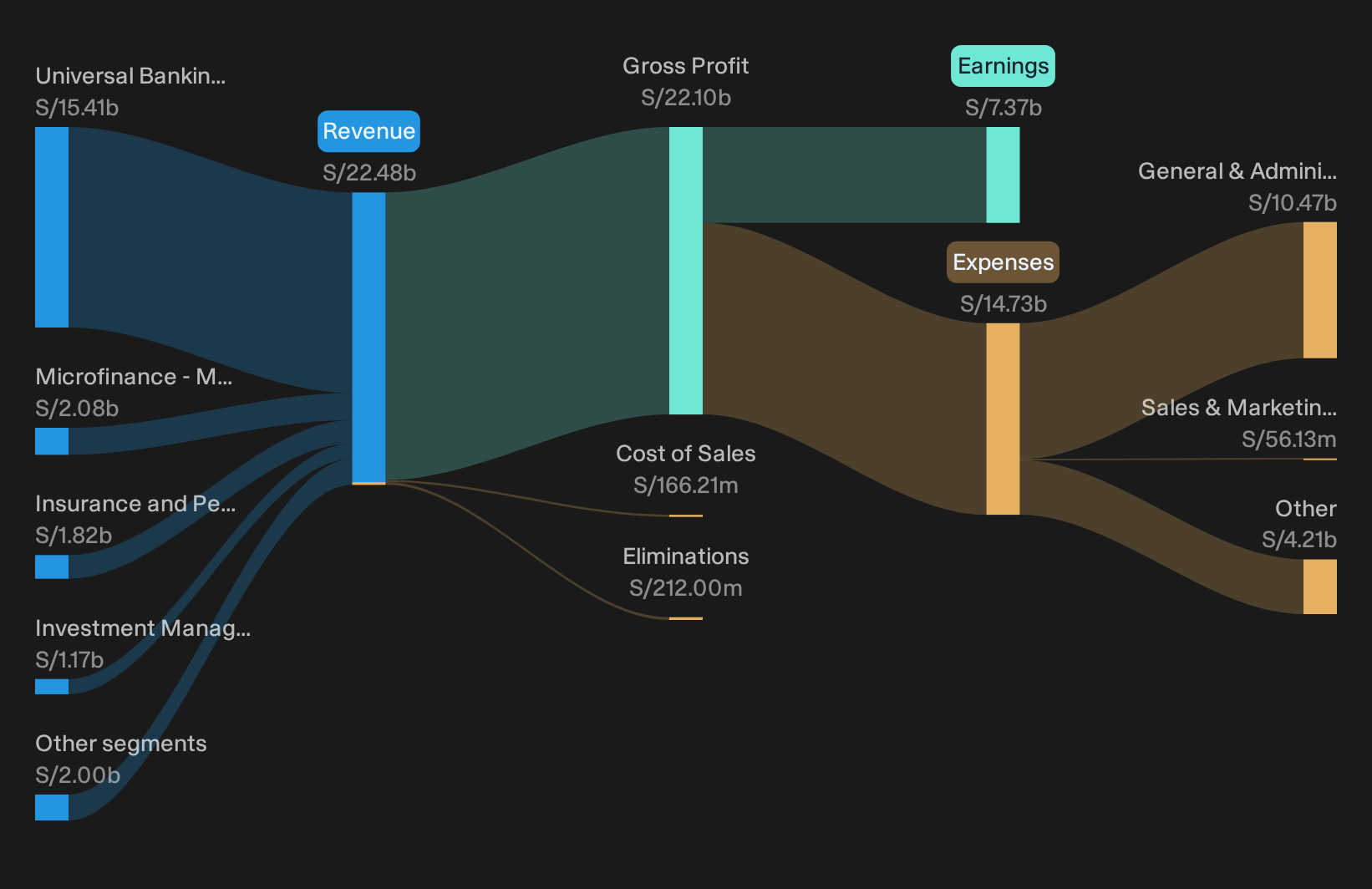
Credicorp runs a broad banking, insurance, and investment franchise, anchored by universal banking in Peru that produces about PEN 15.4b of revenue, with microfinance at PEN 2.6b and insurance plus pensions near PEN 2.3b, and the stock carries a market value around US$30.0b.
"Recent and anticipated expansion of digital financial services like Yape is unlocking new revenue streams through both increased transaction volumes and lending to previously underserved segments. This is driving strong growth in fee-based income and supporting sustained top-line expansion."
What happens to Credicorp’s margin story if one pressure point inside its fast-growing credit book moves against those current assumptions?
That pressure point is exactly what the full narrative for Credicorp unpacks, showing where Credicorp’s fee engine could be accelerating fastest and where credit risk might quietly be decoupling.
Citizens & Northern (CZNC)
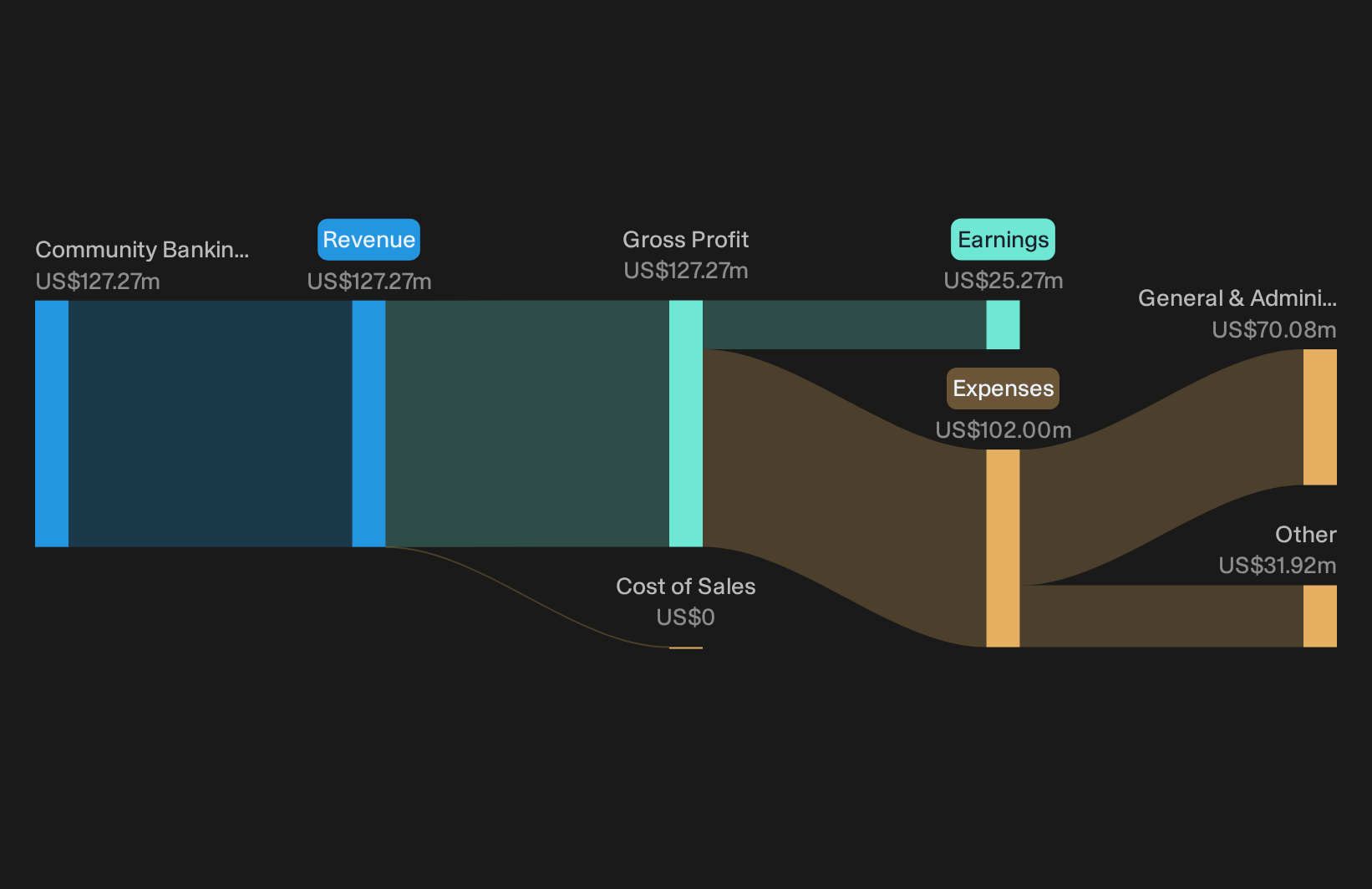
Citizens & Northern is a regional U.S. bank holding company built around traditional loans and deposits, aligned with a higher long-term borrowing cost theme. It draws all its $127 million of revenue from community banking in the U.S. and has a market value of about $452 million.
Citizens & Northern fits this higher-rate screen because it is a community-focused lender whose earnings lean heavily on net interest income from commercial, mortgage, and consumer loans funded by local deposits. With all $127 million of revenue tied to U.S. community banking and a market cap near $452 million, investors get a focused exposure to what happens when one quiet pressure point inside that loan book shifts direction.
If that quiet shift has your attention, run through the 3 key rewards and 3 important warning signs to see where Citizens & Northern’s opportunity could be building fastest.
Seeking Alternatives Before Momentum Flies
Fresh ideas move first, then the window tightens as breakout stories gain momentum and under the radar stocks get caught by the crowd. Do not delay; get in early.
- Spot income workhorses built for durability and use the 7 dividend fortresses to see which high-yield payers still look ready to keep rewarding patient capital.
- Track where AI cash engines already run profitably and scan the 37 profitable AI stocks that aren't just burning cash to find operators that back the story with real earnings, not hype.
- Ride the build out of next generation infrastructure and use the 40 power grid technology and infrastructure stocks to check which grid players could benefit as electrification spending ramps.
This article by Simply Wall St is general in nature. We provide commentary based on historical data and analyst forecasts only using an unbiased methodology and our articles are not intended to be financial advice. It does not constitute a recommendation to buy or sell any stock, and does not take account of your objectives, or your financial situation. We aim to bring you long-term focused analysis driven by fundamental data. Note that our analysis may not factor in the latest price-sensitive company announcements or qualitative material. Simply Wall St has no position in any stocks mentioned.
Have feedback on this article? Concerned about the content? Get in touch with us directly. Alternatively, email editorial-team@simplywallst.com