
Netflix Stock And Streaming Winners From Media Merger Chaos
Big media is being rewired in real time, and the Skydance mash up with Warner Bros. Discovery and Paramount has turned the spotlight onto who really controls the streaming story. When one giant tries to stitch together US$110b of deals and US$79b of debt, attention often shifts to others that might supply content, strike licensing deals, or simply benefit from the chaos. This piece walks through three stocks from the US Streaming Platforms and Licensing Beneficiaries screener that appear closely tied to this news. It also explains how the shake up could help or hurt if you are trying to position your portfolio before the next round of headlines.
The stocks highlighted below are just a small sample from this theme, and the full screen surfaced 16 more U.S. media groups with equally compelling streaming and licensing narratives that are not covered here. To identify and analyze the ones that best fit your own thesis, head straight to the US Streaming Platforms and Licensing Beneficiaries screener.
Warner Bros. Discovery (WBD)
Warner Bros. Discovery is the clearest expression of this streaming and licensing theme, since it owns HBO Max, Discovery+ and a deep film and TV library that feeds both its own platforms and third party deals. This puts it right on the fault line of consolidation.
Warner Bros. Discovery runs streaming, studio and global TV network operations, with Global Linear Networks generating about US$16.4b, Studios US$12.0b and Streaming US$11.4b in revenue, and the group valued at roughly US$77.7b by market cap.
Regulators focusing on Netflix’s approach to competition underlines why Warner Bros. Discovery’s role inside a combined streaming giant carries so much weight for this theme.
"The Department of Justice (DOJ) was reported to be reviewing whether Netflix’s competitive behavior would have raised antitrust concerns in the deal’s merger review."
What really matters now is how one unresolved pressure on the merged group could shift the balance between promised cost savings and future pricing power.
That pricing squeeze is exactly what the full narrative for Warner Bros. Discovery unpacks, showing where cost cuts, debt pressure and streaming ambitions may be quietly accelerating Warner Bros. Discovery’s next chapter.

Roku (ROKU)
Roku runs a TV streaming operating system that helps viewers and content owners meet in one place. This is exactly what matters in a world where big media groups are consolidating their apps and hunting for the largest possible connected TV audience.
Roku operates a TV streaming platform used by households and media partners globally, with the Devices segment generating about US$568 million and a segment adjustment of roughly US$4.6b, and the group valued by the market at about US$22.4b.
Roku’s role in the US Streaming Platforms and Licensing Beneficiaries theme is all about being the operating system that crowded streaming apps need if they want simple access to viewers and to ad dollars flowing away from traditional TV.
"The accelerating shift away from traditional linear TV toward streaming continues to expand Roku's total addressable market, supporting long-term growth in active users and increasing demand for its connected TV platform, which is expected to drive sustained double-digit platform revenue growth."
From here, an important factor is how one quiet change in who controls the streaming shelf space affects Roku’s pricing power and ad demand.
That shift in control is exactly what the full narrative for Roku unpacks, revealing how Roku’s platform economics, ad mix, and licensing leverage could be quietly accelerating well beyond the headline story.

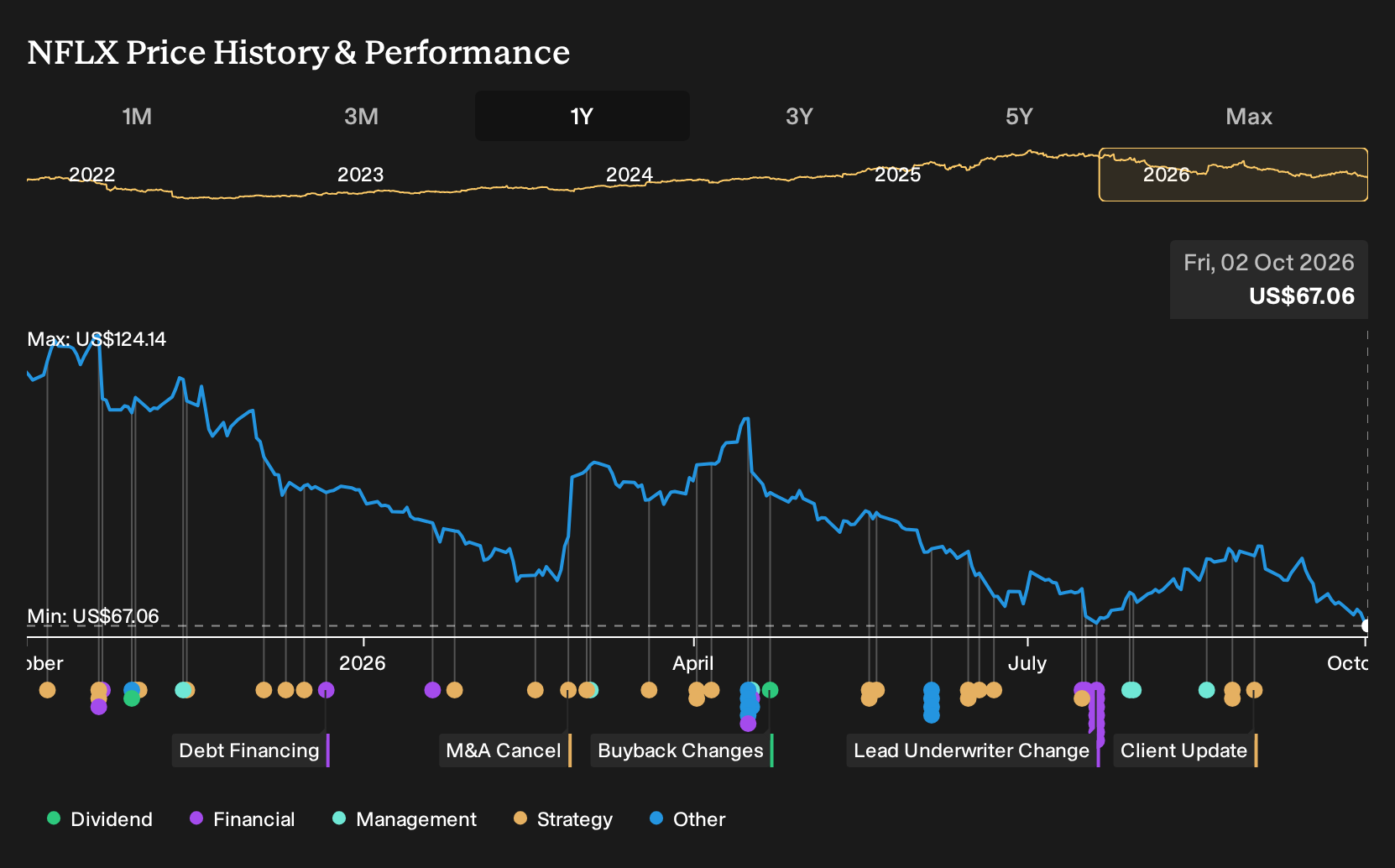
Netflix (NFLX)
Netflix sits in the middle of this streaming and licensing theme, running a global subscription service that lives or dies on how viewers react when rivals merge, reprice and rethink where their best shows get sold.
Netflix operates a global streaming entertainment service, generating about US$48.4b from a single core segment, and carries a market value around US$282.5b.
"The bull case increasingly leans on pricing, advertising, margin expansion and buybacks rather than pure subscriber momentum."
The key question is whether a subtle shift in how viewers value time spent on Netflix can continue to support that higher margin ambition.
If that trade off between time, pricing and margins interests you, read the full narrative for Netflix to see how Netflix’s model could be accelerating or stalling next.
Seeking Fresh Alternatives Before They Fly
New themes keep breaking out while older stories lose momentum and get caught by the crowd. Scan fresh ideas that are still under the radar for now and consider them before they become widely followed.
- Spot stronger income anchors by reviewing the 7 dividend fortresses to find candidates that may help steady a portfolio when prices swing and yields suddenly matter more than hype.
- Focus on real business momentum through the 37 profitable AI stocks that aren't just burning cash to identify companies already turning AI demand into revenue instead of relying on ongoing cash burn and story driven expectations.
- Track the backbone of electrification through the 40 power grid technology and infrastructure stocks to follow critical infrastructure plays as demand for resilient energy systems builds.
This article by Simply Wall St is general in nature. We provide commentary based on historical data and analyst forecasts only using an unbiased methodology and our articles are not intended to be financial advice. It does not constitute a recommendation to buy or sell any stock, and does not take account of your objectives, or your financial situation. We aim to bring you long-term focused analysis driven by fundamental data. Note that our analysis may not factor in the latest price-sensitive company announcements or qualitative material. Simply Wall St has no position in any stocks mentioned.
Have feedback on this article? Concerned about the content? Get in touch with us directly. Alternatively, email editorial-team@simplywallst.com