
Is Sovereign AI Partnership Altering The Investment Case For Cisco (CSCO)?
- On 29 September 2026, Bell Canada and Cisco Systems announced a memorandum of understanding to jointly develop sovereign AI infrastructure offerings for Canadian organizations using Bell's domestic facilities and Cisco's AI, security, and observability technologies.
- The focus on modular AI infrastructure and flexible consumption models points to Cisco Systems testing new ways to align AI hardware and software usage with customer budgeting and deployment patterns in sensitive public sector and regulated markets.
- We will look at how Cisco Systems sovereign AI push with Bell Canada feeds into the broader investment narrative around secure networking.
Scan how Cisco Systems fits into the wider secure AI infrastructure story by reviewing the hand picked 90 AI infrastructure stocks that are building out similar capacity across global networks.
Cisco Systems Investment Narrative Recap
For an investor to own Cisco Systems, the core belief is that its role in AI focused networking, security and observability can support earnings while hardware mix and memory costs pressure gross margin. The Bell Canada sovereign AI move fits that story but does not fundamentally change the near term focus on turning AI infrastructure orders into delivered revenue.
The short term swing factor still sits in how efficiently Cisco Systems converts US$9.3b of hyperscale AI orders and broader enterprise demand into cash flow without eroding its 35.9% non GAAP operating margin. The biggest risk remains sustained gross margin pressure, especially if hardware heavy deployments grow faster than higher margin software and subscriptions.
The Bell agreement lines up most clearly with Cisco Systems push to blend networking, security and observability into a single stack. That same integration theme shows up in offerings such as Hypershield, AI Defense and the use of Splunk with Cisco Cloud Control, where customers are encouraged to consolidate tools on Cisco infrastructure.
Investors watching catalysts may view sovereign AI with Bell as one more test case of this combined stack in highly regulated environments. The outcome matters for Cisco Systems because success stories in security sensitive markets can reinforce order momentum in AI infrastructure and security, while any security incident or operational hiccup could amplify the existing cyber and margin related risks.
Cisco Systems Long Term Analyst Setup
Cisco Systems sits in the middle of a fairly clear analyst framework. Forecasts hinge on whether AI focused networking and bundled security can support higher earnings while the business deals with hardware mix and memory costs that already pressured margins in FY26.
Consensus models build in revenue growth of 9.6% per year over the next 3 years. Profitability in those projections rises from a 21.0% margin today to 24.1% by around 2029. This effectively assumes that the mix of software, subscriptions and higher value security can carry more weight inside the income statement as AI infrastructure orders convert into shipped systems.
On earnings, the analyst base case points to US$13.3b today moving to US$20.1b by about 2029, with a more optimistic camp stretching that figure to US$23.1b. That spread indicates there is still disagreement over how smoothly Cisco Systems can execute on AI infrastructure, sovereign deployments with partners like Bell Canada and broader enterprise refresh spending.
Valuation assumptions sit on top of that earnings bridge. To hit the consensus targets, the stock would need to trade on a P/E of 34.5x those 2029 earnings, compared with 31.6x today and a current US Communications sector multiple of 35.4x. In other words, the thesis does not just rest on higher profits. It also leans on investors continuing to pay a premium style multiple for a secure AI infrastructure and networking story.
One other moving piece is share count. Analysts expect the number of shares on issue to fall by 0.22% per year across the next 3 years. That buyback effect supports earnings per share even if operating outcomes land closer to the middle of the profit margin range rather than the bullish end.
Cisco Systems' narrative projects US$83.4b revenue and US$20.1b earnings by 2029. This setup assumes 9.6% yearly revenue growth and an earnings increase of about US$6.8b from US$13.3b today.
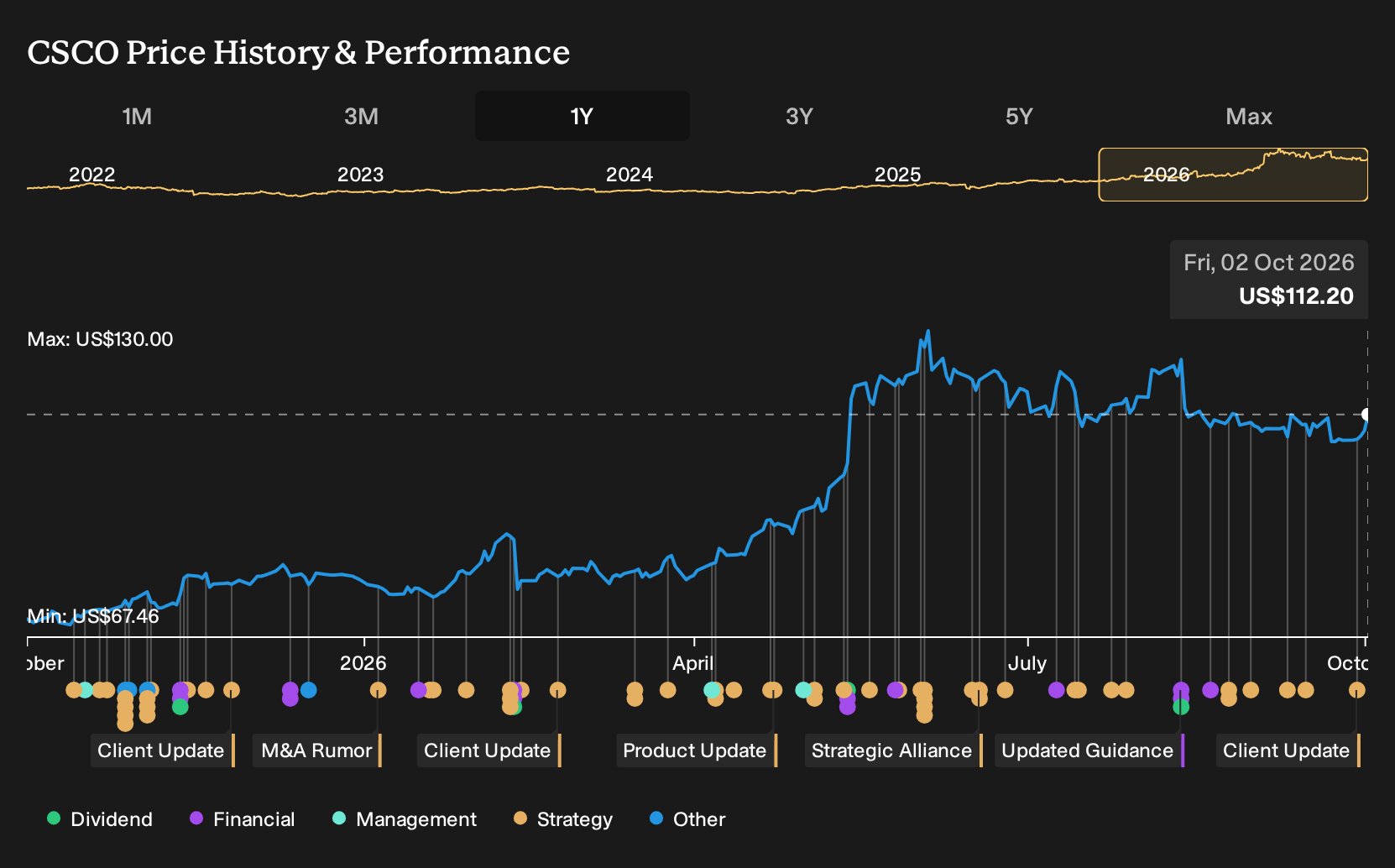
Bringing those strands together, consensus price targets cluster around US$137.25, with the most optimistic call at US$170.00 and the most cautious at US$115.00, against a recent share price of US$106.44 on 1 October 2026. That spread in target prices mirrors the range of views on how resilient Cisco Systems margins will be if hardware heavy AI and sovereign builds accelerate faster than higher margin software and security subscriptions.
Uncover why Cisco Systems' fair value indicates a 22% potential upside to its current price, which could close sooner than many investors expect.
Exploring Other Perspectives
The lowest Cisco Systems analysts worry more about AI demand falling away than about new deals like Bell. They were only pencilling in US$78.0b of revenue and US$19.3b of earnings by 2029 before this news. That more cautious story can shift. Use it as a prompt to compare multiple viewpoints yourself.
Explore 4 other Cisco Systems fair value estimates, including one that suggests it could be worth just $110.56.
The Verdict Is Yours
Don't just follow the ticker; dig into the data and build a conviction that's truly your own.
- A great starting point for your Cisco Systems research is our analysis highlighting 5 key rewards that could impact your investment decision.
- See our latest analysis for Cisco Systems. The report includes a comprehensive fundamental analysis summarized in a single visual, the Snowflake, making it easy to evaluate Cisco Systems' overall financial health at a glance.
Looking For More Investment Ideas Beyond Cisco Systems?
If the Cisco Systems story has sharpened your thinking, use that momentum to widen the lens. The Simply Wall St screener can help you compare this stock against other businesses with different income profiles, balance sheets, and risk levels, so you can build a watchlist that truly reflects how you want your portfolio to behave.
- For investors who care most about resilient cash flows and payouts, consider income opportunities that show staying power by scanning a curated set of 7 dividend fortresses.
- If capital preservation and steadier trading profiles matter more to you than headline growth, filter for defensively positioned businesses using a focused group of 31 resilient stocks with low risk scores.
- When you want to hunt beyond the usual tickers and find quality that is not heavily followed, broaden your watchlist with a carefully selected pool of 19 high quality undiscovered gems.
This article by Simply Wall St is general in nature. We provide commentary based on historical data and analyst forecasts only using an unbiased methodology and our articles are not intended to be financial advice. It does not constitute a recommendation to buy or sell any stock, and does not take account of your objectives, or your financial situation. We aim to bring you long-term focused analysis driven by fundamental data. Note that our analysis may not factor in the latest price-sensitive company announcements or qualitative material. Simply Wall St has no position in any stocks mentioned.
Have feedback on this article? Concerned about the content? Get in touch with us directly. Alternatively, email editorial-team@simplywallst.com