
Should CFO Appointment Require Action From Vestis (VSTS) Investors?
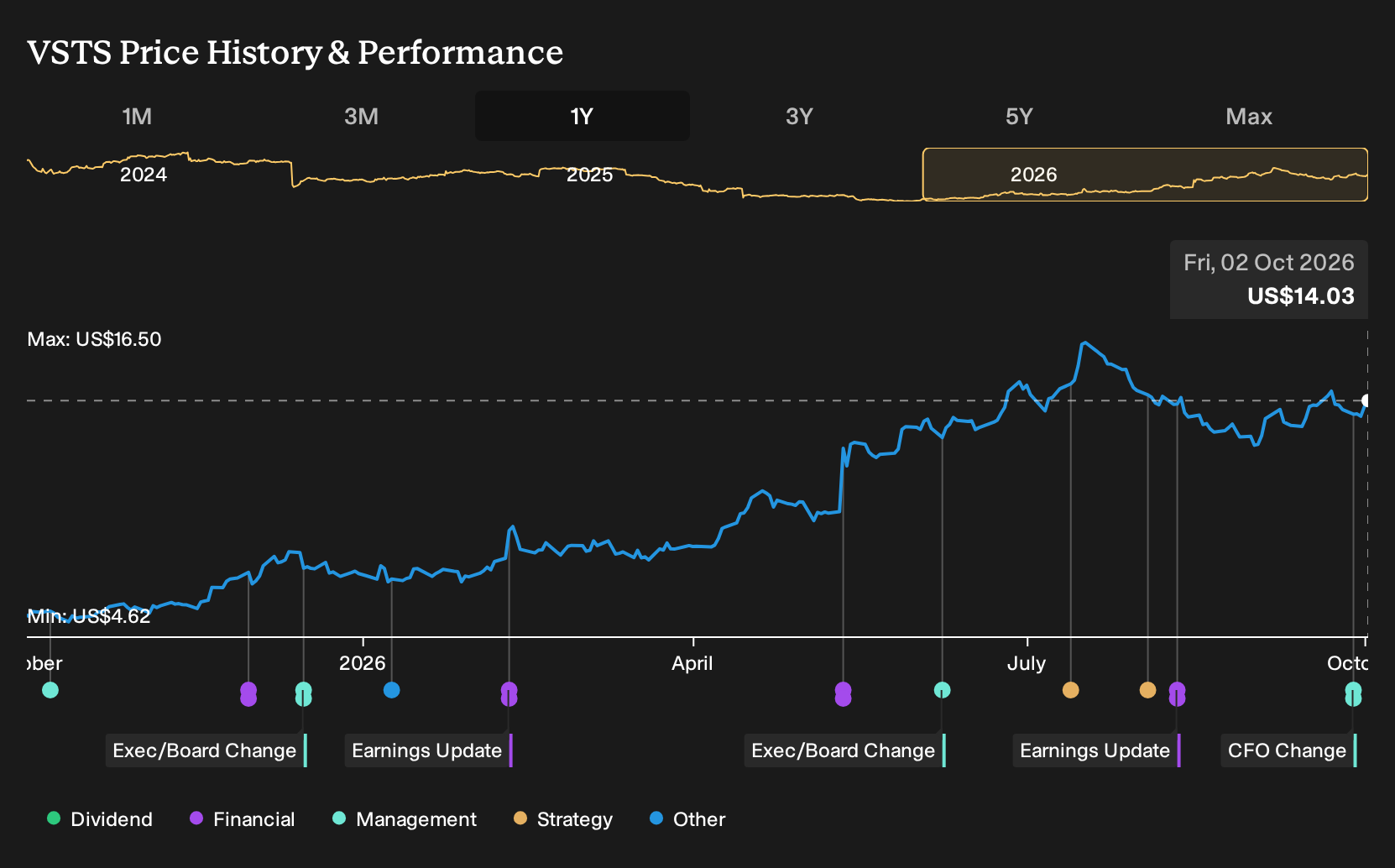
- Vestis appointed Russell Tiejema as Chief Financial Officer and Executive Vice President on 28 September 2026, succeeding interim CFO Adam K. Bowen, who plans to support the handover through October.
- Tiejema brings three decades of public company finance leadership across General Motors, Lennox, Masonite, and US LBM, directly relevant to Vestis’s focus on operational discipline, capital allocation, and large scale transformation.
- The discussion now turns to how Vestis’s investment narrative could be affected by the appointment of Russell Tiejema as its new finance chief.
Scan how Vestis’s CFO transition compares with other leadership driven stories by reviewing our curated list of 19 high quality undiscovered gems that may be flying under most investors’ radar.
Vestis Investment Narrative Recap
To own Vestis, you need to believe the business can turn customer churn, pricing pressure, and execution challenges into a cleaner, more disciplined operation that supports its uniform rental and workplace supplies model. The near term story still revolves around stabilising retention, making value based pricing stick, and getting more from recent technology and route optimisation investments.
The biggest short term catalyst remains evidence that churn is easing and margins are holding as value based pricing rolls through contracts. The main risk is that revenue softness and weaker profitability persist while net debt above US$1.3b keeps financial flexibility tight. The CFO change does not fundamentally alter that near term equation.
The most relevant recent announcement is the appointment of Russell Tiejema as Vestis Chief Financial Officer and Executive Vice President. His background in operational finance and capital allocation lines up with management’s focus on value based pricing, efficiency, and working capital discipline, which are central to the current turnaround narrative.
For investors, the link to catalysts is practical. Stronger financial planning and tighter capital decisions could support technology upgrades, route efficiency projects, and selective growth in higher margin verticals, while still targeting deleveraging. The main risk is execution. If operational and cultural changes stall, balance sheet constraints and customer churn remain front and centre.
What The New CFO Steps Into At Vestis
Vestis is being judged against a fairly specific set of consensus expectations. Analysts are working off a view that revenue grows by 1.3% a year over the next few years while profit margins move from a small loss position today to a mid single digit profit level by 2029. That forecast framework shapes how much room a new finance chief has to recut spending, rephase investment, or pull back on anything that might put those targets at risk.
On the earnings line, the reference point is current losses of about US$5.3 million compared with forecast consensus earnings of US$176.3 million by 2029. That implies an earnings swing of roughly US$181.6 million from today to the analysts’ 2029 estimate. It is a sizeable reset in profitability expectations that makes execution on pricing, costs, and churn reduction far more than an internal clean up story.
Vestis is also being analysed against a set of valuation markers that tie directly into those earnings forecasts. The consensus view assumes revenues of about US$2.8b and earnings of US$176.3 million in 2029. On those numbers, the stock would need to support a P/E multiple of 12.3x, which sits below the current US Commercial Services peer group average of 19.4x and below the very high loss making multiple implied today.
For a reader, the bridge is simple. If you think a steadier pricing regime, better route economics, and a tighter grip on working capital can make those earnings figures realistic, then the Tiejema appointment looks aligned with the current script. If you worry that customer churn, leverage near US$1.3b, and cultural change push the timeline out or keep margins under pressure, then the same consensus numbers start to look more demanding.
Vestis' current analyst narrative points to forecast revenue of about US$2.8b and earnings of US$176.3 million by 2029. This setup assumes revenue growth of 1.3% per year and an earnings improvement of roughly US$181.6 million from current earnings of a US$5.3 million loss.
Uncover why Vestis' fair value indicates a 7% potential downside to its current price, which leaves little room for error.
Exploring Other Perspectives
One alternative view puts long term demand risk front and center for Vestis. The most cautious analysts were working off slower 1.1% annual revenue growth and earnings of about US$168.4 million by 2029 before this CFO news. That is a more pessimistic script. Use this appointment as your cue to compare those assumptions and weigh several different viewpoints yourself.
Explore another Vestis fair value estimate, including one that suggests it could be worth just $17.00.
Decide For Yourself
Disagree with existing narratives? Extraordinary investment results rarely come from following the herd, so go with your instincts.
- A great starting point for your Vestis research is our analysis highlighting 3 key rewards and 1 important warning sign that could impact your investment decision.
- See our latest analysis for Vestis. The report includes a fundamental analysis summarized in a single visual, the Snowflake, making it easier to review Vestis' overall financial position at a glance.
Looking For More Vestis-Sized Investment Ideas?
If the Vestis story has sharpened your thinking on risk, balance sheets, and execution, use that same lens across a wider watchlist. The Simply Wall St Screener can help you quickly scan for other opportunities that line up with your preferred mix of quality, resilience, and potential upside.
- If you care most about finding strong businesses at what could be reasonable prices, start with companies on our 31 high quality undervalued stocks and see which ones deserve a deeper look.
- For readers who put capital preservation and financial resilience first, filter for stocks on the list of solid balance sheet and fundamentals (25 results) to see which issuers pair cleaner finances with fundamental support.
- If lower volatility and steadier profiles appeal more than chasing the fastest growth stories, scan the 31 resilient stocks with low risk scores and build a shortlist that better matches your risk comfort.
This article by Simply Wall St is general in nature. We provide commentary based on historical data and analyst forecasts only using an unbiased methodology and our articles are not intended to be financial advice. It does not constitute a recommendation to buy or sell any stock, and does not take account of your objectives, or your financial situation. We aim to bring you long-term focused analysis driven by fundamental data. Note that our analysis may not factor in the latest price-sensitive company announcements or qualitative material. Simply Wall St has no position in any stocks mentioned.
Have feedback on this article? Concerned about the content? Get in touch with us directly. Alternatively, email editorial-team@simplywallst.com