
Top AI Stocks To Watch In October 2026
Public resistance to energy hungry data centers is rising just as AI workloads consume more computing power and capital. That creates a filter moment for investors, as attention starts to shift from story stocks to businesses that already earn real money from AI and can justify new server farms, chips, and software with cash flow. This article walks through three profitable AI players screened for current earnings strength.
The stocks below are just a sample. The full screen surfaced 34 more profitable AI players with equally compelling stories that are not covered here. Head straight into the Profitable AI Stocks screener to identify, analyze, and prioritize the highest conviction AI earners for your watchlist.
NVIDIA (NVDA)
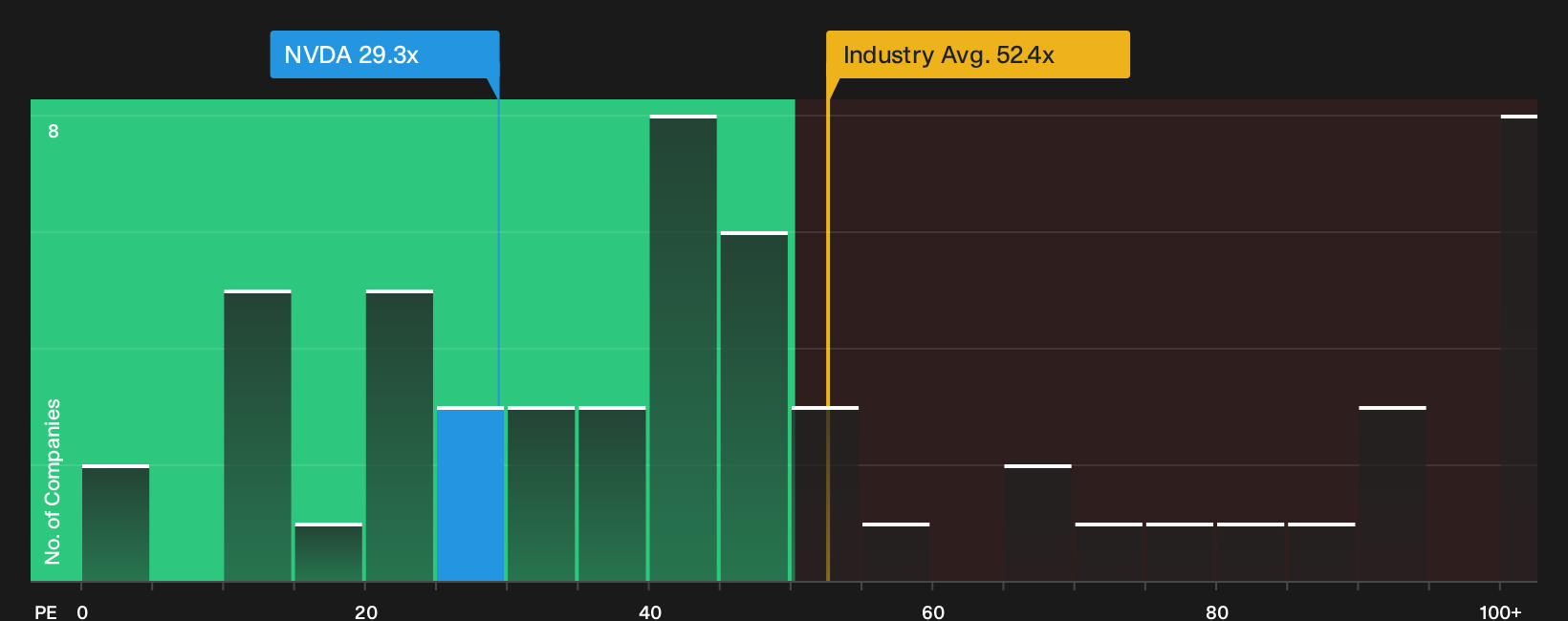
NVIDIA is the clearest example in this list of a business already turning AI infrastructure spending into profits through its data center compute and software stack. This makes it a useful reference point for what a mature AI earner can look like.
NVIDIA generates most of its revenue from the Compute & Networking segment at about US$275.4b, with Graphics contributing roughly US$27.6b, and the stock carries a market value of around US$5.6t.
"Uptake of an open-source/cheaper/better platform than Nvidia's CUDA would heavily undermine Nvidia's moat and enable any sizeable firm to directly engage semiconductor manufacturers, such as TSMC, to produce their own chips, stealing away Nvidia's high margin products."
For investors, the key question is what happens if a quiet shift in the AI software stack changes how much pricing power NVIDIA really holds over that data center spend.
That pricing question sits at the center of the NVIDIA debate, and the full narrative for NVIDIA lays out how cash generation, competition, and AI demand could still accelerate from here.
2CRSI (ENXTPA:AL2SI)
2CRSI designs and builds GPU and AI servers, dense racks, and cooling systems that power AI, ML, and deep learning workloads, while also supplying broader compute gear. The group generated about €405 million from sales of components and finished products and carries a market value of roughly €606 million.
2CRSI plugs directly into real AI capex by supplying GPU servers, high density racks, and immersion cooling that sit inside AI data centers rather than on a slide deck. Profit margins are slim at around 2%, so future AI infrastructure orders may be significantly affected by how one unseen pressure plays out.
Those tight margins put the spotlight on execution, so scan the 3 key rewards and 2 important warning signs (1 is major!) to see how 2CRSI’s thin profits could either scale or get squeezed.

eMemory Technology (TPEX:3529)
eMemory Technology turns its embedded non volatile memory and hardware security IP into a royalty engine linked to real AI deployment, especially where model weights and firmware need to be locked down inside chips rather than sitting exposed in general purpose storage.
eMemory Technology generates its NT$4.2b in sales entirely from memory chip related IP and products, and the stock carries a market value of about NT$236.8b.
"The accelerating content growth in automotive, medical, and critical infrastructure, where reliability and embedded security are mandatory, means eMemory is gaining foothold in markets with ultra-long product cycles and stringent qualification, providing durable, recurring royalty streams and driving net margin resilience."
The real swing factor is how one shift in customer design wins and security standards shapes the royalty rate that underpins those margins.
That royalty question is exactly where the full narrative for eMemory Technology pulls everything together, showing how eMemory Technology’s AI, security and margin story could accelerate or stall from this point onward.

Seeking Alternatives Before They Fly
Fresh ideas often emerge before momentum is obvious and prices start moving significantly. Scan these curated lists while they are still relatively under the radar and consider them as part of your research process.
- Identify durable income streams before yield-focused investors turn their attention to them by reviewing the 7 dividend fortresses, which focuses on higher payouts and sturdier balance sheets.
- Monitor potential early participants in electrification as infrastructure spending develops by exploring the 40 power grid technology and infrastructure stocks, curated for grid technology, hardware, and supporting services.
- Research potential future materials suppliers while expectations are still adjusting by using the 16 top copper producer stocks, which is focused on producers aligned with long-term demand trends.
This article by Simply Wall St is general in nature. We provide commentary based on historical data and analyst forecasts only using an unbiased methodology and our articles are not intended to be financial advice. It does not constitute a recommendation to buy or sell any stock, and does not take account of your objectives, or your financial situation. We aim to bring you long-term focused analysis driven by fundamental data. Note that our analysis may not factor in the latest price-sensitive company announcements or qualitative material. Simply Wall St has no position in any stocks mentioned.
Have feedback on this article? Concerned about the content? Get in touch with us directly. Alternatively, email editorial-team@simplywallst.com