
Learn Why The Bull Case For DHL (XTRA:DHL) Could Change Following Health Logistics Expansion
- DHL Group has expanded its focus on Morocco as a priority Geographic Tailwinds market and rolled out broader freight, express, and contract logistics services to tap trade flows between Europe and Sub Saharan Africa.
- The group has also committed €2b to DHL Health Logistics by 2030, with half allocated to the Americas, signaling heavier exposure to healthcare supply chains and more specialised, service intensive contracts.
- We will now look at how DHL Group's Morocco expansion and €2b health logistics investment could reshape the existing investment narrative.
DHL Investment Narrative Recap
DHL investors need to be comfortable owning a global logistics platform that is leaning into new trade corridors and higher touch services while core express volumes face regulatory and macro pressure. The key short term swing factor remains how B2B and B2C demand reacts to ongoing trade volatility and U.S. de minimis rule changes that management has flagged as a risk to EBIT.
The biggest current threat is that weaker shipment flows and regulatory headwinds keep squeezing express volumes faster than DHL can offset with mix shift, pricing and Fit for Growth savings. The Morocco expansion and broader Africa focus do not alter that near term risk in a material way, but they do slightly widen the set of routes that could stabilise volumes over time.
The most relevant new move is DHL committing €2b to expand DHL Health Logistics by 2030 with half directed to the Americas. This pushes the group further into healthcare distribution where contracts tend to be more service intensive, with tighter delivery standards and higher compliance requirements than general freight.
For catalysts, that healthcare build out matters because it aligns with DHL Supply Chain’s new U.S. health system logistics solution that centralises inventory, support activities and final mile transport. Execution risk is real since these customers are demanding and heavily regulated, but if DHL runs these networks reliably, the health vertical could become a steadier counterweight to cyclical express demand and trade exposed forwarding.
DHL's analyst narrative points to revenue of €95.6b and earnings of €4.6b by 2029. This implies 3.8% yearly revenue growth and an earnings increase of about €0.9b from €3.7b today.
Uncover why DHL's fair value indicates that DHL is roughly in line with its current price.
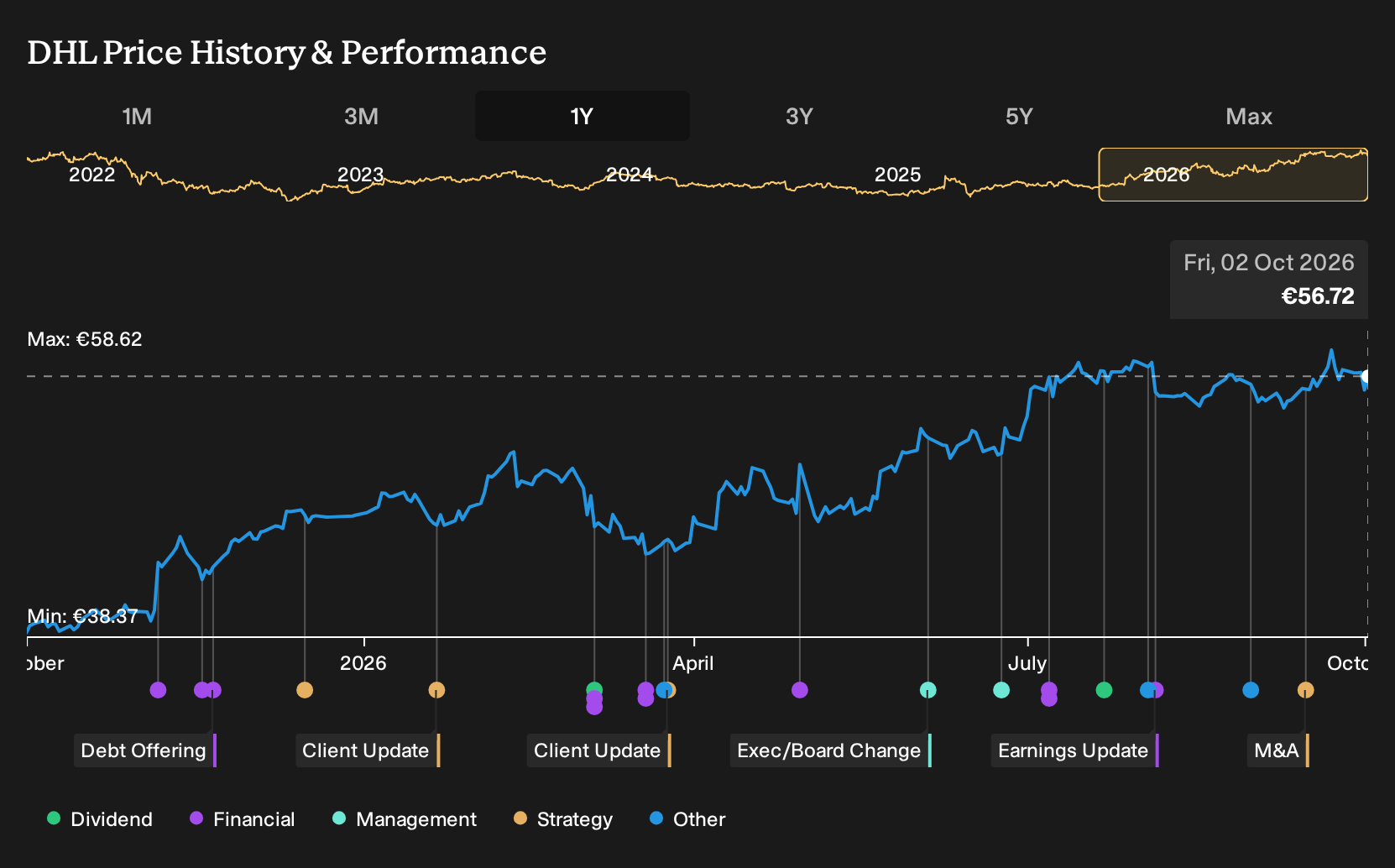
Exploring Other Perspectives
You are not the only one wondering whether DHL’s Morocco and health logistics push changes the script. The most cautious analysts focus on the risk that new trade corridors add customs complexity instead of cleaner throughput. They were pencilling in about €91.2b of revenue and €4.1b of earnings by 2029, well below consensus. Those views were set before this news, so use them as a reference point while you explore how opinions could shift.
Explore 6 other DHL fair value estimates, including one that suggests as much as 22% downside from the current price.
Decide For Yourself
Disagree with existing narratives? Extraordinary investment returns rarely come from following the herd, so go with your instincts.
- A great starting point for your DHL research is our analysis highlighting 4 key rewards that could impact your investment decision.
- See our latest analysis for DHL. The report includes a comprehensive fundamental analysis summarized in a single visual, the Snowflake, making it easy to evaluate DHL's overall financial health at a glance.
Looking For More DHL Investment Ideas?
If DHL has prompted you to rethink how you build a portfolio, it can help to line it up against other stocks with clear, data driven profiles using the Simply Wall St Screener.
- For investors hunting for mispriced quality, start with a curated set of 192 high quality undervalued stocks that combine fundamentals with more measured expectations baked into their prices.
- If resilience matters most to you, focus on balance sheets that look robust across multiple metrics by reviewing the list of solid balance sheet and fundamentals (206 results).
- Income focused portfolios can begin with a shortlist of 168 dividend fortresses that pair higher yields with business profiles screened for stability.
This article by Simply Wall St is general in nature. We provide commentary based on historical data and analyst forecasts only using an unbiased methodology and our articles are not intended to be financial advice. It does not constitute a recommendation to buy or sell any stock, and does not take account of your objectives, or your financial situation. We aim to bring you long-term focused analysis driven by fundamental data. Note that our analysis may not factor in the latest price-sensitive company announcements or qualitative material. Simply Wall St has no position in any stocks mentioned.
Have feedback on this article? Concerned about the content? Get in touch with us directly. Alternatively, email editorial-team@simplywallst.com