
Is the 60/40 Portfolio Finally Back to Work? It Depends on One Thing.
For decades, the 60/40 portfolio was the closest thing investing had to a free lunch. Then it lost 16% in a single year, and everyone started writing its obituary.
Now the 10-year is back above 5%, and the corpse is starting to twitch.
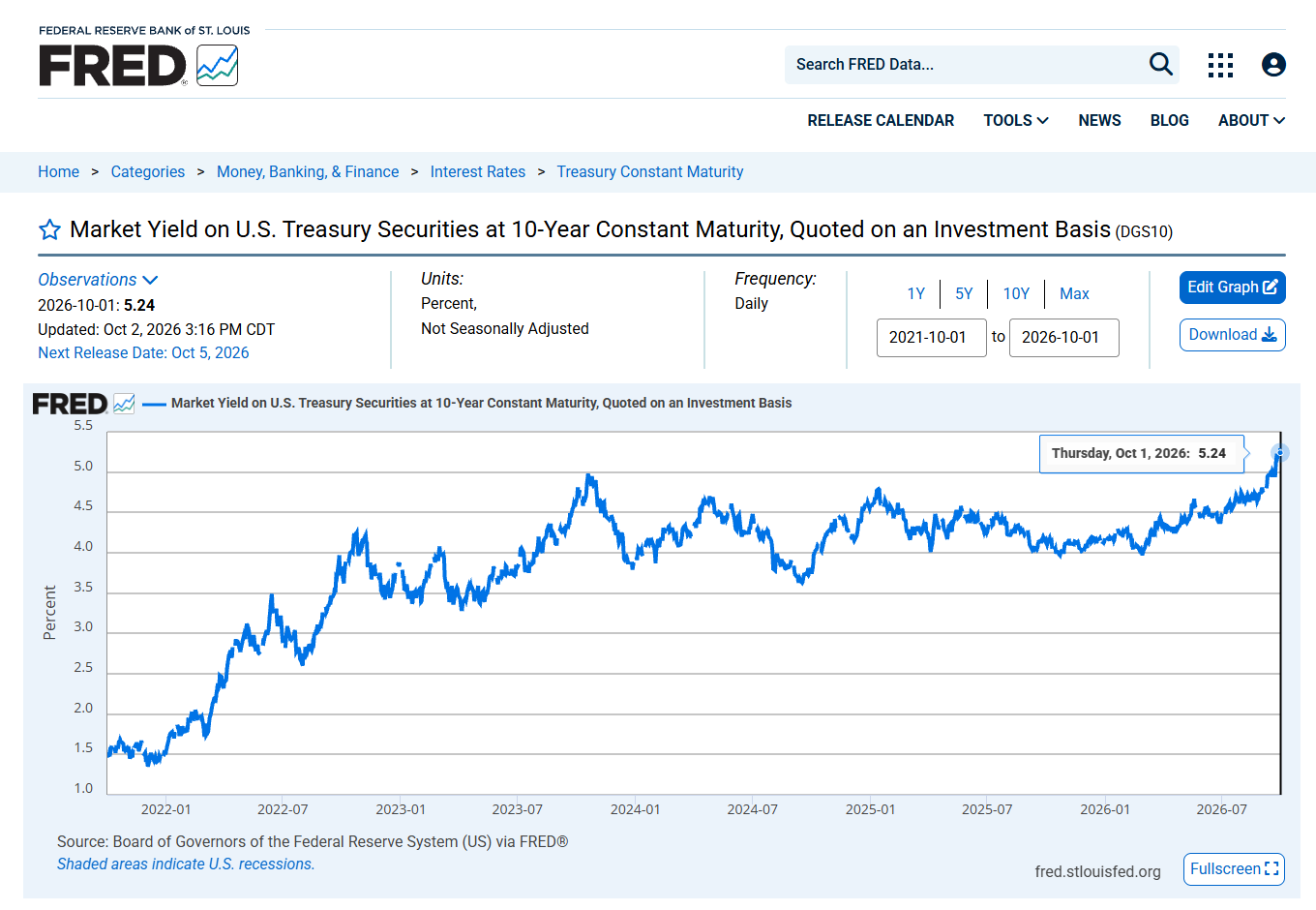
But here's the twist: the same surge in yields that crushed bond prices in 2022 also quietly rebuilt the case for the 40%. When the 10-year paid under 2%, bonds paid almost no income, and there was little room to rally if stocks fell. At 5%, they pay a multiple of what the S&P 500 Index ($SPX) does in dividends, with plenty of room to climb in a selloff.
But a better yield doesn't mean a working hedge. Whether your bonds show up when you need them depends on a question most investors never ask: why are stocks falling? The answer decides whether the 40% cushions the blow or sinks right alongside the 60%, and today's backdrop isn't all pointing the way you'd hope.
To see why, we have to go back to where the idea came from.
The 60/40 Portfolio Is Older Than You Think
Balanced investing didn't start with Markowitz. The Wellington Fund, billed as the first balanced mutual fund, launched in 1929 and split money between stocks and bonds two decades before his math existed. Markowitz gave the idea a theoretical foundation rather than inventing it, and shared a Nobel Prize in 1990 for that work.
It didn't catch on right away, and the hurdle wasn't what you'd expect. Institutions of the era were already bond-heavy, and stocks were still seen as speculative, so a 60% stock allocation was the bold move. The idea spread gradually as pension funds and endowments shifted toward equities and began applying Markowitz's theory, and by the early 1990s it was the go-to balanced strategy.
But actually, bonds were a weaker hedge then than we assume today. 10-year Treasuries returned just 2.6% a year from 1940 to 1980, and from October 1974 until late 2000, the trailing three-year correlation between stocks and bonds was consistently positive.
Translation: when stocks fell, bonds often fell alongside them… so the 40% wasn't cushioning as much as it should have.
So why was it so popular? Well, the core concept - diversification - worked. One study found that 60/40 portfolios had about a 10.5% volatility rating during the earlier periods, when stocks and bonds were positively correlated. After 1999, when bonds provided arguably better diversification, volatility fell to 8.4%.
It was also simple. One stock fund and one bond fund. Investors could set the split, rebalance occasionally, and sit tight through the swings without tinkering every time the market twitched, which is a real advantage when trading costs were high.
The returns came from a tailwind. After rates peaked in September 1981, falling yields fueled a once-in-a-lifetime bond bull market, so the 40% return came from both income and price gains. Stocks and bonds both do better when inflation is falling, which is also why the two moved together.
Then, the hedge came. Around the turn of the millennium, stock-bond correlation turned mostly negative, and it stayed that way until about 2020. That is the stretch when bonds became the “shock absorber” most investors now take for granted.
But it was the exception, not the rule. Morgan Stanley Investment Management calls it an anomaly, noting that stocks and bonds moved together in 78% of years since 1870. And after two decades of bonds acting as shock absorbers, investors came to treat that behavior as permanent. So when the strategy struggled, it felt like the strategy was broken.
Why The 60/40 Strategy Looked Completely Broken
The 60/40 strategy drew criticism from two angles.
The first was from a returns perspective. After the 2008 financial crisis, central banks pushed rates toward zero, and yields stayed low for the next 12 years, going into the next decade. The 10-year Treasury yielded around 3.8% at the start of 2010 and dropped below 1% in 2020, setting record lows that summer. It was official: the bond bull market that had padded 60/40 since 1981 had run out of road.
Hence, the math behind bond investments was… unforgiving. A 1% starting yield meant that 40% of your portfolio was earning next to nothing. It got so bad that strategists began warning that portfolios following the 60/40 strategy would deliver far less than investors were used to.
As a result, the 60/40 strategy was declared dead.
But, ironically, the warning never really showed up in the results. Stocks boomed, and a 60/40 portfolio did well through 2020. The pronouncement that the strategy was “dead” was largely forward-facing, but it still effectively planted the idea that bonds were dead weight.
Then came 2022, when the second problem arrived: the hedge disappeared. Inflation surged, and the Federal Reserve raised rates at the fastest pace in decades to combat the surge. The S&P 500 fell about 18% that year, and the broad U.S. bond index lost about 13%.
Take 60% and 40% of that, and a 60/40 portfolio would have lost 16%.
This was the failure investors cared about most, because the 40% is supposed to cushion exactly this kind of drop. Instead, stocks and bonds fell together, the same positive correlation as in earlier history, and bonds failed at their one job.
What a 5.24% 10-Year Yield Changes for 60/40 Investors
Today, things are different.
The 10-year Treasury closed at 5.24% on October 1, 2026, roughly 10 times its 0.52% low in August 2020.
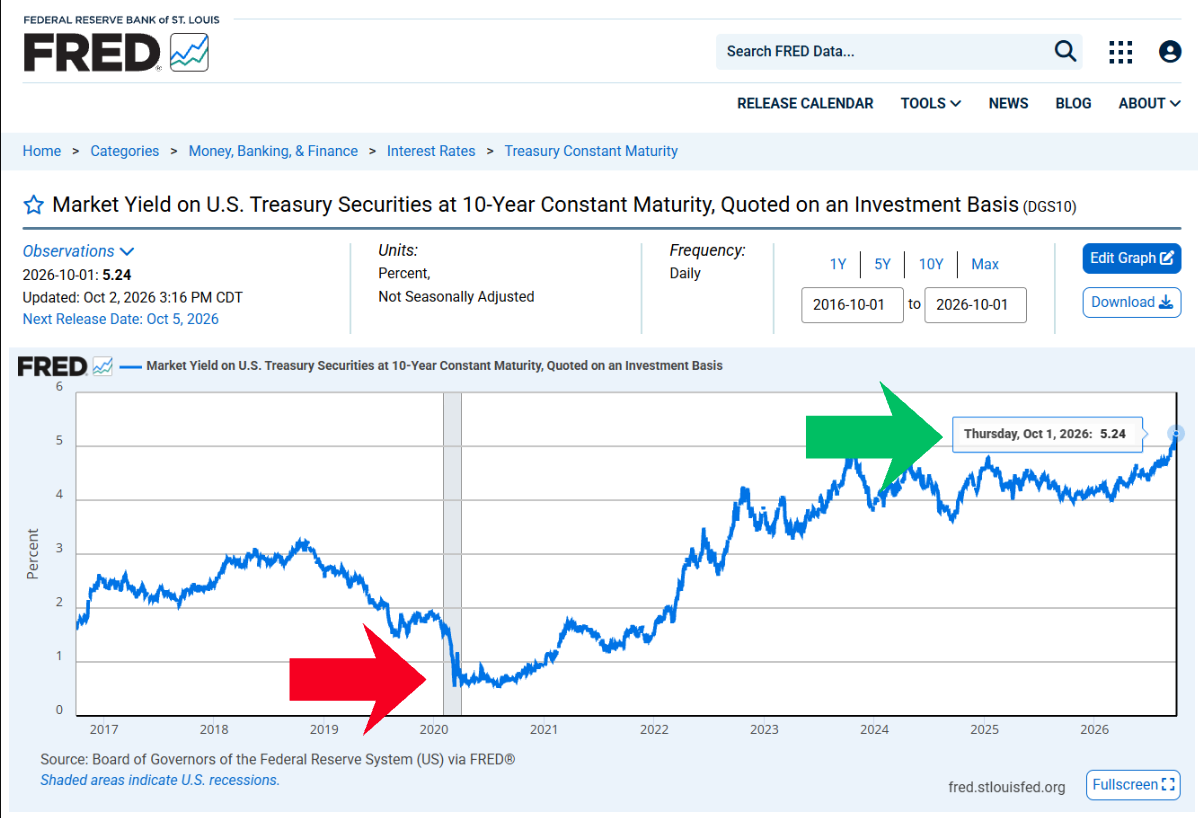
That changes the math significantly and, more importantly, gives the 60/40 strategy a couple of distinct advantages that investors haven't had in years.
First, of course, is the return. What a bond pays at the start is a good guide to what you will earn from it over the next ten years. Research by Bogle and Nolan covering 1915 to 2014 found that a 10-year Treasury's starting yield is a good guide to what it will earn over the next decade. A more recent FTSE Russell study mirrors the claim.
So, give or take a couple of decimal places, a 5.24% starting yield will likely deliver roughly a 5% annual return when all is said and done. That’s not bad at all for 40% of your portfolio. It immediately secures around 2 points of yield from an assumedly safe position, compared to 0.4 point when Treasury yields were 1%. That means investing in bonds today actually results in “getting paid to wait,” rather than “getting paid almost nothing to wait.”
Then, there’s the protection angle, the hedge. A bond can now protect you in two ways. First, the interest. Second, the bond's price will likely rise when yields fall. So if a market scare pushes rates down, that gain can cover a real part of any actualized or paper stock loss, on top of the interest gained.
These yields are before inflation, so inflation still decides what the income is worth. Even so, a 40% sleeve paying about 5% means you are paid to wait, and that was not true at 1%.
The Catch: Bonds May Not Cushion the Next Selloff
That said, the cushion is not a promise. Like in 2022, if inflation drives selloffs, yields rise, but stocks and bonds will likely fall together. But what has changed now is the starting point. If stocks drop because growth is slowing, a 60/40 portfolio holding 5% bonds has two cushions: the interest it keeps collecting and the price gains that come when yields fall. At 1%, it had almost neither.
But that brings us to another potential problem: the real reason for higher yields today, and the duration risks that come with it.
News reports blame rising oil prices and inflation fears tied to the Iran war and U.S. trade policy, along with worries about government borrowing. That's the same kind of trigger as 2022, when inflation pushed yields up fast. It creates duration risk, which measures how much a bond’s price moves when yields move.
For Treasuries with seven to ten years left, the average move has been about 7.28% in bond price for every one-point change in yield since 2000.
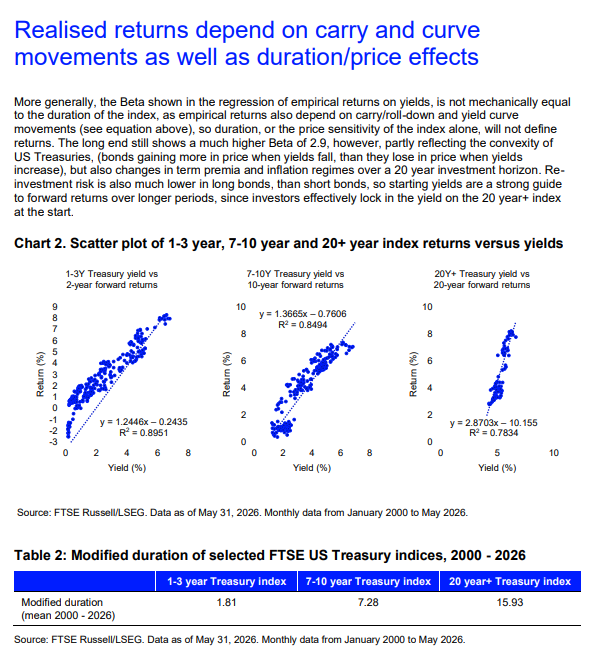
So if yields rise to ~6.2%, that will likely result in around a 7% loss in the bond price.
To be fair, though, interest rates tend to normalize over time, at least according to the same study. When that happens, bond prices recover. In the meantime, you keep earning interest every year. Over about ten years, the price drops and recoveries tend to cancel each other out, so you're left with the interest.
But that’s not exactly comforting when you need the money during a dip.
The bigger worry is that stocks and bonds fall at the same time again. Both dislike rising prices, though for different reasons. Higher inflation squeezes company profits, pushes the Fed to raise rates, and eats into the real value of a bond's fixed interest payments. When growth is the problem instead, the Fed cuts rates and bonds rally.
That’s why today’s setup might not be the best to calm nerves. The yield surge is being blamed on oil prices, trade policy, and government borrowing, which are inflation-flavored triggers, not growth scares. Not everyone agrees on the cause, though. Cleveland Fed President Beth Hammack says real rates have moved more than inflation expectations.
That said, if inflation is what keeps driving markets, the 40% may not protect you the way it did for the last two decades.
What Can You Do About The Risks?
So what can you actually do about these risks if you still want a 60/40 portfolio?
One option is to shorten your bond duration, since shorter-term bonds move less when yields jump, and your price hits are smaller. With yields at 5%, you no longer have to reach for long maturities to earn a decent income, so the trade-off costs less than it did a few years ago.
Another is to add inflation-protected bonds (TIPS), whose payouts adjust with inflation and cover the exact scenario that hurts regular bonds. They won't rise in every selloff, but they remove the inflation piece of the problem.
It also helps to match your bonds to your timeline. If you’re absolutely sure you won’t touch your money for the next ten years, these price swings won’t usually matter by maturity. The people who get hurt most are those who need cash during a dip and are forced to sell at a loss. Rebalancing, which means selling what's held up and buying what's dropped, keeps your split on target. In a year like 2022, it also forces you to buy bonds at higher yields instead of panicking out of them.
Of course, none of these steps remove the risk. They just spread it across more than one kind of shock, which may be enough to help you through the bad times.
How to Build a 60/40 Portfolio With Just Two ETFs
So if you’re planning to build a 60/40 portfolio the simple way, here’s how.
For the 60% portion in stocks, an index ETF can do the trick, like the Vanguard S&P 500 ETF (VOO).
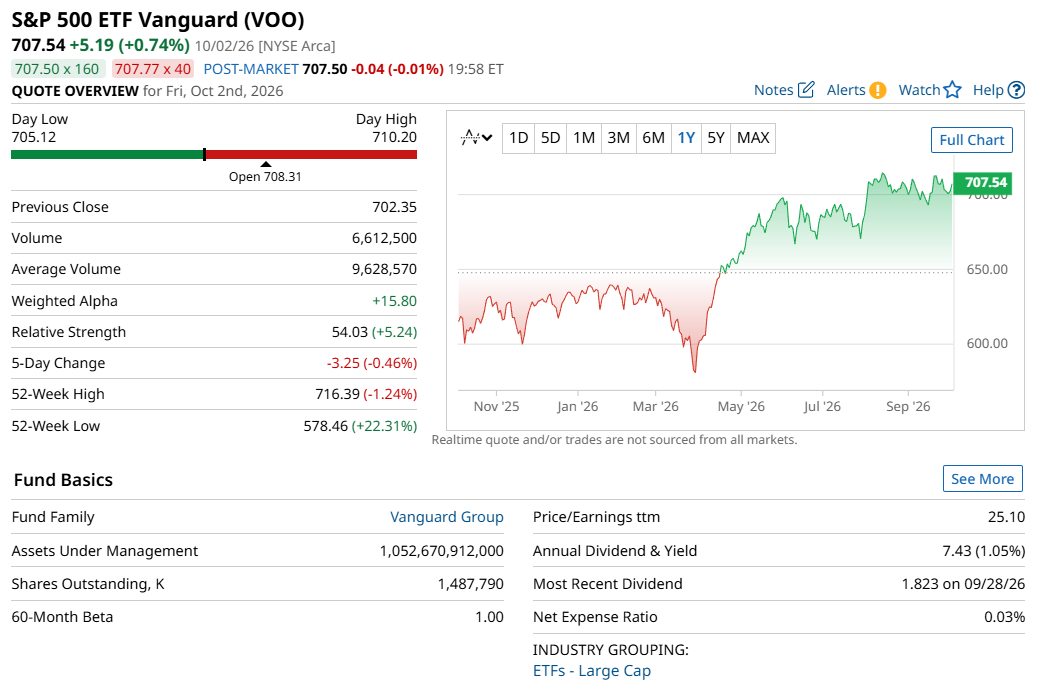
VOO tracks the S&P 500, giving investors ownership in roughly 500 large U.S. companies in a single investment. Investors use it for instant diversification, low costs (0.03% net expense ratio), and broad exposure to the U.S. stock market without picking individual stocks.
For the 40%, use a Treasury ETF. To mirror the performance of a 10-year Treasury bond, the iShares 7-10 Year Treasury Bond ETF (IEF) is a good candidate.
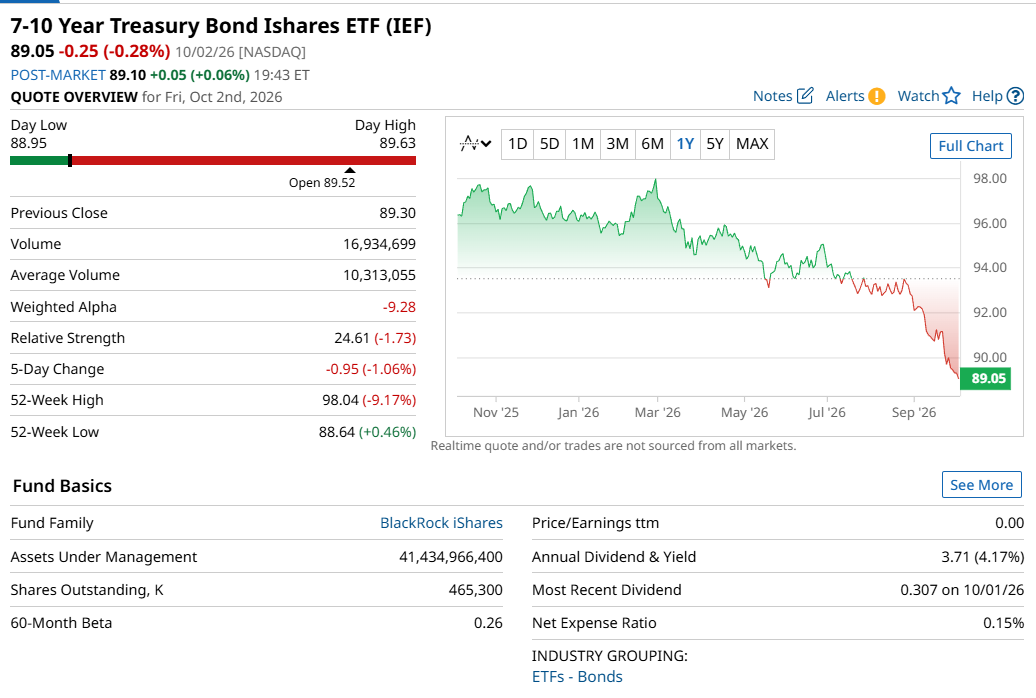
The idea is to capture the income and relative stability of intermediate-term government bonds while still allowing the bond portion to respond to interest-rate changes. It also makes the 40% bond allocation easy to buy, sell, and diversify, rather than buying individual Treasury bonds. The net expense ratio is pretty decent, too, at 0.15%.
To avoid the price risk I mentioned earlier and a cheaper expense ratio, there’s also the Vanguard Intermediate-Term Treasury ETF (VGIT).
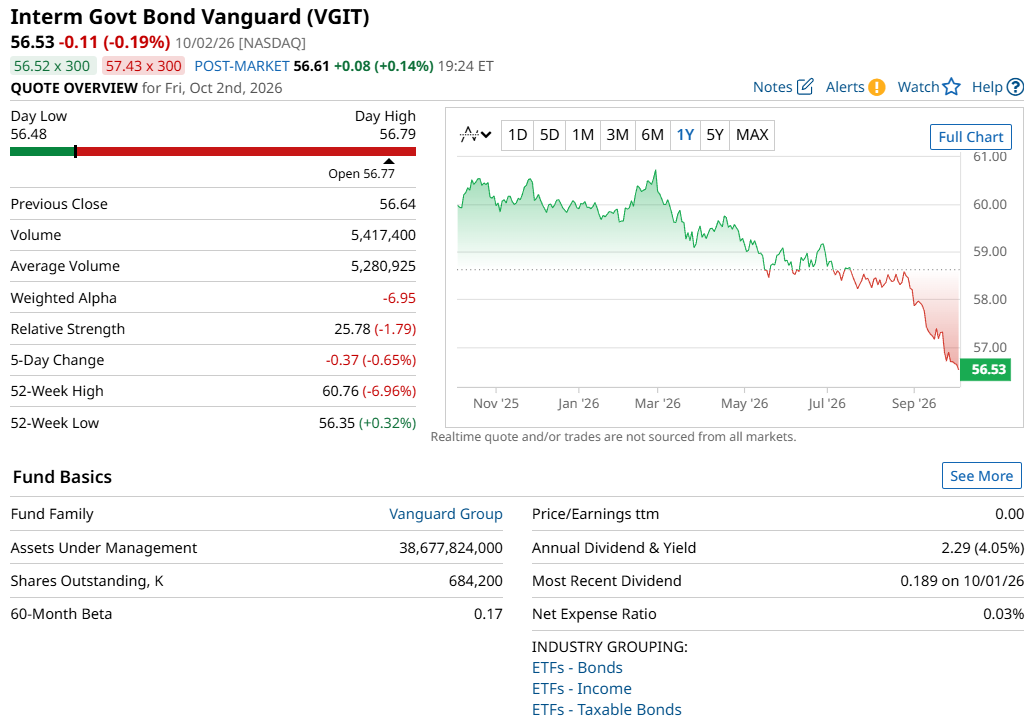
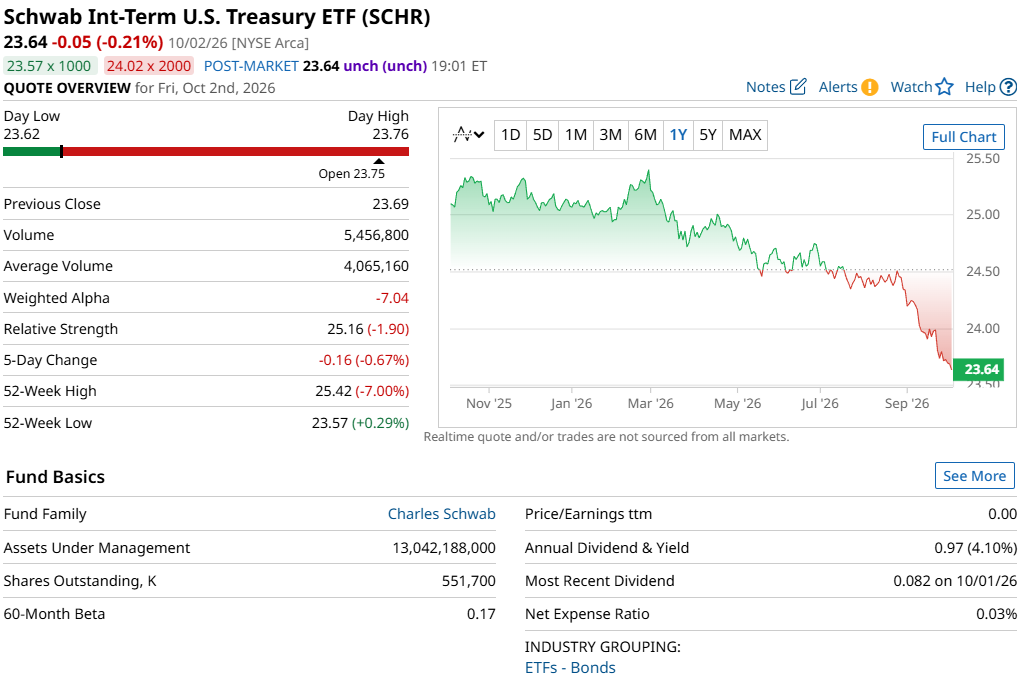
The catch is that it holds bonds with 3 to 10 years remaining, so its average duration is only about 4.9 years. That makes it calmer than IEF in a rate spike, sure, but it also gives up some of the rally if yields fall, and it's a bit less like a true 10-year bond. The Schwab Intermediate-Term U.S. Treasury ETF (SCHR) also offers the same exposure and expense ratio.
Now, if you want to go the other direction and get more exposure to that rate sensitivity, there’s the iShares 20+ Year Treasury Bond ETF (TLT). The expense ratio is reasonable at 0.15%, but the kicker here is that its average effective duration is about 14.7 years, roughly double IEF's.
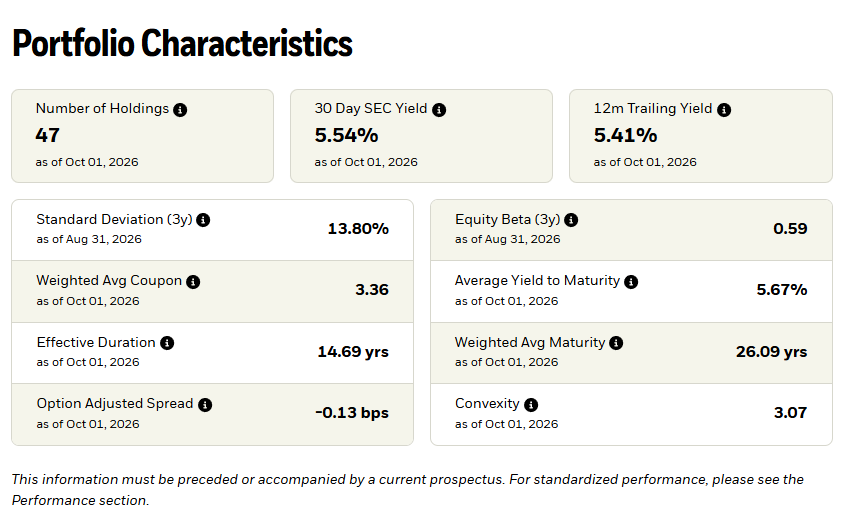
That means it should gain far more if yields fall and lose far more if they rise (15.93% in price per one-point move in yield, based on the historical average since 2000), so it works best as a deliberate bet on falling rates rather than a calm stabilizer. It pays a bit more for that risk, though, with a 30-day SEC yield of 5.54% as of October 1, 2026.
Once you've picked your two funds, the only real upkeep is rebalancing, which means trading back to 60/40 after the market pushes you off target. And, unfortunately, there’s no magic schedule for it. Research says rebalancing monthly, quarterly, or annually makes no meaningful difference to risk-adjusted returns, except for the higher costs you'll accumulate along the way.
So I’d pick a day every year to reset, or check once a year and only touch your portfolio if you’ve drifted five points or more. And, of course, using new contributions to whichever fund is behind lets you rebalance without selling anything.
And don’t forget, where you hold each fund matters too. Bond interest is taxed at ordinary income rates every year, while stock returns usually get more favorable treatment.
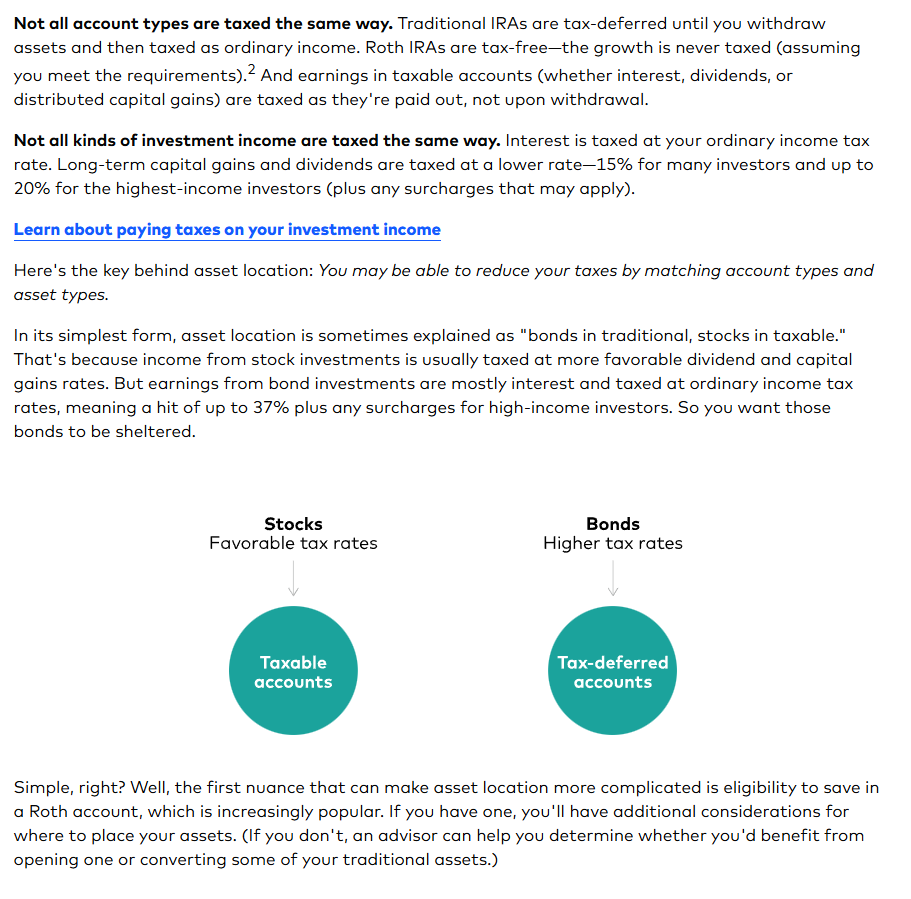
That's why the common rule of thumb is to keep bonds in a traditional IRA or 401(k) and stocks in a taxable account.
There's a twist for Treasuries, though. Their interest is taxable federally but not by states, so the tax drag weighs less if you hold them only in a taxable account. Trades inside an IRA or 401(k) also don't create a tax bill, which makes rebalancing there painless.
But remember, this is general information, and if you have a unique situation or are unsure about anything, always consult your tax advisor.
Conclusion
This two-fund 60/40 suits today's investors who value simplicity over fine-tuning. History lays out how and why the math works, but it won't shield you from an inflation shock or squeeze out every extra basis point of return. Still, that’s the entire point if you'd rather not think about your portfolio more than once a year.
On the date of publication, Rick Orford did not have (either directly or indirectly) positions in any of the securities mentioned in this article. All information and data in this article is solely for informational purposes. For more information please view the Barchart Disclosure Policy here.