
Here's Why SpaceX's AI Infrastructure in Space "Moonshot" Won't Uproot Neocloud Companies
Key Points
SpaceX just launched a test satellite with Google TPUs to see how well they perform in space.
Data center satellites would avoid land constraints and run on freely available solar power, but they'd come with other issues, and cost 2.5 to 3 times as much as comparable ground-based data centers.
Neoclouds are building data centers right now, and tech giants aren't going to sit around and wait for orbital data center technology to work.
AI data centers in space just got one step closer to reality. Last week, SpaceX (NASDAQ: SPCX) launched a prototype satellite for Alphabet's (NASDAQ: GOOG) (NASDAQ: GOOGL) Project Suncatcher that contains four of its Tensor Processing Units (TPUs). Alphabet is testing how those TPUs fare in space, in pursuit of its longer-term objective to operate entire constellations of data center satellites in low earth orbit, where they can run on nearly continuously available solar power.
Yet even if data centers in space become a reality, this development is unlikely to eliminate the market for the neocloud companies currently scrambling to build as many data centers as they can on Earth.
Missed Nvidia in 2009? This Rare Signal Is Flashing Again. In 2009, a "Double Down" signal flashed for a little-known chipmaker called Nvidia. For the first time in years, that same "Total Conviction" signal is flashing for a company 1/100th the size of Nvidia. Continue »
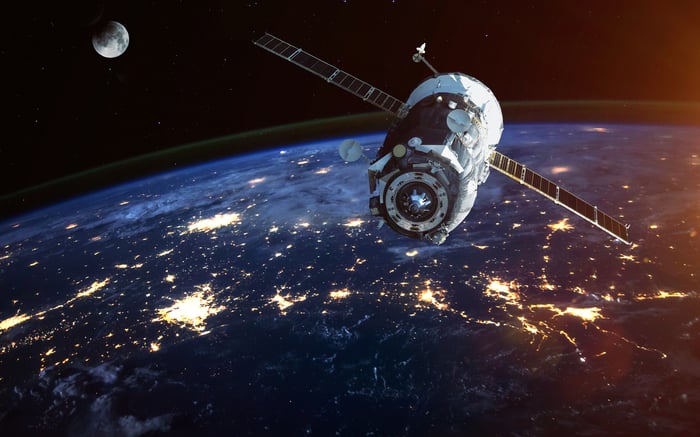
Image source: Getty Images.
Orbital data center hardware is more expensive
Any time Nvidia (NASDAQ: NVDA) releases a new GPU or AI platform, data center operators can order a bunch of chips and have them delivered by truck or plane. However, if those same chips are installed in a data center satellite, bringing them online requires a rocket launch. And putting payloads into orbit is still a extremely costly.
That's not even including the initial costs of building the rest of the hardware for an orbital data center. Overall, Boston Consulting Group estimates that on a processing-power basis, satellite-based data centers will be 2.5 to 3 times more expensive than data centers on Earth -- even though they will have no electricity costs. The researchers acknowledged that this gap could shrink over time as the cost of putting payloads into orbit falls.
While orbital data centers would sidestep the power and land constraints that are among the bottlenecks to standard data center development, those issues are less of a problem for neoclouds like Nebius (NASDAQ: NBIS) and Iren (NASDAQ: IREN), which have gained considerable head starts in infrastructure.
Tech executives are taking the orbital data center idea seriously. Nvidia is hiring an orbital data center system architect, but it also owns multibillion-dollar stakes in Iren and Nebius. If orbital data centers prove technically and commercially viable, they won't make data centers on Earth obsolete, any more than air freight eliminated the markets for freight railroads or tractor-trailers.
AI infrastructure still has to work in space
The launch of Google's TPUs into space was a milestone moment in the quest to make data center satellites a reality. Such processors must prove that they can operate properly and sustainably in space before they're deployed at scale. However, the technological hurdles involve more issues than just AI chips. Server racks, thermal management resources, power generation systems, and telecommunication products must all work in harmony, too.
While data center satellites would avoid some of the obstacles that terrestrial data centers face, they have numerous challenges of their own. Although SpaceX CEO Elon Musk suggested his company would be putting data center satellites into orbit by the end of 2027, he has a well established track record of setting ambitious timelines for his bold projects, and then repeatedly missing the deadlines he sets.
For instance, last year, Tesla (NASDAQ: TSLA) temporarily halted mass production of Optimus robots due to design challenges with their hands. Musk had earlier stated that the company would produce at least 5,000 robots by the end of 2025. It did not. In August 2026, Optimus production finally reached the level of several hundred robots per week -- and they are still having issues.
However, even if something doesn't happen as soon as Musk is promising, that doesn't mean that it will never happen. SpaceX may eventually get large numbers of data center satellites operational. Alphabet and other tech giants own significant stakes in SpaceX, giving them incentives to support the company and see it succeed.
Hyperscalers need compute right now
All that said, tech giants do not have time to wait around for orbital data centers to become established. They need compute for their AI models, products, and services right now, and they aren't afraid to pay a premium for it. Iren, Nebius, and other neoclouds have been able to negotiate steadily higher annual contract values for their available megawatts as supply crunches continue.
It's at the point where Meta Platforms (NASDAQ: META) reached a deal with Oklo (NYSE: OKLO) for a 1.2-gigawatt nuclear-powered data center campus in Ohio that will not be completed until 2034. Granted, the first phase of the project could come online as early as 2030, but it shows that tech companies are bidding on electricity supplies for data centers that will not be available for almost a decade.
Neocloud companies have available megawatts of power committed to support their pipelines, and they have been scaling to multigigawatt pipelines behind the scenes. As more of those data centers come online, the neoclouds will have the flexibility to charge higher prices, especially as agentic AI and physical AI further increase the demand for compute.
Neoclouds are poised to win right now and for years to come, and while orbital data centers could become a niche option in the future, they are unlikely to supplant AI data centers built on Earth.
Marc Guberti has positions in Iren. The Motley Fool has positions in and recommends Alphabet, Meta Platforms, Nvidia, and Tesla. The Motley Fool has a disclosure policy.