
Will Drug Approvals Change Merck (MRK) Narrative
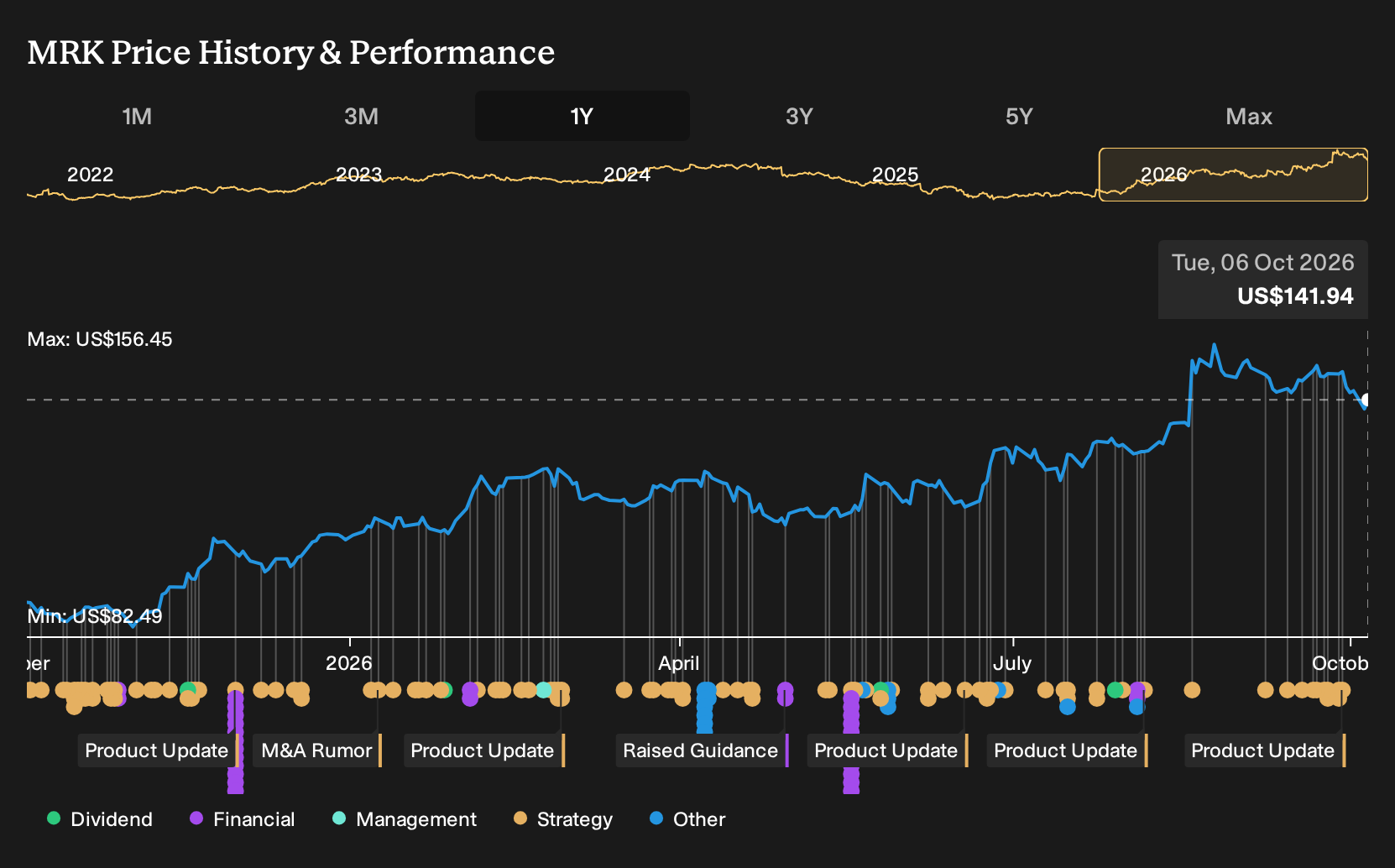
- Recent Merck news spans multiple therapeutic areas, including an FDA approval for WELIREG plus LENVIMA in advanced renal cell carcinoma, an FDA label update for WINREVAIR in pulmonary arterial hypertension, and positive Phase 2b/3 BRUNELLO data in diabetic macular edema, alongside collaboration progress, licensing activity and a withdrawn oncology filing.
- The mix of a new dual cancer regimen, a strengthened PAH label, advancing retinal assets and a large KRAS G12D licensing deal highlights how Merck is committing substantial capital and R&D effort to broaden revenue drivers beyond any single flagship product.
- We will now look at how Merck's investment narrative could be influenced by the FDA approval of WELIREG plus LENVIMA.
Scan how Merck is reshaping its pipeline, and then size up other research heavyweights with resilient balance sheets using our hand picked list of solid balance sheet and fundamentals (25 results)
Merck Investment Narrative Recap
To own Merck, you need to be comfortable with a business that is spending heavily to refresh its drug portfolio before KEYTRUDA faces cheaper rivals. The key near term swing factor is how quickly newer products and late stage trials convert into steady prescription demand. This week’s cluster of oncology, ophthalmology, vaccine and PAH updates mainly reinforces that R&D heavy story rather than resetting it.
The biggest operational risk right now remains concentration around KEYTRUDA and a pipeline that carries clinical and safety uncertainty, as seen with remigromig’s adverse event profile and the ifinatamab deruxtecan withdrawal. New deals and trial starts, including those just announced, add potential future revenue streams but also keep reported earnings sensitive to upfront charges and development outcomes.
The SciBrunch deal for SPR2015 looks most relevant when thinking about catalysts. Merck is taking exclusive rights to a KRAS G12D inhibitor and recording a US$400 million pre tax charge in Q3 2026. For you as a shareholder, that means more near term investment in oncology options that could one day help offset KEYTRUDA pressure if development and approvals go to plan.
That single agreement carries up to US$2.13b in potential payments tied to development, regulatory and sales milestones across several indications. It fits with management’s push to build more than 20 future growth drivers, but it also keeps the risk list live. Execution on SPR2015 and similar assets now sits squarely on the catalyst side of the ledger, while the guaranteed upfront spending flows straight into today’s income statement.
Merck's narrative projects US$75.3b revenue and US$22.5b earnings by 2029. This assumes 4.2% yearly revenue growth and an earnings increase of US$19.3b from US$3.2b today.
Uncover why Merck's fair value indicates a 10% potential upside to its current price, which could narrow quickly.
Exploring Other Perspectives
For Merck, the key swing factor in the alternative, more cautious story is pipeline execution risk. The most pessimistic analysts, who set price targets near US$105 and worked off revenue of about US$73.2b and earnings of US$22.9b by 2029, worry that newer drugs may not offset KEYTRUDA concentration. The fresh WELIREG plus LENVIMA approval could reshape those expectations over time, so it makes sense for you to compare these different narratives and decide which assumptions are closer to your own view.
Explore 5 other Merck fair value estimates, including one that suggests there may be as much as 20% downside from the current price.
The Verdict Is Yours
Disagree with existing narratives? Extraordinary investment returns rarely come from following the herd, so trust your own analysis and judgment.
- A great starting point for your Merck research is our analysis highlighting 2 key rewards and 5 important warning signs that could impact your investment decision.
- See our latest analysis for Merck. The report includes a comprehensive fundamental analysis summarized in a single visual, the Snowflake, making it easy to evaluate Merck's overall financial health at a glance.
Looking for more Merck investment ideas and peers?
If you want to stress test your view on Merck against other opportunities, cast the net wider and see how different businesses stack up on quality, value and resilience using the Simply Wall St Screener.
- For investors hunting for strong businesses that could be mispriced, scan our 27 high quality undervalued stocks to find companies that pair solid fundamentals with room for sentiment to shift.
- If capital protection matters most to you, filter for companies that aim to keep risk in check with a 31 resilient stocks with low risk scores that focuses on balance sheet strength and earnings stability.
- When you want to move beyond the usual watchlist and see fresh possibilities, search through a 19 high quality undiscovered gems that combines quality metrics with lower market attention.
This article by Simply Wall St is general in nature. We provide commentary based on historical data and analyst forecasts only using an unbiased methodology and our articles are not intended to be financial advice. It does not constitute a recommendation to buy or sell any stock, and does not take account of your objectives, or your financial situation. We aim to bring you long-term focused analysis driven by fundamental data. Note that our analysis may not factor in the latest price-sensitive company announcements or qualitative material. Simply Wall St has no position in any stocks mentioned.
Have feedback on this article? Concerned about the content? Get in touch with us directly. Alternatively, email editorial-team@simplywallst.com