
3 Freight Stocks With Pricing Power as Diesel Costs Rise
Factory backlogs are piling up, diesel and freight bills keep climbing, and customer inventories look too thin for comfort. That mix creates pressure for some businesses and opportunity for others that can manage costs and keep goods moving. This piece explains how that tension connects to U.S. freight and fuel trends and highlights 3 stocks from the screener that appear well placed against the current news backdrop.
The three stocks below are just a starting sample from this freight and fuel theme. The full screen surfaced 9 more listed transport businesses with equally compelling narratives that are not covered here. To go wider and sort through the broader U.S. domestic freight universe, head into the U.S. Domestic Freight & Diesel-Efficient Transport Stocks screener to identify, compare, and analyze potential higher conviction ideas.
Exchange Income (TSX:EIF)
Overview: Exchange Income is a Canadian aerospace, aviation, and manufacturing group that flies passengers and freight while supplying specialized industrial equipment and services.
Operations: Exchange Income generates about CA$2.6b from Aerospace & Aviation and CA$1.1b from Manufacturing, giving it sizeable exposure to transportation-linked activity.
Market Cap: CA$6.7b
Exchange Income matters for this freight and fuel theme because its aviation services and industrial businesses touch many of the same cost pressures and demand swings affecting domestic transport and diesel users.
"The recent acquisition of Canadian North, combined with a long-term exclusive contract with the Government of Nunavut, uniquely positions the company as the primary provider of essential air services to remote Arctic regions. This leverages multi-decade demand for connectivity and government infrastructure investment in the North, creating a stable, recurring revenue base and supporting future revenue and EBITDA growth."
What investors will watch closely now is how one unseen pressure shapes the balance between that recurring revenue and future margin strength.
That hidden pressure is exactly what the full narrative for Exchange Income unpacks, revealing how those Arctic routes could accelerate or stall Exchange Income’s long term earnings mix.

TFI International (TSX:TFII)
Overview: TFI International runs a large North American trucking and logistics network that moves freight by truckload, less than truckload, and asset light services.
Operations: TFI International generates about US$3.4b from Less Than Truckload, US$3.2b from Truckload, and US$1.6b from Logistics, with roughly US$5.6b from the United States and US$2.5b from Canada.
Market Cap: CA$13.3b
TFI International plugs directly into this freight and diesel theme, because its mix of truckload, LTL, and brokerage work is tied to the same domestic shipping volumes and fuel cost pressures that are driving today’s factory and transport headlines.
"The accelerating growth of e-commerce and last-mile delivery creates a durable, multi-year uplift in demand that benefits a scale leader like TFI International, with its integrated, North American footprint. This positioning enables the potential for organic revenue growth alongside pricing power as customers consolidate spending with reliable partners."
What investors may want to evaluate now is how one unresolved cost and capacity swing could shape the balance between that demand and future margins.
That cost swing is exactly what the full narrative for TFI International unpacks, spotlighting where accelerating freight demand, pricing power, and diesel exposure could decouple for TFI International.

Marten Transport (MRTN)
Overview: Marten Transport runs temperature-controlled and dry truckload, dedicated, and brokerage services that keep food and consumer goods moving across North America.
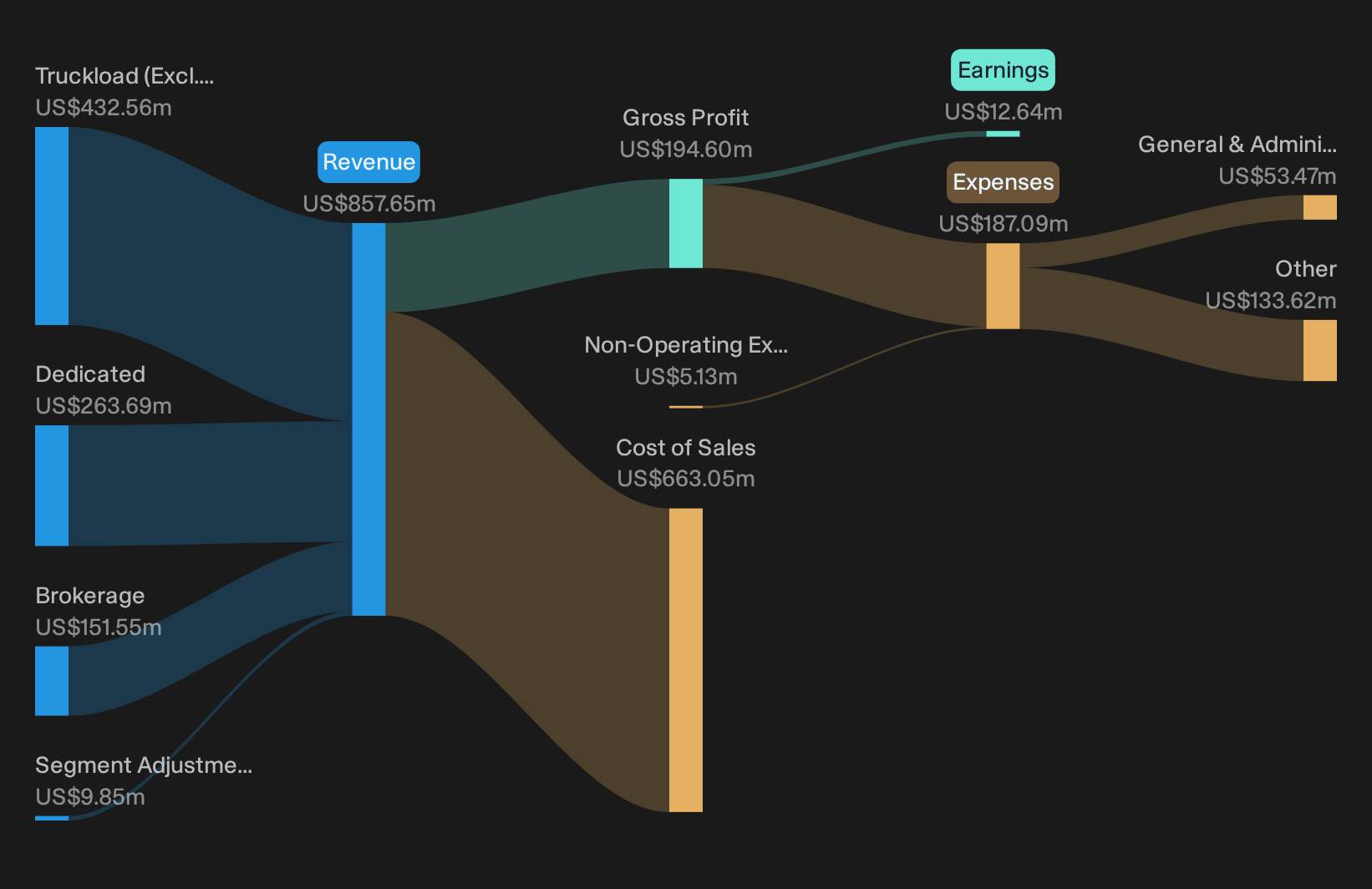
Operations: Marten Transport generates about $433 million from Truckload, $264 million from Dedicated, and $152 million from Brokerage, plus a $10 million segment adjustment.
Market Cap: $1.1b
Marten Transport ties closely into the freight and diesel theme because its temperature-controlled trucks, dedicated contracts, and brokerage links all move with U.S. shipment volumes and fuel costs. Current profit margins are thin and the dividend draw is significant, so much depends on how one unseen pressure shapes future pricing power and the effectiveness of fuel surcharges.
Those fuel surcharges and pricing decisions are exactly what the analysis report for Marten Transport unpacks, showing where Marten Transport’s margins could quietly inflect before the market catches up.
Curious About Fresh Alternatives?
Markets move fast and the next breakout list does not stay under the radar for long. Scan fresh momentum while it matters, then get in early.
- Spot steadier payers by scanning the 2 dividend fortresses before yields get compressed as more investors pile into the same high income ideas.
- Track changing trends through the list of solid balance sheet and fundamentals (7 results) and focus on businesses with the financial footing to stay flying even when sentiment drops.
- Hunt for early movers in automation with the 88 robotics and automation stocks while many of these under-the-radar operators are still quietly building momentum.
This article by Simply Wall St is general in nature. We provide commentary based on historical data and analyst forecasts only using an unbiased methodology and our articles are not intended to be financial advice. It does not constitute a recommendation to buy or sell any stock, and does not take account of your objectives, or your financial situation. We aim to bring you long-term focused analysis driven by fundamental data. Note that our analysis may not factor in the latest price-sensitive company announcements or qualitative material. Simply Wall St has no position in any stocks mentioned.
Have feedback on this article? Concerned about the content? Get in touch with us directly. Alternatively, email editorial-team@simplywallst.com