
Grid Upgrade Plan Could Be A Game Changer For Con Edison Stock (ED)
- Consolidated Edison has outlined a US$38b, five year program in its New York territory to fund electrification, grid upgrades, reliability work and climate resilience projects. The plan is framed around customer demand that management expects to sit roughly 20% above past electric capacity levels.
- The plan leans on regulated returns from a growing asset base, while a modest 0.2% uplift in consensus EPS estimates and a Zacks Rank #2 (Buy) indicate that analysts are factoring these infrastructure commitments into their views on earnings quality and dividend support.
- The focus now turns to how Consolidated Edison's investment narrative could be shaped by this large grid modernization and electrification plan.
Scan how other regulated utilities are positioning for grid upgrades and electrification by checking the curated 43 power grid technology and infrastructure stocks alongside Consolidated Edison's latest plan.
Consolidated Edison Investment Narrative Recap
To own Consolidated Edison, you need to be comfortable with a regulated utility that leans heavily on long term grid spending and constructive decisions from New York regulators. The big picture is simple. Earnings power depends on getting that US$38b capital plan into rate base while keeping reliability and customer bills at levels regulators accept.
In the near term, the main swing factor is how quickly those investments translate into approved rates and allowed returns. The biggest operational risk remains stress on the system during extreme weather, which can drive outages, higher spend and potential penalties. The latest plan does not remove that risk; it frames how management intends to tackle it.
The five year US$38b investment outline is the key announcement to focus on. It ties directly to electrification demand that management expects to run about 20% above historical capacity levels, plus a long queue of substation and transmission projects through 2035, and climate resilience work already embedded in programs at CECONY and O&R.
For you as a shareholder, that roadmap shapes both the main catalyst and the main constraint. Load growth and new substations can support a larger regulated asset base over time, while heavier debt funding and rate case scrutiny can limit how much of that spend turns into returns. Analyst sentiment is currently constructive, but execution on this grid buildout and regulatory timelines will determine outcomes.
Consolidated Edison's narrative connects analyst assumptions to a path in which revenues reach US$19.7b and earnings are US$2.8b by 2029, based on annual revenue growth of 3.6% and an earnings increase from US$2.2b today to US$2.8b, representing a rise of about US$0.6b in forecast consensus earnings.
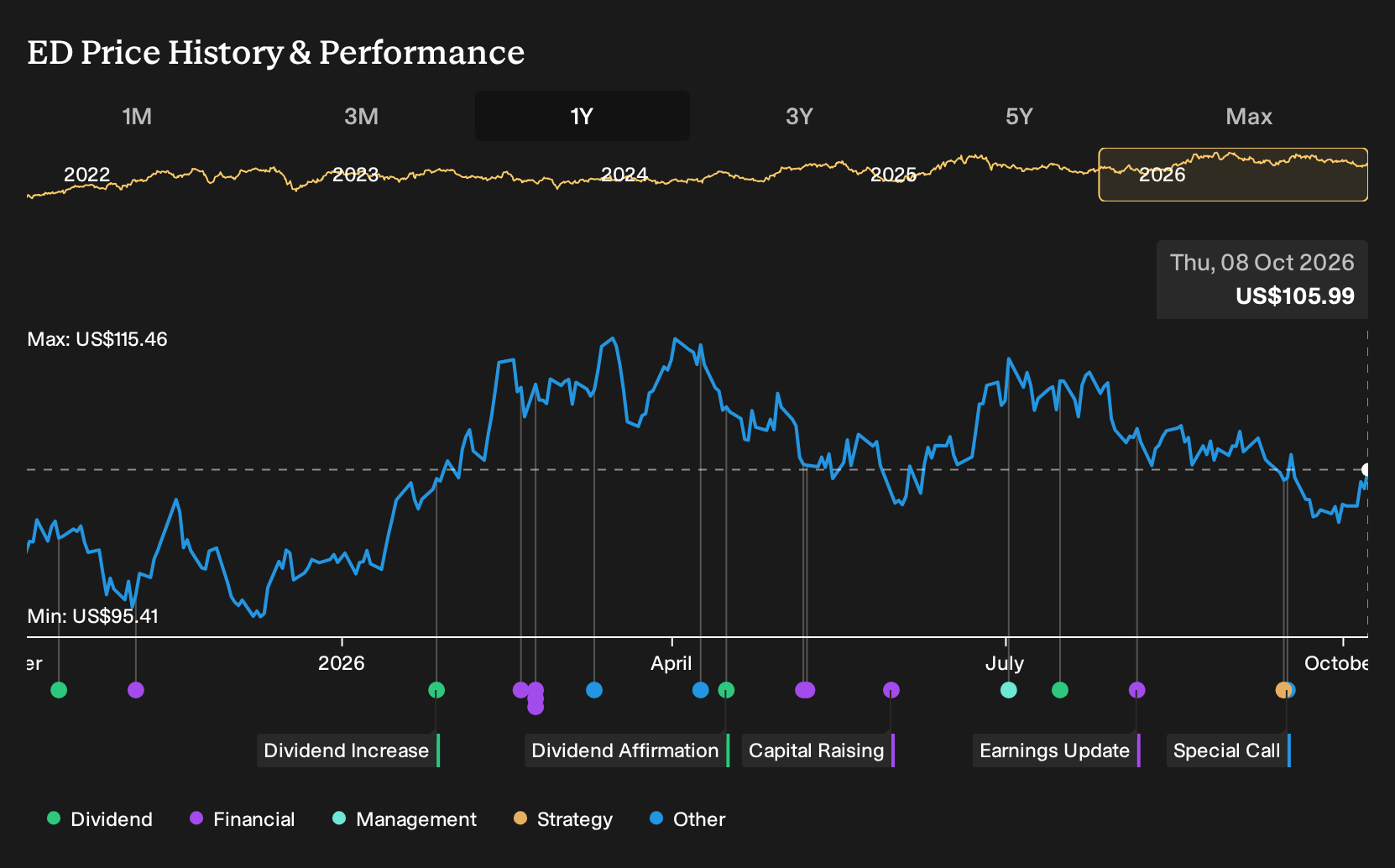
Uncover why Consolidated Edison's fair value indicates a 3% potential upside to its current price before the discount to fair value closes.
Exploring Other Perspectives
Three fair value estimates from the Simply Wall St Community cluster tightly between about US$107.6 and US$109.7, which keeps the current 3% upside signal in context. Those views collide with real world uncertainties around New York rate cases, heat related reliability strain and potential legal costs. Use that contrast to weigh several competing narratives for Consolidated Edison before deciding how this grid buildout fits your own expectations.
Explore 2 other Consolidated Edison fair value estimates, including one that suggests it could be worth as much as $109.66.
Reach Your Own Conclusion
Disagree with existing narratives? Extraordinary investment returns rarely come from following the herd, so go with your instincts.
- A great starting point for your Consolidated Edison research is our analysis highlighting 4 key rewards and 2 important warning signs that could impact your investment decision.
- See our latest analysis for Consolidated Edison. The report includes a comprehensive fundamental analysis summarized in a single visual, the Snowflake, making it easy to evaluate Consolidated Edison's overall financial health at a glance.
Looking for more investment ideas beyond Consolidated Edison?
Once you have a view on Consolidated Edison, it can help to compare it with other opportunities that line up with your risk tolerance, income needs and time horizon. The Simply Wall St Screener lets you filter by fundamentals so you can build a watchlist that fits how you like to invest.
- If capital preservation and steadier returns matter most to you, start with a curated group of resilient companies by checking out 31 resilient stocks with low risk scores.
- For investors focused on dependable income, scan a hand picked set of higher yield opportunities through the 8 dividend fortresses.
- If you are hunting for quality that the crowd may have overlooked, broaden your research with the 20 high quality undiscovered gems.
This article by Simply Wall St is general in nature. We provide commentary based on historical data and analyst forecasts only using an unbiased methodology and our articles are not intended to be financial advice. It does not constitute a recommendation to buy or sell any stock, and does not take account of your objectives, or your financial situation. We aim to bring you long-term focused analysis driven by fundamental data. Note that our analysis may not factor in the latest price-sensitive company announcements or qualitative material. Simply Wall St has no position in any stocks mentioned.
Have feedback on this article? Concerned about the content? Get in touch with us directly. Alternatively, email editorial-team@simplywallst.com