
Thames Water Fallout Puts Close Brothers Stock And UK Lenders In Focus
Nationalisation talk around Thames Water has pushed UK political risk back onto centre stage, and that sudden spotlight is reshaping how investors think about banks and infrastructure lenders with money tied to regulated assets. Sharp policy swings can punish some balance sheets yet open pricing gaps elsewhere. This article walks through 3 stocks from the UK-Listed Banks and Infrastructure Lenders screener that appear most exposed to the latest headlines, and explains why that may matter for your portfolio.
The three stocks covered below are only a starting sample, and the full screen surfaced 12 more companies with equally detailed and potentially important narratives that are not included here.
If you want to identify where your own risk tolerance and return goals line up with this corner of the market, head straight to the UK-Listed Banks and Infrastructure Lenders screener to filter, analyze, and focus on your highest conviction ideas.
Close Brothers Group (LSE:CBG)
Close Brothers Group plugs directly into the UK-Listed Banks and Infrastructure Lenders theme, with a lending-heavy model that leans into UK-focused credit spreads and refinancing work at a time when regulated assets are firmly in the political spotlight.
Close Brothers Group is a UK merchant banking group focused on lending and deposits, with commercial activities generating about £300 million in revenue, retail banking £185 million, and property £82 million, all from UK clients, and the stock valued at roughly £575 million.
"The sale of the Asset Management division (CBAM) to Oaktree is expected to strengthen Close Brothers' capital position by increasing CET1 capital by approximately 100 basis points, allowing the company to focus on its core lending business which could drive future revenue growth."
What really moves the dial from here is how one unresolved pressure feeds through into future lending margins and refinancing demand.
Lending margins are only half the story, and the full narrative for Close Brothers Group lays out how capital, regulation, and UK political risk could be colliding or quietly resetting expectations.

Shawbrook Group (LSE:SHAW)
Shawbrook Group taps directly into the UK-Listed Banks and Infrastructure Lenders theme as a specialist UK lender, using its focused balance sheet to fund SMEs, property professionals and selected consumers where mainstream banks can be slower to move.
Shawbrook Group runs a UK-focused lending and savings business spanning SME finance (£204 million), real estate (£174.6 million), retail mortgage brands (£126.5 million), consumer finance (£43.6 million) and other income (£92.6 million), with the stock valued at about £1.5b.
For this screener, Shawbrook Group matters because it channels capital into UK borrowers who rely on structured and often bespoke funding rather than vanilla high street loans, which is exactly where political risk and infrastructure repricing tend to bite hardest.
"The growing use of specialist lenders by U.K. SMEs and property investors, combined with Shawbrook Group’s 6% share of an estimated £300b addressable market, gives scope to reallocate its diversified loan book toward higher risk adjusted niches, which can support revenue and earnings."
What really shifts the story now is how one quiet change in funding conditions alters both the price Shawbrook Group can charge and the quality it feels comfortable writing.
As that funding shift plays through, the full narrative for Shawbrook Group maps how Shawbrook Group’s niche lending, risk appetite and pricing power could be quietly decoupling from mainstream UK banks.

Metro Bank Holdings (LSE:MTRO)
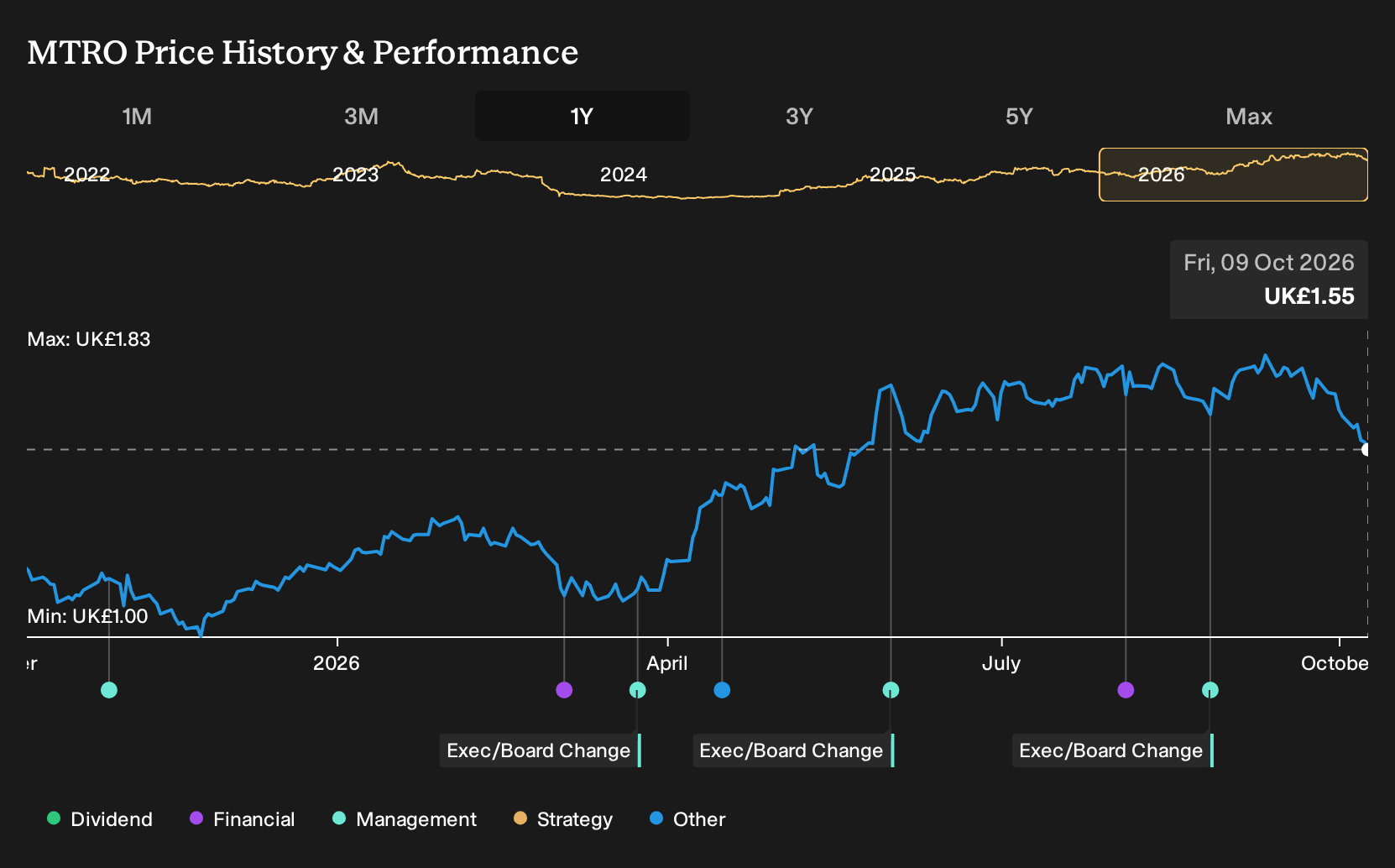
Metro Bank Holdings plugs into the UK-Listed Banks and Infrastructure Lenders theme as a pure UK lender, running a full-service banking model where all £580 million of revenue comes from domestic banking activities and the stock is valued at about £1.0 billion.
For investors watching how UK political risk ripples through lending markets, Metro Bank offers a focused way to track how a nationwide branch network and specialist business lending respond when credit spreads move and sentiment toward UK assets shifts.
"Metro Bank's relationship-led banking model, supported by a high proportion of low-cost, noninterest-bearing deposits (43% vs. 18% market average), increases deposit stickiness and supports low funding costs. This positions the company to attract customers seeking personalized service amid rising financial literacy and demand for differentiation."
What happens to Metro Bank’s earnings power now largely hinges on how one quiet change in loan mix and credit pricing flows through future margins.
As that loan mix shifts, read the full narrative for Metro Bank Holdings to see how Metro Bank Holdings’ deposit base, pricing power and political risk could be quietly decoupling expectations.
Seeking Alternatives Before Everyone Else
Fresh ideas move first. By the time a theme hits headlines, early entry points can already be dropping away. Scan for quiet breakout momentum while it still matters and aim to position earlier in the cycle.
- Track cash generators that might be hiding behind dull headlines with a curated 7 high quality undervalued stocks designed to surface quality before momentum really starts increasing.
- Spot potential infrastructure workhorses by scanning the 43 power grid technology and infrastructure stocks while these under the radar operators are still priced like yesterday’s utilities, not tomorrow’s backbone.
- Follow structural demand in materials by reviewing the curated 16 top copper producer stocks before tighter supply or new projects are fully reflected in broader market pricing.
This article by Simply Wall St is general in nature. We provide commentary based on historical data and analyst forecasts only using an unbiased methodology and our articles are not intended to be financial advice. It does not constitute a recommendation to buy or sell any stock, and does not take account of your objectives, or your financial situation. We aim to bring you long-term focused analysis driven by fundamental data. Note that our analysis may not factor in the latest price-sensitive company announcements or qualitative material. Simply Wall St has no position in any stocks mentioned.
Have feedback on this article? Concerned about the content? Get in touch with us directly. Alternatively, email editorial-team@simplywallst.com