
3 Bank Stocks That Could Benefit From Higher Fed Rates
The Federal Reserve has pushed its key rate to about 3.9%, hinted at at least one more hike, and signaled that financial conditions, including firm stock markets, still look supportive. That mix can hurt heavy borrowers yet open up fresh income streams for companies tied to cash, deposits, and short-term yields. This piece walks through three stocks exposed to that Fed story and explains why they may belong on your watchlist.
The stocks below are just a sample, since the full screen surfaced 26 more companies with equally compelling rate-sensitive stories that are not covered here. To identify and analyze those additional banks, insurers, and cash managers in detail, head straight to the US Banks, Insurers and Cash Managers Benefiting from Higher Fed Rates screener.
Amerant Bancorp (AMTB)
Overview: Amerant Bancorp is a Florida based bank holding company that earns most of its money from traditional lending, deposits, and related financial services that are closely tied to Federal Reserve interest rates.
Operations: Amerant Bancorp generates about US$391 million in revenue from its core banking activities, including loans, deposits, and cash management services.
Market Cap: US$1.13b
Amerant Bancorp operates within a higher rate environment, with a loan and deposit engine that closely links Federal Reserve moves to changes in interest income potential.
"Growth in low cost international deposits, including sub 1% funding from Venezuela, is expected to keep supporting Amerant Bancorp’s net interest margin and help sustain interest income on a larger balance sheet.
The key variable is how pressures on funding costs and credit quality affect those margins as interest rates change.
To see how those funding pressures could interact with Amerant Bancorp’s deposit mix and loan book over time, read the full narrative for Amerant Bancorp for the complete rate play and risk map.

Columbia Financial (CLBK)
Overview: Columbia Financial is a New Jersey based regional bank that gathers deposits and makes loans to households and businesses, with money market and cash management services tied closely to Fed driven short term rates.
Operations: Columbia Financial generates about US$267 million in financial services revenue, all from customers in the United States.
Market Cap: US$2.9b
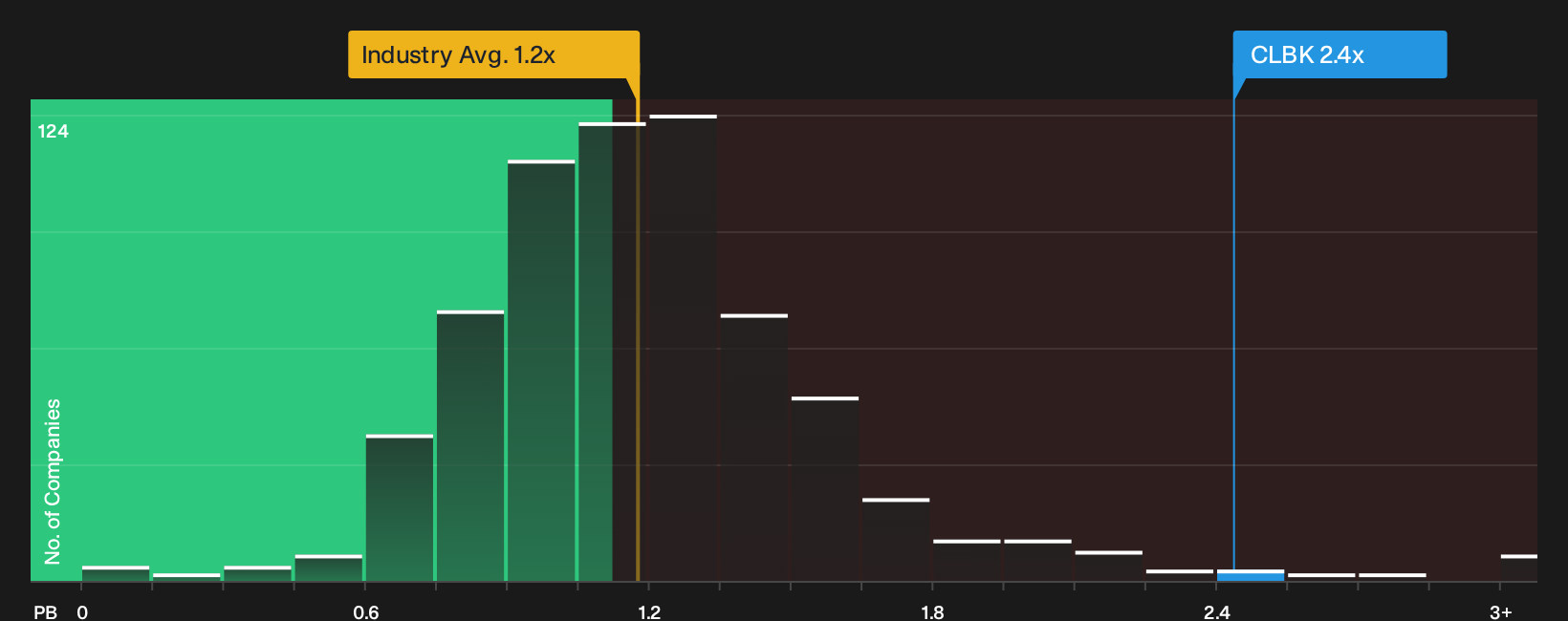
Columbia Financial offers the classic recipe for a higher rate beneficiary: a deposit heavy funding base, a broad menu of loans, and money market styled cash products where interest income tracks Fed policy shifts. Recent net interest income and net income both moved higher alongside elevated benchmark yields, and the new dividend adds an income angle that still hinges on how one quiet valuation pressure plays out.
That quiet pressure is valuation, and you can see how it interacts with earnings power in the 3 key rewards and 1 important warning sign for Columbia Financial before the story shifts again.
Hope Bancorp (HOPE)
Overview: Hope Bancorp runs Bank of Hope, a US retail and commercial lender built around deposits and loans that are sensitive to interest-rate spreads.
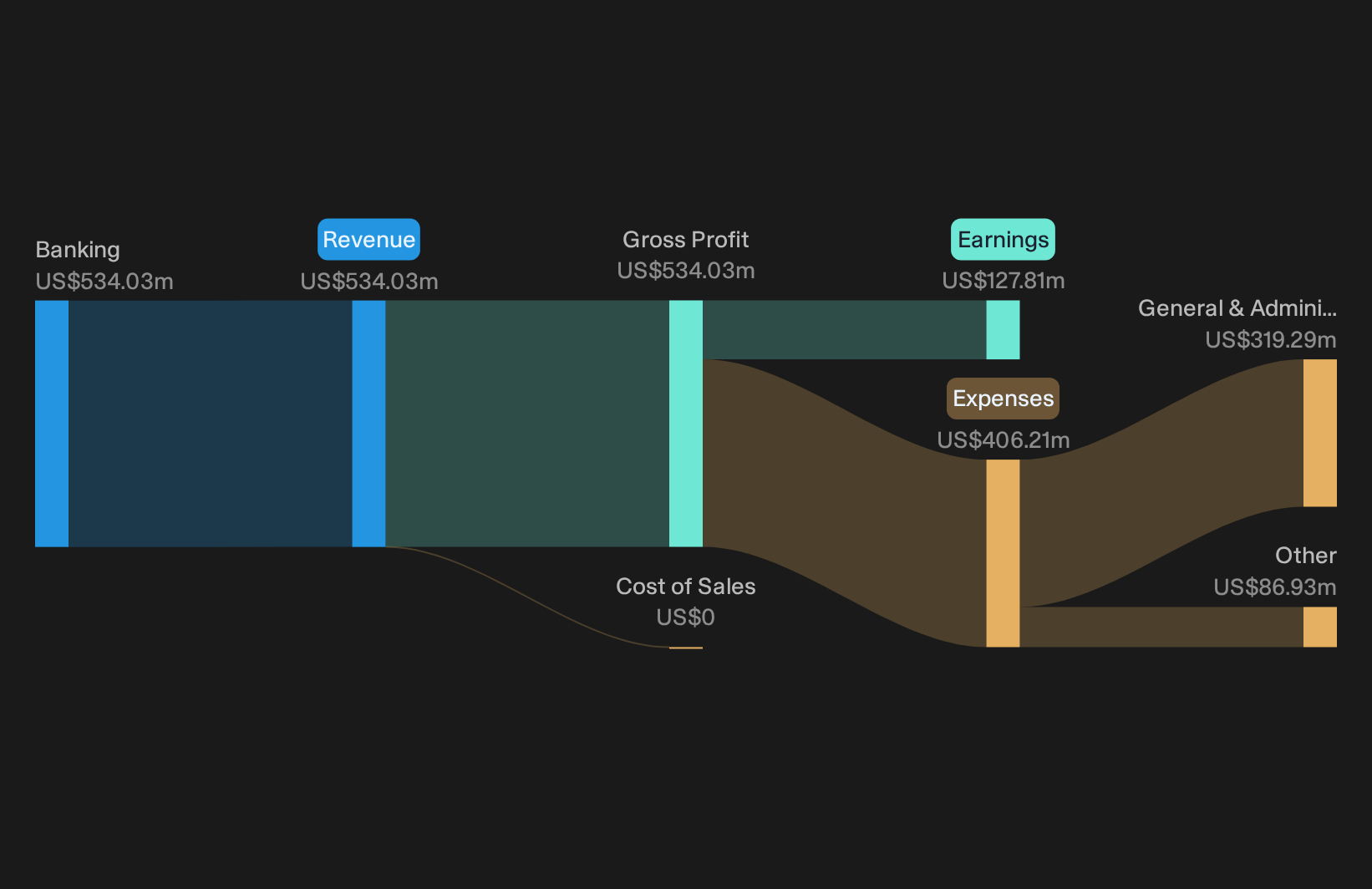
Operations: Hope Bancorp generates about US$534 million in banking revenue, all from customers in the United States.
Market Cap: US$1.70b
Hope Bancorp fits this higher rate theme squarely, since its money market accounts, business deposits, and loan book all lean on the gap between what it earns on assets and pays on funding.
"The SMBC MANUBANK commercial banking unit acquisition is expected to add roughly US$2.3b to US$2.7b of loans and US$2.6b to US$2.7b of largely non CD deposits, which could lift Hope Bancorp’s future net interest income and earnings once the book is integrated and repriced."
What really shapes the upside from here is how one quiet shift in Hope Bancorp’s funding mix feeds through into longer term margins.
That funding shift is exactly what the full narrative for Hope Bancorp unpacks in detail, spotlighting where Hope Bancorp’s margin story could be quietly accelerating or stalling next.
Seeking Fresh Alternatives Before Others Do
Market themes move fast and breakout stories can be flying before most investors even notice. Spot fresh momentum while it matters, while it is still under the radar, and get in early.
- Look at smaller companies where AI developments align with existing profits by scanning 39 profitable AI stocks that aren't just burning cash before the crowd potentially focuses more on this group.
- Explore resilient businesses built on strong cash positions and lower risk profiles by tracking the 31 resilient stocks with low risk scores while prices may still reflect older assumptions.
- Review the long-term buildout of nuclear capacity by examining 16 nuclear energy infrastructure stocks while these infrastructure-related companies may still be quietly priced.
This article by Simply Wall St is general in nature. We provide commentary based on historical data and analyst forecasts only using an unbiased methodology and our articles are not intended to be financial advice. It does not constitute a recommendation to buy or sell any stock, and does not take account of your objectives, or your financial situation. We aim to bring you long-term focused analysis driven by fundamental data. Note that our analysis may not factor in the latest price-sensitive company announcements or qualitative material. Simply Wall St has no position in any stocks mentioned.
Have feedback on this article? Concerned about the content? Get in touch with us directly. Alternatively, email editorial-team@simplywallst.com