
The next target is 8%? US mortgage interest rates soared to a three-year high, and “higher and longer” deals swept the property market
The Zhitong Finance App learned that US mortgage interest rates are experiencing a sharp rise. In just over a month, the average interest rate for 30-year fixed mortgages has climbed a full 1 percentage point, hitting a three-year high of 7.5%. Buyers' demand has shrunk sharply, and the existing home sales data for September is expected to record a sharp decline.
The direct driver of this round of surging interest rates is the general rise in global bond yields. Mortgage interest rates are particularly sensitive to changes in 10-year US Treasury yields, which have jumped to multi-year highs in recent weeks. Last week, the 10-year US Treasury yield broke through 5.360%, far higher than the level of 3.97% before the war broke out in Iran. The yield on 30-year Treasury bonds also climbed to the highest level since 2002.
However, what force is driving bond yields to such a high level in such a short period of time is far more complicated than the surface phenomenon. Economists have set their sights on a set of intertwined factors — geopolitical shocks, resilience of economic fundamentals, structural capital competition, and fiscal debt dynamics — all of which together have prompted investors to completely rewrite their expectations of inflation and economic growth.
Redfin chief economist Daryl Fairweather commented: “The trend is already very clear. We are entering an economic environment with higher interest rates and a longer lasting economy, and substantial changes are taking place behind this.”
Geopolitical shock: Iran war and energy price transmission
The upward trajectory of mortgage interest rates is highly consistent with the outbreak of war in Iran. Mortgage interest rates jumped sharply within a few weeks after the US launched a military attack on Iran on February 28 this year. Investors are deeply concerned about the rise in oil prices and the implications for inflation. Market concerns persist that rising energy prices will spread to the supply chain and worsen inflation.
More importantly, the uncertainty of the situation in Iran itself poses continuing upward pressure on interest rates. Realtor.com senior economist Jack Krimmel notes, “Geopolitical uncertainty is an important part of this. We're talking about a supply shock — this isn't just about oil, it could affect every other area of trade.” Investors are demanding higher compensation for unknown risks, which is directly reflected in an increase in term premiums.
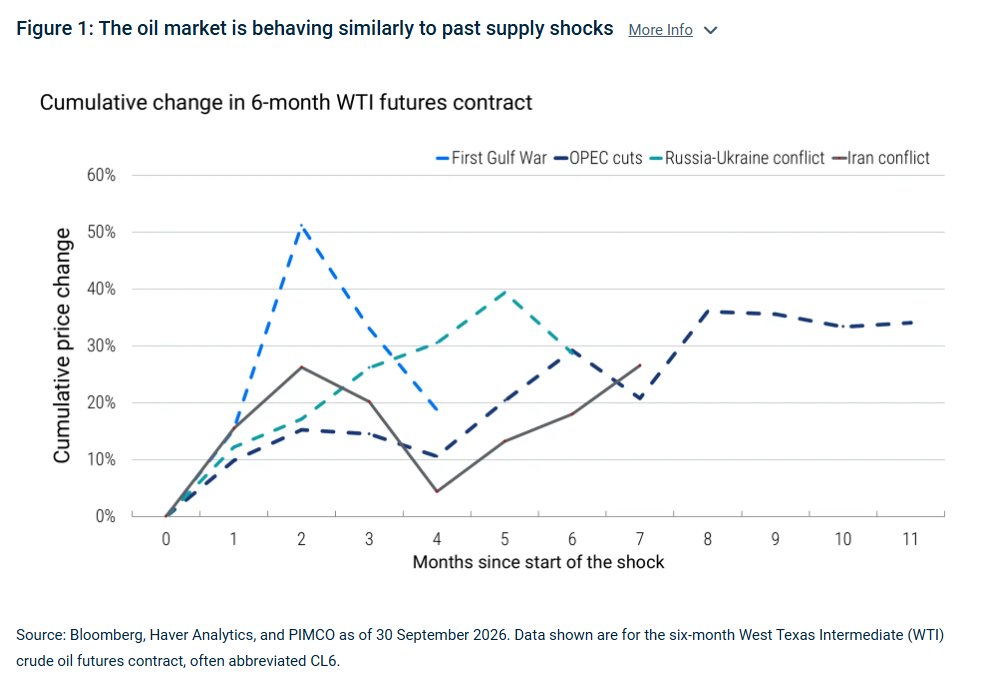
According to PIMCO's analysis, since the outbreak of the Iran conflict, the energy market has always been the clearest source of uncertainty faced by risky assets. The six-month WTI crude oil contract rose by about 25% from the end of February. The trend is roughly in line with previous geopolitical oil shocks. The International Energy Agency predicts that global oil supply will drop by an average of 5.7 million barrels to 100.7 million barrels per day in 2026 due to factors such as the stalemate in negotiations between the US and Iran and the obstruction of the oil supply recovery process. The full recovery of oil supply in the Gulf region is expected to be delayed until 2027.
US Treasury Secretary Scott Bessent has been trying to reduce bond yields through treasury repurchases, but to little effect. He blamed energy prices for most of the rise in bond yields and mortgage interest rates, and said, “I don't know if this conflict will end next week, next month, or two months, but I believe on the other side of it all, energy prices will drop drastically, and interest rates on mortgages will also fall.” However, most economists believe that energy prices alone are not sufficient to explain the current high interest rate environment.
Economic resilience: Strong growth forms fundamental support for rising interest rates
The US economy continues to show unexpected market resilience, and this is a fundamental factor in keeping mortgage interest rates high. The annualized GDP growth rate reached 2.2% in the second quarter, and consumer spending remained strong. Recent indicators of manufacturing activity and consumer spending continued to show healthy growth.
“Consumers are still spending, and spending more at the level of actual purchasing power, which often points to a strong economy,” said Ofi Diongui, founder and chief economist at housing and economics consulting firm Economist Research Group. He further pointed out that in the context of a strong economy driving inflation far above the Federal Reserve's 2% target, “investors are demanding additional compensation for holding long-term bonds,” thereby boosting yields and mortgage interest rates.
Notably, the Federal Reserve's latest forecast shows that the overall personal consumption expenditure (PCE) inflation rate will reach 3.7% by the end of 2026, and the median core PCE inflation will rise sharply to 3.4%. Inflation continues to deviate from target, making bond investors more and more adequately price the risk of inflation.
This “good news is bad news” paradox is particularly evident in the mortgage market. Strong economic data means that the Fed lacks urgency to cut interest rates quickly, while higher inflation than the target requires monetary policy to maintain a restrictive stance. Together, the two put upward pressure on bond yields.
AI capital boom: the “crowding out effect” of the technological revolution on the bond market
Although it may seem unreasonable, the wave of financing for artificial intelligence (AI) infrastructure construction has indeed constituted a seemingly distant yet far-reaching factor among the multiple drivers of rising mortgage interest rates. Big tech companies are pouring into the bond market on an unprecedented scale to fund AI infrastructure such as data centers, chips, and servers.
According to statistics, in the nine months since January of this year, the technology industry's loans have reached about 500 billion US dollars, and in 2024, this figure is almost zero. Goldman Sachs expects a further rise to $1.2 trillion in 2027. James Flatchers, executive director of acquisitions at fund-raising consulting firm Post Oak Group, estimates that AI now accounts for 25% of all corporate bond issues, compared to just 4% two years ago.
On an inflation-adjusted basis, the AI industry's loan scale this year is expected to exceed that of US cable operators during the entire Internet construction period, as well as the loan scale of railway companies during the 19th century railway boom. Investors are fond of these tech giants' bonds, but they are demanding significantly higher returns than before. Even Meta (META.US) has had to provide an annual return of over 7%, while the riskier cloud data center specialists are already over 9%.
For bond investors, these deals are attractive: they offer higher yields than government bonds, and issuers often have credit ratings almost as good as the US government — or even better in the case of Microsoft (MSFT.US). Bond yields are inversely related to prices, so when investors allocate capital to alternatives such as AI debt and stay away from US Treasury bonds and mortgage-backed securities, yields and mortgage interest rates will rise.
The impact of this trend on the treasury bond market is worth scrutinizing. Mark Seidner, PIMCO's chief investment officer for non-traditional strategies, pointed out that the scale of AI-related bond issuance “too many and too fast” may have caused “indigestion” in the fixed income market. PIMCO's chief investment officer Dan Evasin also said earlier that the boom in large-scale debt financing by AI companies is one of the key factors driving up 10-year US bond yields.
Zillow senior economist Kara Wu said, “The AI spending boom may have had a crowding effect on other similar investment instruments.” Regardless of the extent of the crowding out effect, the huge supply of AI debt is changing the supply and demand pattern in the fixed income market, and its effect on raising interest rates cannot be ignored.
The fiscal debt spiral: market shock at the $40 trillion milestone
If AI debt forms a new type of capital competition, then the US government's own debt expansion forms a more fundamental driving force for rising interest rates. US Treasury bonds have long been regarded as a global safe haven asset. The depth and liquidity of the market, as well as the strength and stability of the US financial system, attract strong demand from international investors, which helps to reduce yields.
However, this pattern is undergoing subtle and profound changes. The US national debt has grown substantially since the pandemic and surpassed a record $40 trillion earlier this year. Some of the new spending stems from emergency measures during the pandemic that have been phased out, yet the US often exceeds its revenue in major categories such as social projects and defense. The 2026 budget deficit has risen to 1.993 trillion US dollars, up 12% year on year, the highest since 2021, and is expected to account for more than 6% of GDP. Net interest expenses surpassed $1 trillion for the first time, and the average interest rate on tradable treasury bonds rose to 3.48%, more than 2 percentage points higher than five years ago.
This situation creates a self-reinforcing negative cycle: as yields rise, the government must use a larger share of fiscal capital to pay interest on ever-increasing debt; and the increase in interest burdens further heightens investors' concerns about America's fiscal sustainability, prompting them to demand higher risk compensation, thus further boosting yields.
The 10-year US Treasury maturity premium has risen to about 0.98%, a 12-year high. Analysts pointed out that the 30-year Treasury yield above 5.3% is not simply a liquidity premium, but includes the market's risk pricing of uncertainty about the US fiscal path. Although Treasury Secretary Bezent tried to stabilize the market through treasury bond repurchase operations, the effect was limited — with debt exceeding $40 trillion, it was difficult to counter market forces with repurchase tools alone.
What is even more worrisome is that the recent sharp rise in treasury bond yields has yet to be fully felt. Since changes in interest rates only affect newly issued debts, it will take time to refinance old bonds to mature, which means that interest pressure will continue to increase in the next few years.
The Federal Reserve's policy path: Expectations of interest rate hikes continue to heat up
Although the Federal Reserve does not directly control mortgage interest rates, its adjustments to short-term federal funds interest rates have a profound impact on interest rate trends. Changes in market expectations of the Federal Reserve's policy path are already largely reflected in current mortgage interest rates.
The Federal Reserve raised the benchmark interest rate by 25 basis points to the 3.75% to 4.00% range at the September FOMC meeting. This is the first rate hike since July 2023, and all 12 members of the voting committee voted unanimously to support it. The minutes of the meeting show that most of the participating officials believe that interest rates will be raised again this year, but there are differences about the timing of the rate hike — some officials insist that the military stay on hold in October and leave the next rate hike for December.
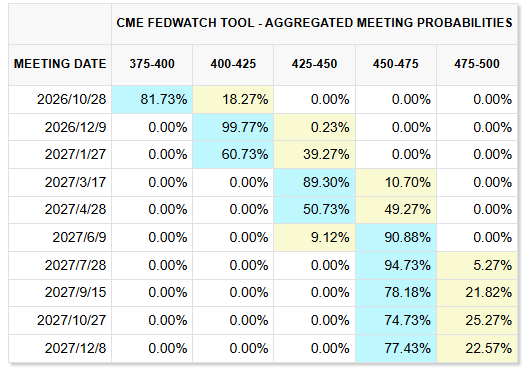
According to the CME FedWatch tool, investors currently price the probability that the Federal Reserve will raise interest rates by 25 basis points at the October 27-28 meeting is less than 20%, a sharp drop from about 70% a few days after the September resolution was issued, but it is almost completely priced to raise interest rates by at least 25 basis points before the end of the year. Federal Reserve Governor Waller also said earlier that there is still a need to raise interest rates further, but there is no need for continuous action.
Is 8% within reach? The tipping point of the housing market
Thanks to the combined effects of these multiple forces, the prospect of mortgage interest rates hitting 8% is changing from “out of reach” to “not that far away.” Diongui of Investigative Research Group put it bluntly: “This is no longer a distant thing; it is getting closer to reality.”
According to the interest rate scenario framework constructed by HousingWire's chief analyst Logan Motashami, an 8% mortgage interest rate would require 10-year Treasury yields to rise to around 5.40%, while mortgage spreads worsened further. This also requires strong economic data, the hawkish US Federal Reserve, and the ongoing conflict with Iran. However, the September non-farm payroll report fell short of expectations, so the 5.40% 10-year yield did not trigger the 8% mortgage interest rate, indicating that interest spreads have not deteriorated to a sufficient extent.
Moody's Analytics chief economist Mark Zandy even issued an even harsher warning: “There is no upper limit, no so-called limit.” He said there is no reason why the sell-off in the bond market will not continue, and interest rates may be close to 8% or even higher. Thelma Hepp, chief economist at Cotality, said that under extreme circumstances, if the 10-year US Treasury yield rises to 6% to 7%, compounded by the current mortgage spread of about 2 percentage points, buyers will face mortgage interest rates of 8% or even 9%.
PIMCO's Ivashin analyzed from a technical perspective: Driven by technical selling pressure such as stop-loss sell-off of leveraged funds, there is a risk that the 10-year US bond yield will break through 6%. This will be the first time in 26 years that it has reached this level. He made it clear that a significant portion of recent market activity is directly related to “negative technical factors” and “stop-loss operations by platform-based hedge funds and other leveraged investors.”
The housing market is already responding to this. According to data from the Mortgage Bankers Association, the number of mortgage applications for the week ending October 2 decreased by 4.2% compared to the previous week, and has been declining for five consecutive weeks.
In terms of interest rate prospects, Redfin expects mortgage interest rates to remain high, and as long as there is no fundamental shift in economic fundamentals, interest rates are unlikely to fall significantly. HousingWire's scenario analysis suggests that the 7% interest rate scenario requires an end to the Iran conflict and no worsening trade frictions — but at present, it seems that there is no clear timeline for achieving either of these conditions.