
Nvidia-backed AI Company Firmus Just Canceled its IPO. What That Means for NVDA Stock.
On Sept. 10, Nvidia (NVDA) CEO Jensen Huang told a room of Wall Street investors that a new crop of "neoclouds" was close to going public. He named Firmus on that short list.
Neoclouds are newer cloud companies that rent out AI computing power. They secure the land and electricity for AI data centers run by hyperscalers. Despite the optimism surrounding the AI trade, Firmus — a neocloud backed by Nvidia — withdrew its initial public offering last week.
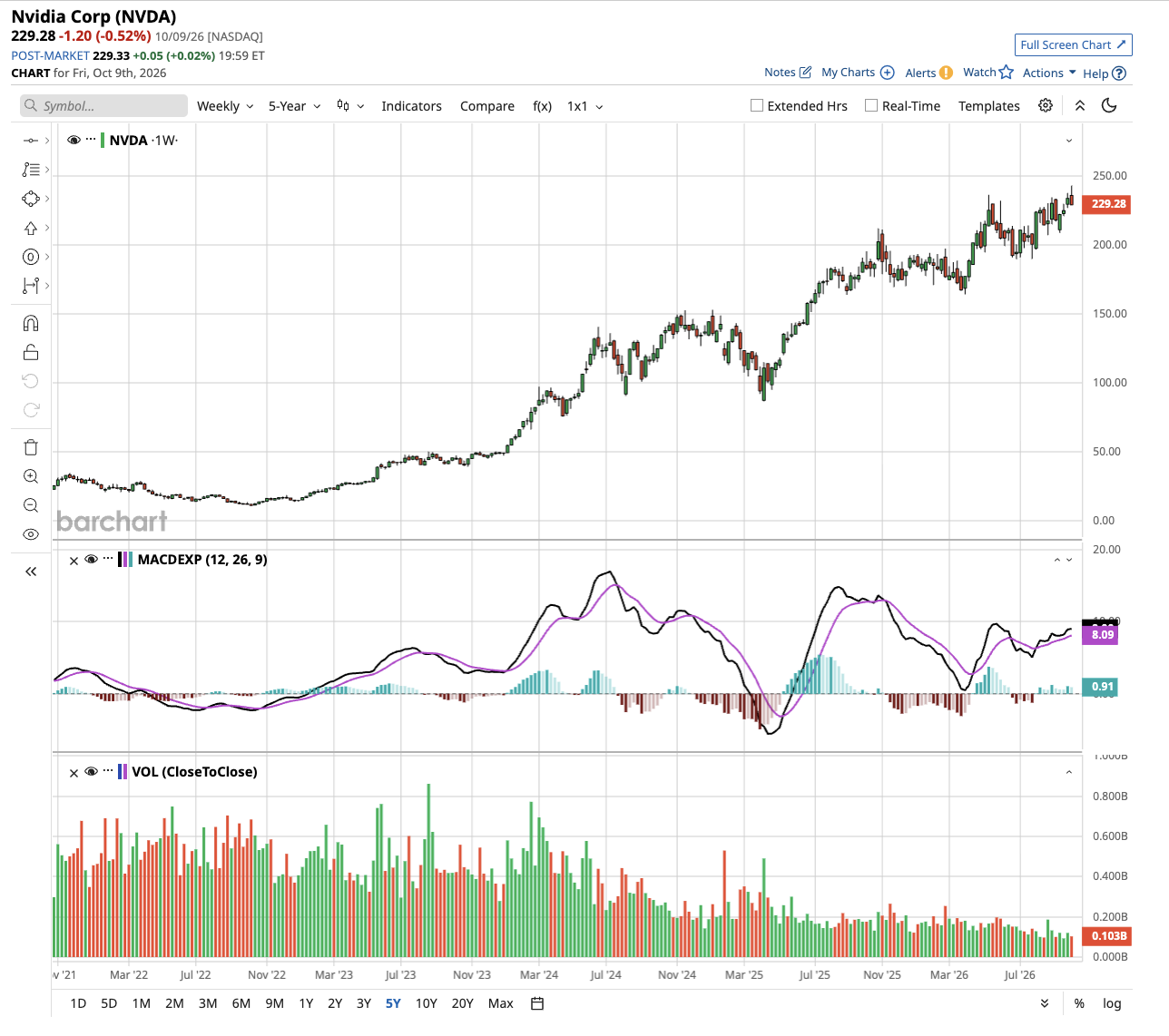
While the failed IPO matters little for Nvidia stock, are investors getting wary of the elevated valuations of AI stocks?
Firmus Rose Fast on the AI Boom
Firmus is a Sydney-based company that builds and runs what it calls AI factories. These are data centers packed with Nvidia chips, cooled with its own technology.
In August, Firmus said it raised $2 billion from Coatue, Nvidia, Blackstone (BX), and Jane Street, valuing the company at $10.5 billion. Over the last 12 months, Firmus raised more than $3 billion in equity capital.
Firmus has an enviable customer base.
- OpenAI signed on for two Malaysian sites operated by Firmus.
- Meta Platforms (META) already uses Firmus' Melbourne site and agreed to expand capacity in Southeast Asia.
- Firmus said its total contracted capacity now tops 900 megawatts.
However, just two of its seven AI factories are running today — in Australia and Singapore — while five are under construction. So the company is investing heavily in capital expenditures, which should boost future cash flows.
How the $5 Billion IPO Unraveled
Reuters reported that Firmus wanted to sell shares at 11 Australian dollars each, valuing it at $30.6 billion, a 200% increase over the last three months. It would have been the second-largest share sale in Australian history.
Last Monday, the Australian Financial Review reported that brokers told clients that demand beat the $5.5 billion offer size. However, a day later, investors learned that existing holders could sell more than half the stock from day one, according to Reuters, raising concerns about weak early trading.
On Wednesday, CDC Data Centers CEO Greg Boorer said on a podcast that a plan to build 1.6 gigawatts of AI factories with Firmus was no longer underway. Reuters said investors began pulling orders following the development.
By Friday, Oct. 9, Firmus suspended its IPO plans. In a company statement shared with CNBC, its board said the terms did not reflect the business's strength.
Was the AI Stock Overvalued?
Investors were concerned about debt. Reuters, citing analysts for the lead managers, said Firmus carried about $30 billion in debt. Add that to the equity value, and you get an enterprise value near $60 billion.
The draft prospectus promised $5 billion in annual earnings within five years, a bold target for a company with two operational sites. Joseph Koh, a portfolio manager at Blackwattle Investment Partners, told Reuters the market was not ready to take a "leap of faith."
UniSuper, one of Australia's biggest pension funds, skipped the deal. Its chief investment officer, John Pearce, told the BBC: "It just doesn't have a compelling valuation."
The Australian Financial Review added more reasons. Local fund managers pointed to a management team without a track record and heavy reliance on debt. The Meta deal and the CDC exit also surfaced right before the book build.
What It Means for Nvidia Stock
My take: this is a Firmus problem that won't impact Nvidia stock, even as the chip giant remains an investor in Firmus
Huang has pushed back on critics who call Nvidia’s deals circular financing. At the Goldman Sachs conference, he said Nvidia invests a small amount in multiple companies, and much more comes back in business. He wants most of its $500 billion financing platform to be asset-backed.
Firmus shows where that argument gets tested. Public investors will fund AI infrastructure, but only at a price that leaves room for mistakes.
Reuters noted that US-listed chipmakers, up more than 80% this year, fell 3.4% on Thursday. The drop followed reports that OpenAI told investors its annualized September revenue was almost $50 billion, lower than it had signaled earlier.
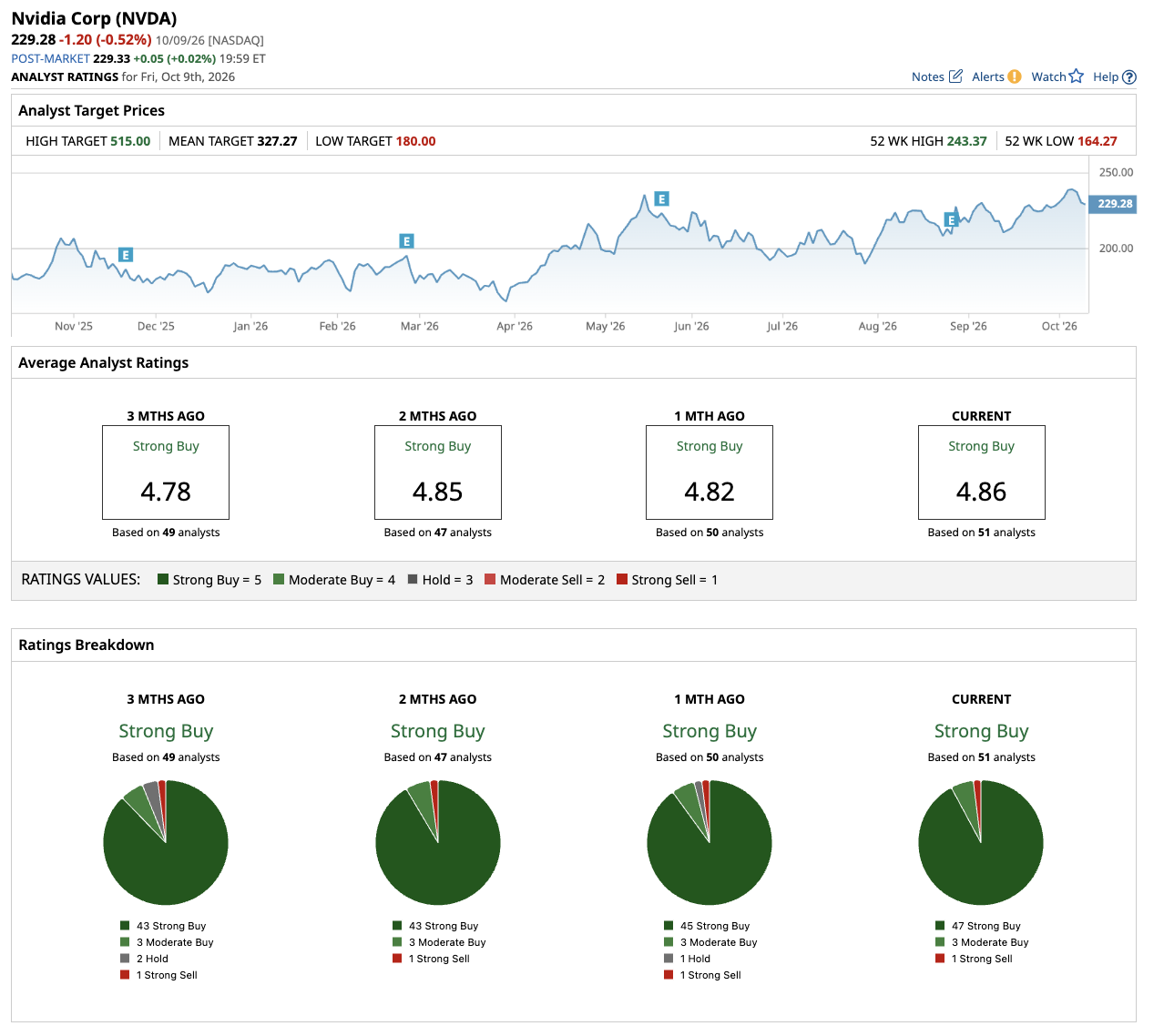
Wall Street remains bullish on Nvidia stock. Out of the 51 analysts covering Nvidia stock, 47 recommend “Strong Buy”, three recommend “Moderate Buy”, and one recommends “Strong Sell”. The average NVDA stock price target is $327, above the current price of $229.
On the date of publication, Aditya Raghunath did not have (either directly or indirectly) positions in any of the securities mentioned in this article. All information and data in this article is solely for informational purposes. For more information please view the Barchart Disclosure Policy here.